Rising seas and saltwater intrusion are threatening some of the world’s most fertile delta regions, like Viet Nam’s Mekong Delta.
A recent article by UN News explores how communities in the delta are adapting to the growing impacts of a changing environment.
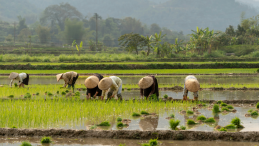
Farmers there are facing rising sea levels, saltwater intrusion and declining sediment supplies, which are increasingly making traditional rice cultivation challenging. For the article, UNU-EHS Researcher, Dr. Jack O’Connor shared insights from his research on sustainable agriculture, organic rice cultivation and the environmental changes reshaping the delta.
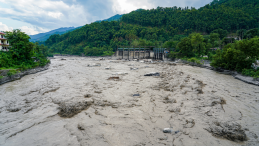
Drawing on research and fieldwork from the OrganoRice project, O’Connor explained how farmers are increasingly pinched between sediment loss from upstream dams and from saltwater intrusion from the sea, as well as changing weather patterns brought by climate change.
“The timing, the strength of floods, how hot it’s going to be and when have become harder for farmers to predict. Because all this determines when they plant their crops,” said O’Connor.
As a result, communities and farmers are working to adapt. For some, it means adding shrimp to their cultivation to take advantage of the salty water. For others, they are adding organic agricultural methods, which use fewer chemical fertilizers and pesticides. Such practices help bring about positive benefits such as stronger crops and increased biodiversity. Plentiful spiders and other predators help control pests, for instance.
But despite the opportunities of organic farming, challenges remain in adopting such practices to help adapt to changing conditions. To reap more benefits, organic farming must also be incorporated more widely. Contaminated water may still flow from a farm using chemicals to a farm using organic methods, for example.
As a result, O’Connor emphasized that successful adaptation requires more than individual action, but wider cooperation and different approaches that involve local communities. Ecosystem restoration, like restoring mangroves, he offered as a prime example.
“Adaptation has to be done in a just way and with the local people on board”, said O’Connor.
Read the full story on UN News.