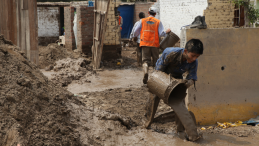


A potentially strong El Niño is forecast to develop between June and August. Amid growing concern, media headlines describing the event as “Godzilla” or a “monster” have captured global attention, while also raising questions about how El Niño and its potential impacts are understood.
While the heightened attention has renewed focus on El Niño, the line between scientific projection and speculation is increasingly blurred. At the same time, as global climate change continues to intensify, misunderstandings about El Niño and its relationship to climate change are becoming more common.
UNU-EHS expert, Dr. Jack O’Connor, was featured in an Anadolu Agency article addressing these misconceptions, helping to contextualize current media coverage.
O’Connor emphasized that El Niño is a naturally occurring climate cycle, but that human-induced climate change driven by CO2 emissions can amplify its impacts. “Heatwaves can be hotter, drought can be drier and intense rainfall can be more intense,” he explained.
Although forecasts indicate the potential for a strong El Niño, he stressed that alarming headlines do not always reflect scientific predictions. At the same time, O’Connor acknowledged that current forecasts are notable, as climate prediction systems are pointing to the likelihood of at least a moderate event, with the possibility of a strong one. “Such events are rare,” he said. “It is clear there is an elevated risk of potentially impactful weather changes.”
He stressed that forecasts should still be taken with caution and viewed as an opportunity to prepare for potential heatwaves, droughts, floods, wildfires and food-security challenges.
Read the full article here.