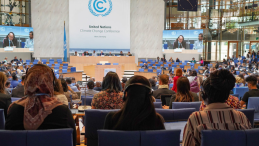


The annual June Climate Meetings in Bonn took place from 16–26 June. The meetings mark the halfway point between each Conference of the Parties (COP) and are a key part of the international climate policymaking process, allowing parties to the UNFCCC and scientific experts to advance work agreed at the November summit. More technical in nature, they convene the Subsidiary Body for Implementation (SBI) and the Subsidiary Body for Scientific and Technological Advice (SBSTA).
A delegation of UNU-EHS experts participated in and observed the discussions. Several also spoke with media outlets to explain the key issues under negotiation and their implications.
Dr. Simone Sandholz was interviewed by China Central Television on the importance of the conference and how the climate crisis is driving an increase in extreme weather events around the world.
“Take this year's heatwaves, for example; they are among the increasingly frequent and severe climate extremes we are facing. Even in regions like Germany, which are typically relatively cool, this is no exception. This is, of course, due to the warming atmosphere, which leads to high-temperature weather,” Sandholz explained.
She also warned of the potential impacts of climate change on human security if scientific warnings are ignored and action is delayed. “Future extreme weather events – such as extreme heatwaves and floods – could trigger more conflicts. These events may disrupt water supplies and impact food production; the resulting scarcity of resources could lead to further conflict,” she said.
One of the key storylines emerging from the meetings was the questioning of scientific findings and attempts to sideline evidence in the negotiation rooms, reflecting a broader trend of challenges to climate science.
UNU-EHS Deputy Director, Dr. Zita Sebesvari, was featured in an article by Table.Briefings examining the role of science in the Bonn negotiations.
“Unfortunately, there were also instances at the interim climate conference where scientific findings were called into question,” she said. “Scientific evidence on tipping points was dismissed as ‘matters of perspective,’ and the necessity of regular IPCC updates was challenged.”
However, she noted that vulnerable countries – those on the frontlines of climate impacts – pushed back strongly, insisting that science continues to guide the UNFCCC process. Sebesvari emphasized that it is their voices and lived realities that matter most, adding: “For them, the accuracy and credibility of climate science is not an academic question, but one of survival.”
Watch Simone's interview here and read Zita's interview here.