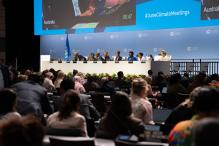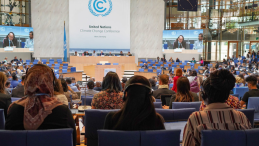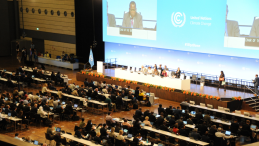


It’s the time of the year again when climate diplomats across the world are gathering in Bonn, Germany, to prepare for the next UN Climate Conference, COP, scheduled for November 2026 in Antalya, Türkiye. But this is not just any other meeting. If last year's COP 30 in Belém, Brazil, represented the closure of a foundational cycle – capping the first Global Stocktake (GST) and locking in the next round of national climate targets – Bonn is where the work of the next era begins.
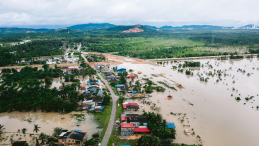
As delegates assemble, they are met by stark realities: A strong El Niño is forming and in the coming months projected to supercharge climate impacts of an already warmer planet. International energy and food prices are spiking, and global political capital is increasingly consumed by geopolitical instability and shifting political and fiscal priorities. This is the framing for the next steps. How can the upcoming cycle for climate policy – the second GST and the 4th generation national climate targets, that will follow – provide real benefits to energy and food security, and how can the UNFCCC process better prepare countries as climate impacts are increasingly outpacing current systems and coping strategies?
June Climate Meetings – Picking up the pieces
The June Climate Meetings serve to give details to decisions from the Belém climate summit and prepare packages for COP 31 in November. Key among these will be fleshing out the newly established "Belém-Antalya Mechanism" to create a practical mechanism and framework for a just transition away from fossil fuels. Simultaneously, delegates are set to initiate dialogues on the intersection of global trade and carbon border adjustment policies, alongside efforts to shape the "Belém Mission to 1.5" and the "Global Implementation Accelerator" to fast-track national climate policy. The talks will also confront the climate finance decisions from Belém, including launching a new dialogue on shifting global finance flows towards a low-carbon economy and assessing the delivery of current climate finance.
Adaptation to the new normal
One critical package in preparation for COP 31 and beyond is the guidance for adaptation. Following Belém, countries decided on a set of indicators to operationalize the Global Goal on Adaptation, which in return will also provide input into the next Global Stocktake. However, countries need to further refine and add details to these indicators, also to make them work for national implementation and circumstances. Open questions include alignment with other policy processes and the choice and guidance of underlying assessment methods and methodologies. Importantly, in Bonn, countries need to decide on a task force that will guide this technical process. Expectations are high that the result will work both for national practitioners and implementers but also provide a picture on the global progress of adaptation. Countries are also discussing the adequacy of adaptation in relation to different temperature increments of warming, thereby linking the Adaptation Goal with the temperature goal of the Paris Agreement.
Aligning agendas and momentum
Times of crisis can become a strong impetus to energy and economic transitions required to meet the climate goals. While concrete decisions on phasing out fossil fuels proved contentious to be anchored in the framework of a COP decision in Belém, the issue is clearly receiving momentum. Last month the First International Conference on Transitioning Away from Fossil Fuels brought together a coalition from roughly 60 nations to establish concrete, practical plans for phasing out global coal, oil and gas production. As part of the COP 30 outcome, the presidency under its own mandate promised to develop an international roadmap for such transition. In Bonn, it is expected that this roadmap, together with a second roadmap aiming at halting continued deforestation, is presented to a larger audience.
The June Climate Meetings are a busy period, in total 43 agenda items are negotiated and 31 mandated events are scheduled to take place, next to numerous side events. However, besides this legwork they also offer the opportunity for the incoming COP presidency to present the overarching vision for the upcoming COP. Following the First Global Stocktake it is clear that continued collective climate action is happening, albeit dangerously slow. For the next climate policy cycle this reality requires a shift in approach: the UNFCCC process must move beyond merely defining collective ambition to purposefully unlocking real-world implementation. Historically, the UNFCCC process and its “Action Agenda” were not designed to operationalize the GST outcomes. COP 30 changed that by building the Belém "Action Agenda" directly on the stocktake's insights. The goal now should be to deliberately design the system around this alignment – to clear away regulatory barriers, tailor national support, and more directly encourage partnerships and initiatives that scale real-world implementation. Creating early clarity and lock-in this GST-driven structure as a permanent feature in Bonn and Antalya could be a major win.
An additional pivot toward real-world action can be seen in the landscape of Loss and Damage, which is currently being redefined. While it is not heavily on the agenda for the formal UNFCCC negotiations in 2026, The Fund for Responding to Loss and Damage is steadily moving from operational design to concrete financial delivery. Simultaneously, the UN General Assembly’s recent resolution to formalize follow-up actions to the historic Advisory Opinion on Climate Change signals that action on the climate crisis is not political choice but an international legal duty.
Ultimately, building the road to Antalya is about laying a policy foundation strong enough to weather today's geopolitical fragmentation, setting up the next climate cycle to deliver tangible energy food and climate security.