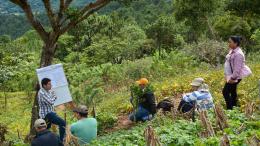


We have long recognized that soil is not merely a physical substrate for agriculture, but a living system in which microorganisms play a decisive role. For decades, soil microbiomes and soil biological activity have been known to underpin agricultural productivity, resilience, and sustainability. Generations of researchers and practitioners have shown that healthy soils depend on complex microbial networks that drive nutrient cycling, promote plant growth, and suppress disease. At the same time, agriculture has continuously faced the challenge of maintaining this biological activity while sustaining — or increasing — productivity under growing social, environmental, and climatic pressures.
The postgraduate course Micro4Agro: Methods in Soil Microbial Biotechnology for Advancing Sustainable Agriculture stands precisely at this intersection between long‑established knowledge and new technological possibilities. This course exemplifies how accumulated understanding of soil biology can now be paired with state‑of‑the‑art methodologies to open genuinely new pathways for agricultural innovation.
For many years, the promise of integrating microorganisms into agricultural management was constrained by limited analytical tools. While the importance of soil microbial communities was clear, our capacity to describe, quantify, and functionally interpret them in complex field conditions remained partial. Micro4Agro directly addresses this historical limitation. By combining classical microbiological approaches with modern molecular, biochemical, and omics‑based technologies, the course provides participants with a comprehensive toolkit to explore soil as a living, dynamic system. This integration of culture‑dependent techniques with genomics, transcriptomics, lipidomics, enzymatic profiling, quantitative PCR, and bioinformatic analysis represents a decisive step forward in soil microbial biotechnology.
One of the most transformative aspects emphasized throughout the course is that these new technologies finally allow us to move beyond generic solutions. Agricultural biosolutions have too often been developed in specific contexts and later transferred — sometimes uncritically — to very different environments, where they frequently underperform. Soil microbial communities are inherently local and shaped by climate, soil type, land-use history, and agricultural practices. Micro4Agro places this reality at the center of its pedagogical approach, highlighting that the future of sustainable agriculture lies in solutions built upon local microbiomes rather than imposed from elsewhere, which is particularly relevant for Latin America, a region marked by extraordinary environmental heterogeneity and agricultural diversity.
We extend our institutional acknowledgment and sincere appreciation to the course coordinators Dr. Betina Agaras, Dr. Patricio Martín Sobrero, and Dr. Antonio Lagares Jr., whose scientific leadership and pedagogical vision made this initiative possible. We also gratefully acknowledge the Universidad Nacional de Quilmes (UNQ) as the hosting institution, for its commitment to excellence in training and for providing an environment in which advanced soil microbial biotechnology can flourish in the service of sustainable agriculture.