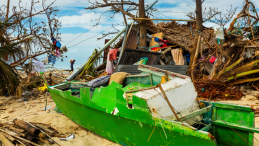


The impacts of climate change are worsening and increasingly hard to ignore. Over the years, we have seen devastating disasters that bear its fingerprints. Often, the consequences go beyond the immediate aftermath we see in the media, taking less visible but equally significant tolls on everyday life. One clear example is how our warming climate is driving up the cost of living, as it repeatedly damages things people rely on — homes, income, health, and infrastructure — making life more expensive. Unfortunately, the financial burdens left behind also shape who is able to adapt to climate change and what resources are available to them.
Here are five ways climate change is making daily life more expensive:
Disasters are driving up recovery costs
According to the Interconnected Disaster Risks report, since the 1970s, damages from weather-related disasters have increased sevenfold, reaching $313 billion in 2022 alone. The number of frequent and severe disasters is expected to double by 2040. Recovery costs are often passed on to taxpayers, who fund emergency and disaster relief. Adequate climate action requires significant investment, but the cost of inaction is far higher. The good news is that mechanisms, such as early warning systems, can help reduce these losses. Additionally, the World Meteorological Organization (WMO) finds an $800 million investment in early warning systems could prevent billions of dollars in damages.
Climate risks are making insurance unaffordable
Insurance is a critical tool for individuals, businesses, organizations and governments to protect against financial losses. But climate change is making risks increasingly unpredictable, catching insurers and governments off guard. As a result, insurance prices are rising. Since 2015, homeowners in some regions experiencing more extreme weather have seen costs increase in home insurance by nearly 57 per cent. Some insurance companies have even limited or stopped coverage in high-risk areas. This is concerning because when insurance is unaffordable — or unavailable — these areas may effectively become “uninsurable,” leaving households to bear the costs themselves.
Extreme weather drives up energy prices
As extreme heat reaches new records, reliance on air conditioning is rising — and so are electricity bills. Higher consumption is not the only driver: utilities are also investing in strengthening power grids against climate risks such as wildfires and hurricanes. At the same time, continued reliance on fossil fuels is adding to long-term costs. These energy sources are finite, emit CO2 and are vulnerable to price spikes when demand surges during crises. Renewable energy, on the other hand, is rapidly becoming the cheaper option. According to IRENA, in 2024, solar and onshore wind power were 41 per cent and 53 per cent cheaper than fossil fuels. In the first half of 2025, renewables generated more electricity than fossil fuels for the first time on record.
Climate volatility increases food costs
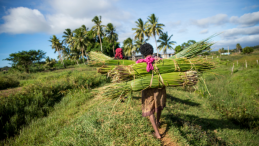
Climate change is a key driver of rising food costs. Change in weather patterns, unpredictability and extreme events such as droughts, floods and heatwaves can significantly affect crop yields, particularly staple crops. For some crops, such as maize, wheat and rice, temperatures of just 30–35 °C during sensitive growth stages can reduce yields. These declines can ripple through the economy, causing higher food prices as supply struggles to meet demand, lower incomes for farmers that make it hard to pay rents, and reduced agricultural productivity. This is particularly concerning for households in low-income countries, where reliance on local markets — often vulnerable to price shocks — is common.
Climate shocks increase household costs and inequality
When floods, heatwaves or droughts hit, households must pay for repairs, replace belongings, miss work or cover medical costs. For low-income groups, insurance, savings or secure housing that could cushion these shocks are often either unavailable, unaffordable or inaccessible, meaning each event can quickly drain limited resources. This creates a reinforcing cycle of poverty, where each loss reduces people’s ability to recover and leaves households more vulnerable to the next climate shock. At the same time, prices may rise while income and purchasing power fall. Households may be forced to sell assets, use up savings or borrow to cope. For those already living close to the margin, each shock raises expenses and weakens their ability to recover, making life more expensive and insecure. Meanwhile, high-income groups have the resources to protect themselves and build resilience.
Suggested citation: "5 Ways Climate Change is Driving Up the Cost of Living," United Nations University, UNU-EHS, 2026-03-17, https://unu.edu/ehs/article/5-ways-climate-change-driving-cost-living.