

From Vulnerability to Agency: Reframing Food Security under Climate Change in the Asia-Pacific
Abstract
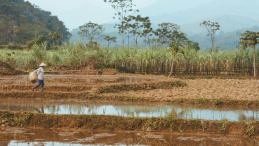
This paper examines the complex relationship between climate change and food security in the Asia-Pacific region. It demonstrates how climate change disrupts food systems through impacts on crop yields, fisheries, and supply chains, while interacting with socio-economic inequalities, governance failures, and competing resource demands to produce compound risks. Drawing on case studies from the Philippines and Pakistan, the paper highlights how small-scale farmers and fishers face heightened vulnerabilities due to unequal access to land, water, and decision-making power, as well as top-down policy interventions that fail to reflect local realities. The analysis argues that conventional definitions of food security are insufficient, advocating instead for integrating elements of food sovereignty and human security to better capture issues of power, equity, and resilience. Ultimately, the paper calls for more inclusive, context-sensitive, and people-centered policy approaches that strengthen adaptive capacity, reduce structural inequalities, and enhance long-term sustainability of food systems in the region.