

A lot has changed in the life of Mariana Páez since the UNU-EHS documentary about the chinamperos of Xochimilco was released. The crux of her story is that it brought three former classmates back into conversation. However, all in all, everything began much earlier, on the chinampas themselves.
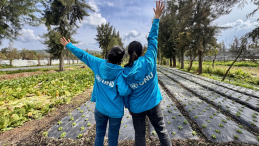
Chinampas are fertile plots of land created through an ancestral agricultural system built within Mexico City’s wetlands that is part of its biocultural heritage. They can be best described as floating gardens, although they do not actually float, but are anchored in the shallow waters of a lake.
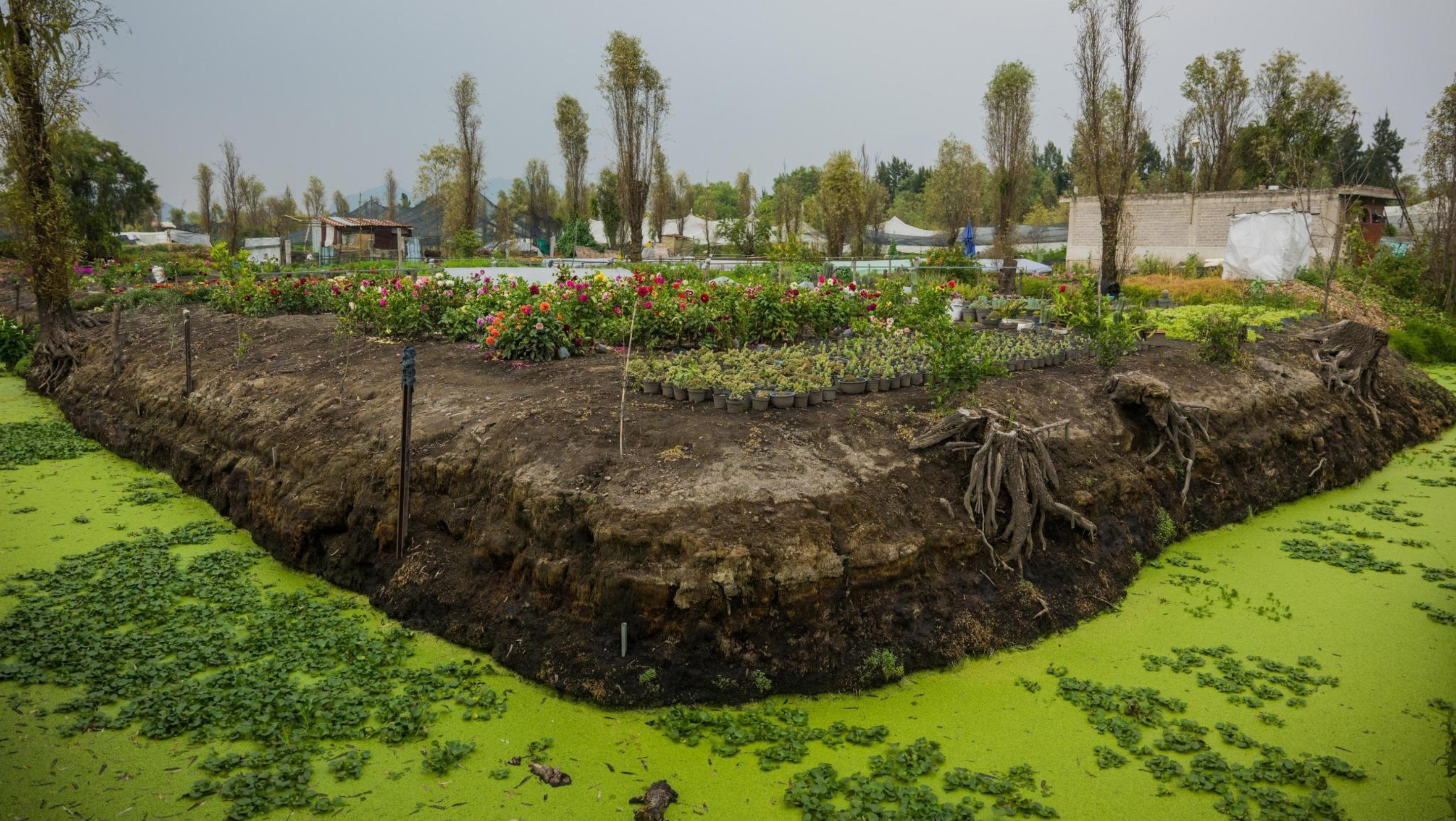
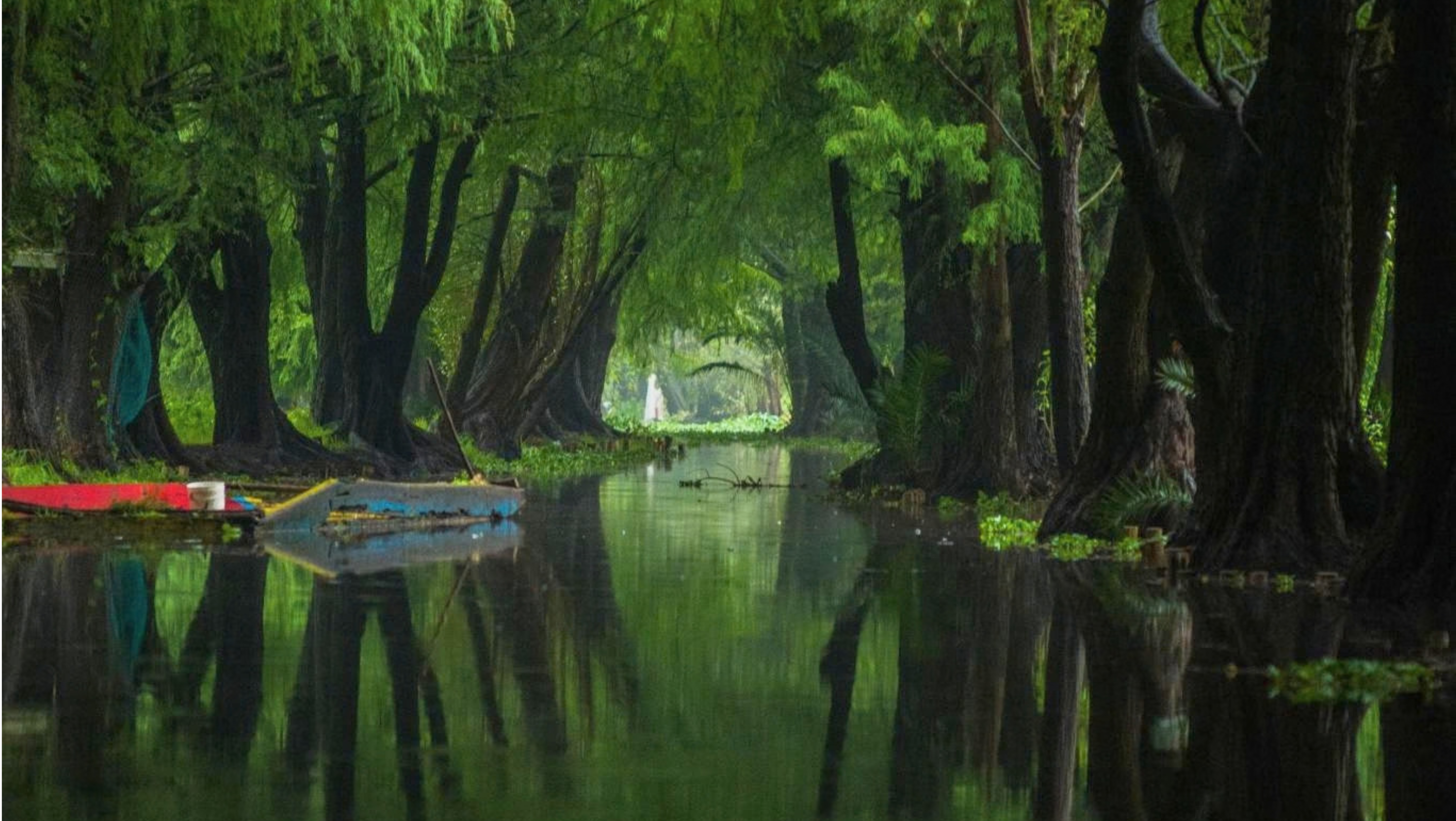
If you were to join one of the farmers – referred to as a ‘chinampero’ – in one of the traditional flat-bottomed wooden boats that are used on the canals of Xochimilco, you would see willow trees rise from the edges of the chinampas, together with a tree species called ‘Ahuejotes’. These magnificent trees are called the guardians of the chinampas, because their deep roots help to hold the chinampas together, while their branches protect crops from the wind.
You would also see the chinamperos cultivate maize, beans, squash, flowers and herbs in neat rows. From a boat, a chinampa looks like a little green island, alive with birds, insects and the scent of wet earth.
The chinampas are still used to grow food today and connect nature and livelihoods with knowledge passed from one generation to the next.
That connection between generations was central to Chinamperos, a short documentary directed by Mexican filmmaker Rodrigo Jardón to illustrate one of the case studies of the UNU-EHS Interconnected Disaster Risks report 2025. It was filmed in Mariana’s community of San Gregorio Atlapulco, one of Xochimilco’s 18 neighbourhoods, and Mariana was one of the locals interviewed.
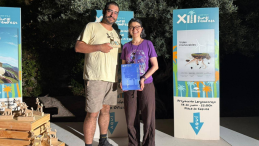
After the launch of the report, the voices of Mariana’s community travelled internationally. When the film was shown at film festivals in Mexico, Spain, Greece, Türkiye and the Czech Republic, reached the UN Climate Change Conference (COP 30) in Brazil, and received awards at the Rural FilmFest and Barcelona Film Festival, Mariana and her friends got inspired to keep up the momentum.
From a documentary to a new conversation
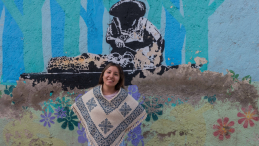
Mariana shared the short film on social media, after which she began receiving messages from people in her community, friends from high school and people she had not spoken to for years. Among those people were Karen and Abel.
The three of them had attended the same high school together. After graduation, their paths took them in different directions, until the documentary gave them a reason to reconnect. Eventually, they arranged a video call, the topic of which was Xochimilco.
“We kept talking about food, talking about culture, traditions, the patron saint festivals, and also the problems that our community has,” Mariana says.
The three friends began meeting regularly, thinking about projects, writing and having conversations connected to their different areas of research. “We started having more meetings and began organizing ourselves in a more formal way,” Mariana says.
Eventually these conversations led them to found the ‘Seminario Permanente de Estudios sobre Xochimilco’ (SEPEX). In English, its name translates to “Permanent Seminar on Studies of Xochimilco”, a community initiative that brings together different areas of knowledge to discuss Xochimilco, its culture and the challenges the land and its inhabitants face.
With that, the initiative became more structured, and the trio divided responsibilities according to what each of them could contribute and began developing projects around Xochimilco. The idea behind it is straightforward: creating a place where different perspectives can meet.
“The main objective is to create these spaces for dialogue.” – Mariana Páez
“We wanted to do projects, we wanted to write, we wanted to talk within the initiative and in line with our academic backgrounds,” she explains.
Creating space for Xochimilco’s voices
Mariana goes on to explain why a space for Xochimilco’s voices to come together is important: “The community has many things to say at the same time.” According to her, SEPEX is about bringing together perspectives that might otherwise remain separate, as she knows that the community itself contains many different experiences and things that need to be said.
It is an impact of the documentary that was not foreseen: how beyond carrying the story of the chinamperos and their traditional farming practices to audiences elsewhere in the world, it would indirectly also help Mariana and her former classmates to create a place where people can continue to talk about the territory themselves. A local place where their voices continue to be heard.
A story turned to legacy
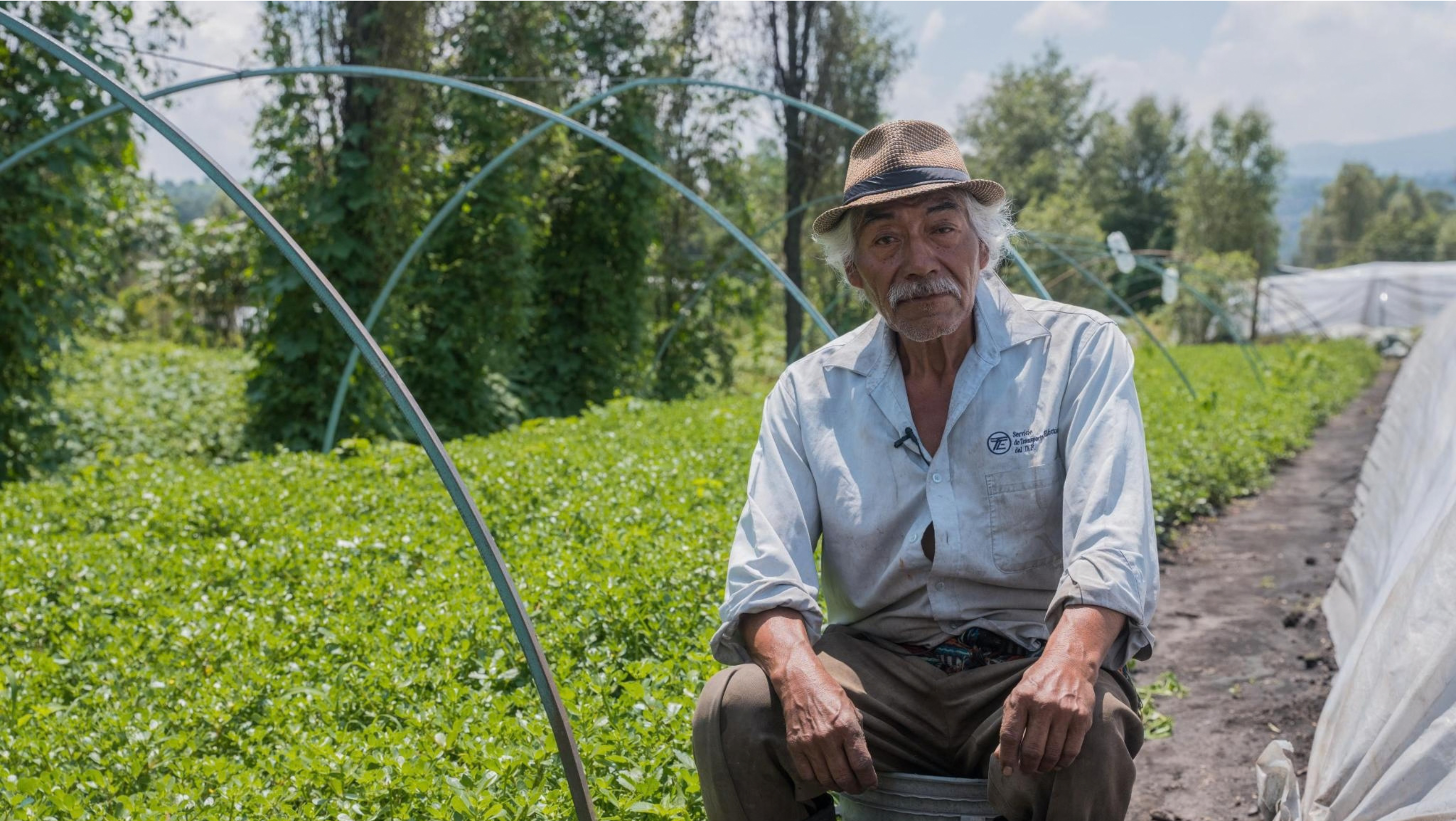
One of the people whose story became part of the documentary was Samuel Avelino, a chinampero who unfortunately passed away in 2026.
“It gives me a bit of nostalgia and sadness, the taste of those feelings” Mariana admits, as she goes on to explain that his death also made clear to her that the loss of a generation of people and their knowledge is already taking place.
“In the documentary, it was not something imaginary in the future, but it was happening, this loss of the generation of people who worked the land.” – Mariana Páez
Samuel was part of that generation. He was still able to see how his story was being shared, and Mariana remembers that he had posted a screenshot of a United Nations news publication featuring him on his Facebook page.
Because of the film, Mariana saw how people continued to remember Samuel and his legacy. His work appeared in university publications and news coverage. An image taken by the film’s director Rodrigo Jardón also continues to circulate, keeping his memory present.
A story that also touched her family
The documentary also brought Mariana’s own family into the conversation. She describes how different professions exist within the family, and how the film gave space to the voice of Eric Enríquez, a cousin who works as a chinampero:
“Within the same family, there is also this division of professions,” she says. “For me, it is important to be able to give this space to Eric’s voice, to be heard outside.”
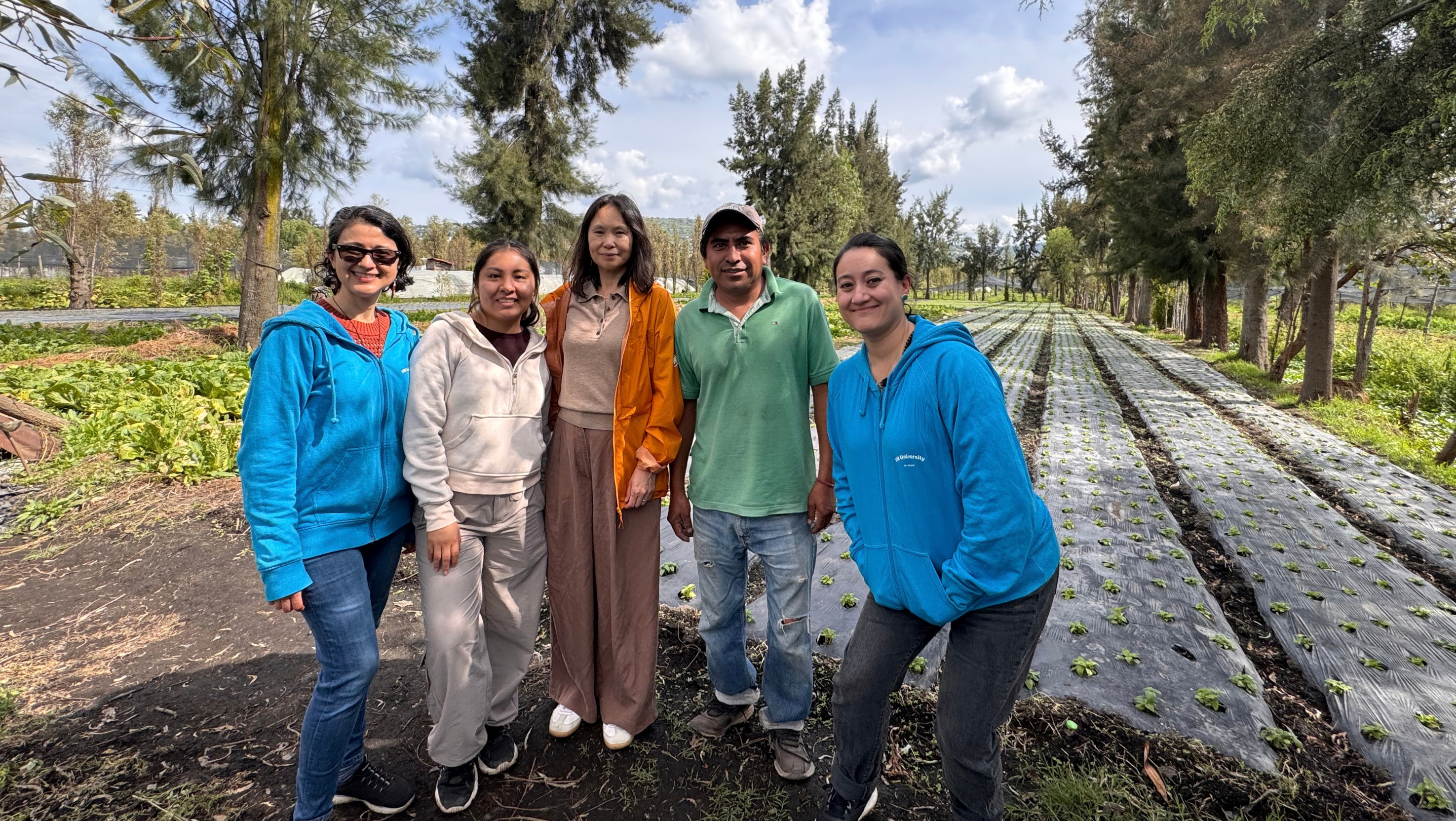
In September 2026, a delegation of UNU-EHS travelled to Xochimilco to 'bring the documentary home' and have a viewing together with the community. Residents, researchers, students, UN staff and city officials came together for this.
Beyond showing a film, the community was able to speak directly to decision makers and researchers about their culture, but also about their challenges in maintaining it.
Prof. Dr. Shen Xiaomeng, the director of UNU-EHS, described the mission as a chance to give something back. She met Eric during her trip and remembers the pride with which he spoke about his work. "Farmers' survival depends on how much society values them – but everyone else depends on those who grow our food," she explained.
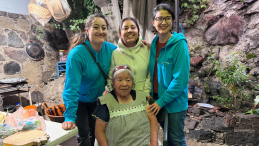
During this time, Mariana also revealed how much the documentary reminds her of her great grandmother, who died around the time the film was being made. “When Rodrigo came to see me for my testimonial for the documentary, I could not finish a sentence without crying,” Mariana recalls.
By the time the documentary came out, her great grandmother had died. The emotions she felt then have now turned into memories and are part of the story captured by the film: one of people and their way of life that is changing.
Thinking beyond the present
The idea behind Chinamperos was to make a large scientific question tangible: what does it mean to think in centuries rather than seconds? What does it mean to be a good ancestor?
In Xochimilco, generations have already left something behind. People inherited knowledge about how to cultivate the chinampas and inherited ways of working with the wetlands and producing food. Today, another generation is deciding what happens to that inheritance.
Mariana shared her vision on how there is value in people outside the community seeing its culture, its food and its ways of life. She added there is also value in the conversations that happen among the people who live there, which resulted in the creation of SEPEX.
She describes the experience with a simple phrase.
“I feel very fortunate.”
__________
Interconnected Disaster Risks is a science-based report series designed to be accessible to the general public through storytelling and human interest films. First released in 2021, it has a different topical focus for each edition, with the aim to shed light on the interconnections that are at the root of today's global challenges, as well as possible solutions.