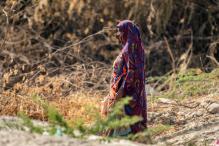
Rapid change in the Arctic system is altering land-ocean linkages. Yet, estimates of the changing carbon fluxes and cycling across these inherently linked systems—the land, the ocean, and the rivers that connect them—are poorly constrained, increasing uncertainties in our understanding and modeling of their impacts on coastal and ocean biology and biogeochemistry. Observations from different platforms are necessary to explore this rapidly transforming ecosystem. Within this framework, high-resolution remote sensing from airborne and satellite platforms provides an unparalleled capability to capture these biogeochemical gradients at multiple scales across the Arctic land-ocean continuum.
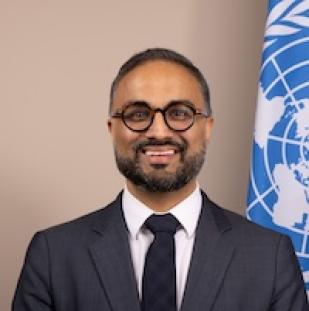
In this Science Talk, Prof. Maria Tzortziou, Lead of the Research, Development, and Innovation Pillar at UNU-Hub R-SIRUS, will discuss results from her recent field expeditions in the coastal Arctic, including optical and biogeochemical measurements collected along highly dynamic river and coastal systems in collaboration with local Alaskan communities. She will also discuss new approaches to link field measurements to satellite remote-sensing observations. Finally, she will provide an update on the new NASA Earth Venture Suborbital FORTE Mission she leads. Formally endorsed as an official United Nations Ocean Decade Project by the UNESCO Intergovernmental Oceanographic Commission, FORTE is designed to quantify changes in the coastal Alaskan Arctic ecosystem through multi-platform observing technologies and strong community and international partnerships.
You may watch the talk on the UNU-INWEH YouTube channel (no registration required).
Speaker
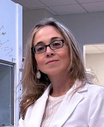
Lead, Research, Development, and Innovation Pillar,
United Nations University Hub (UNU-Hub R-SIRUS)