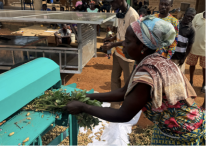


Harare, Zimbabwe, 10 March 2026 — Leading policymakers, scientists, development partners, and practitioners gathered in Harare for a two-day Science–Policy Dialogue titled “Climate-Resilient Agrifood Systems Transformation in Zimbabwe.” The dialogue served as a platform to bridge science, policy, and practice, bringing together representatives from government, United Nations agencies, academia, the private sector, and civil society to explore evidence-based solutions for strengthening Zimbabwe’s agrifood systems in the face of climate change. The event was co-organised by the United Nations University Institute for Water, Environment and Health (UNU-INWEH) and the Sustainable and Healthy Food Systems – Southern Africa Community of Practice (SHEFS-SA CoP), in collaboration with the Ministry of Lands, Agriculture, Fisheries, Water and Rural Development, Government of Zimbabwe, and the University of Zimbabwe.
The dialogue built on the priorities outlined in Zimbabwe’s Agriculture, Food Systems and Rural Transformation Strategy 2 (AFSRTS 2, 2026–2030), which emphasizes food and nutrition security, agricultural competitiveness, climate resilience, and institutional transformation. Effective implementation of the strategy, however, requires sustained collaboration among policymakers, researchers, practitioners, and development partners.
The meeting responded to this need by exploring the nexus between water resource management, climate-resilient agriculture, digital innovation, and sustainable food systems, with particular attention to the needs and resilience of smallholder farmers and rural communities

H.E. Adler Aristilde, Ambassador of Canada to Zimbabwe and Chair of the HeforShe Movement delivering his opening remarks.In his opening remarks, His Excellency Adler Aristilde, Ambassador of Canada to Zimbabwe and Chair of the HeForShe Movement, noted the dialogue’s timely alignment with International Women’s Day.
“We see incredible innovation in climate adaptation when women have access to land and resources,” said Ambassador Aristilde. He further highlighted that the 2026 theme of World Water Day, “Water and Gender”, often captured by the tagline “Where Water Flows, Equality Grows”, underscores how the global water challenges disproportionately affect women and girls. He emphasized that women’s leadership in water management, conservation, and policymaking is essential to achieving sustainable and equitable water and food systems. sustainability, particularly as water resource management and irrigation are key enablers of resilient agriculture.
During the meeting, participants examined strategies to strengthen climate resilience in the face of increasing climate variability and recurrent droughts, which continue to expose the vulnerability of Zimbabwe’s predominantly rain-fed agricultural systems. Discussions underscored the potential of indigenous and climate-resilient crops, particularly small grains such as sorghum, millet, and finger millet, known for their drought tolerance and high nutritional value, to serve as key pillars of diversified and resilient agrifood systems.
Women were recognized as central actors in Zimbabwe’s agrifood systems, particularly in small-grain production, post-harvest processing, and local food markets. However, they continue to face persistent barriers to accessing land, water, finance, technology, and extension services. By integrating a stronger gender lens into agrifood systems transformation, irrigation development, and digital innovation, the dialogue sought to ensure that climate adaptation efforts are both effective and equitable, while fully leveraging women’s knowledge, leadership, and innovation capacities.
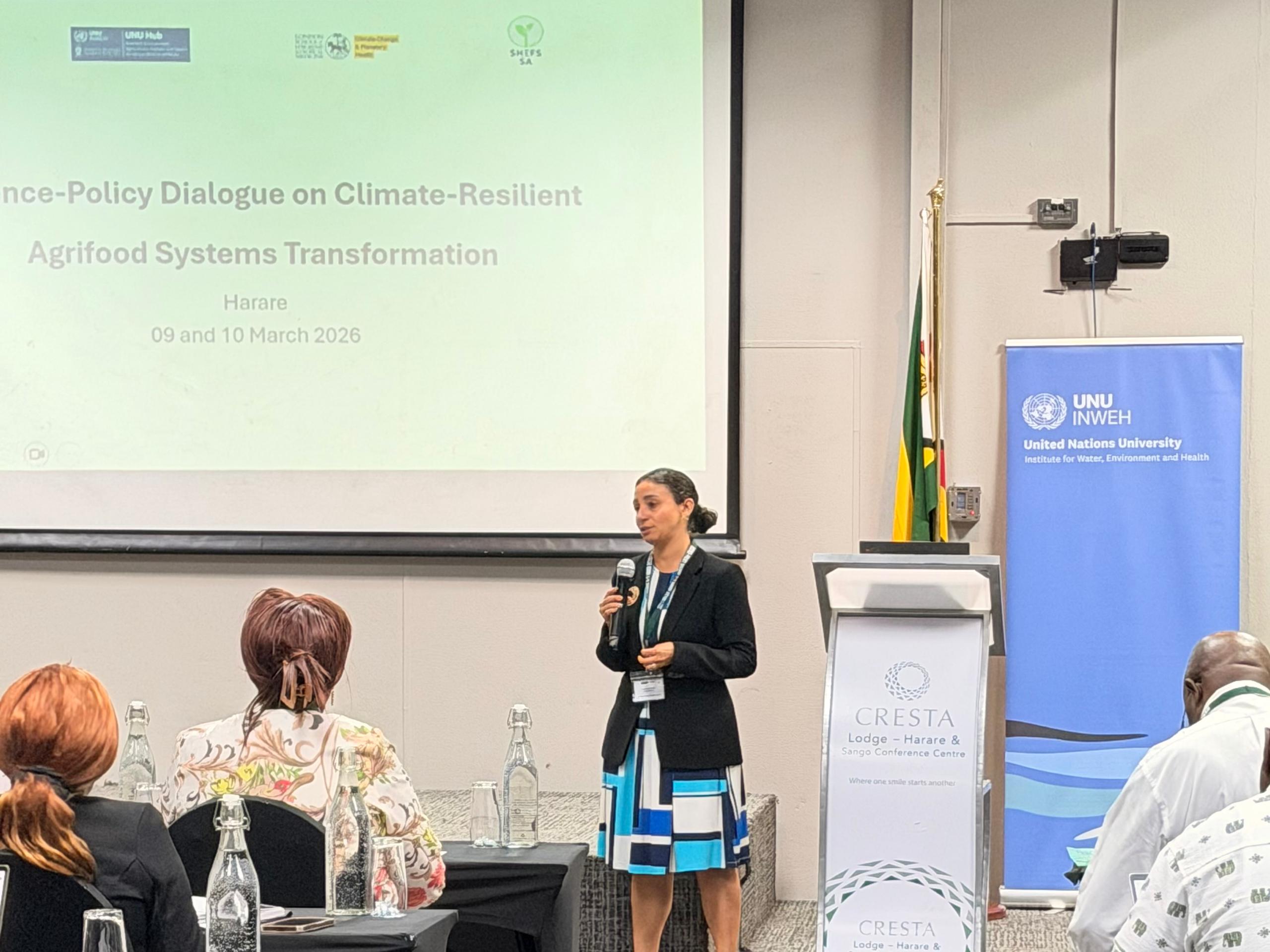
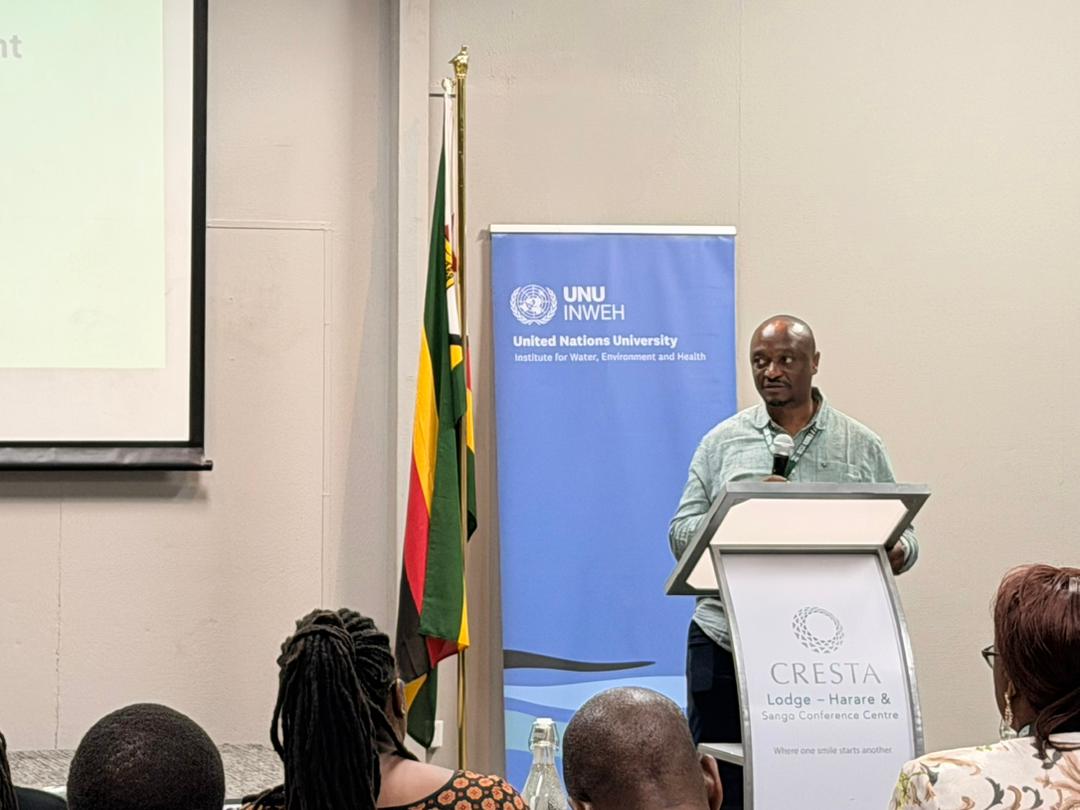
Sogol Jafarzadeh, UN and Government Relations Coordinator and Capacity Building and Gender Focal Point for Africa at UNU-INWEH and Prof. Tafadzwa Mabhaudhi, Executive Director of UNU Hub on REACH-AFRICA delivering opening remarks.
In her opening remarks, Sogol Jafarzadeh, UN and Government Relations Coordinator and Capacity Building and Gender Focal Point for Africa at UNU-INWEH, highlighted the Institute’s role in bringing together diverse stakeholders to advance science-informed solutions for agrifood systems transformation. “UNU-INWEH is proud to serve as a convener at the science–policy interface, bringing together researchers, policymakers and development partners to foster dialogue, share knowledge and support evidence-based action for climate-resilient agrifood systems,” she said. Marking International Women’s Day, she further emphasized the importance of inclusivity in shaping sustainable food systems. “Empowering women and ensuring their meaningful participation across agrifood systems is essential to building more inclusive, resilient and sustainable food systems”.
Reflecting on the dialogue’s outcomes, Professor Tafadzwa Mabhaudhi, Executive Director of the UNU Hub on Resilient Environment, Agriculture, Climate and Health for Africa (REACH-AFRICA) at the University of Pretoria, stressed the urgency of coordinated action. “In the face of intensifying droughts, heatwaves, and floods, experts and policymakers must come together to identify actionable strategies for advancing sustainable agriculture, food and nutrition security, and healthier communities” he noted. "The dialogue demonstrates that collaboration across science, policy, and practice can drive meaningful impact. Bold, evidence-based action today will help secure resilient and inclusive food futures for all.”

Prof. Maxwell Mudhara, Professor of Agricultural Economics, University of KwaZulu-Natal (SHEFS-SA).
Prof. Maxwell Mudhara, Professor of Agricultural Economics, University of KwaZulu-Natal (SHEFS-SA), who facilitated this 2-day workshop, highlighted that “the dialogue underscored that achieving climate-resilient agrifood systems transformation in Zimbabwe requires a coordinated transdisciplinary and multisectoral approach. It emphasized the importance of building on existing plans and strategies while recognizing the interconnected roles of women and youth, innovation and science, effective water management, and climate finance in driving sustainable and inclusive transformation.”
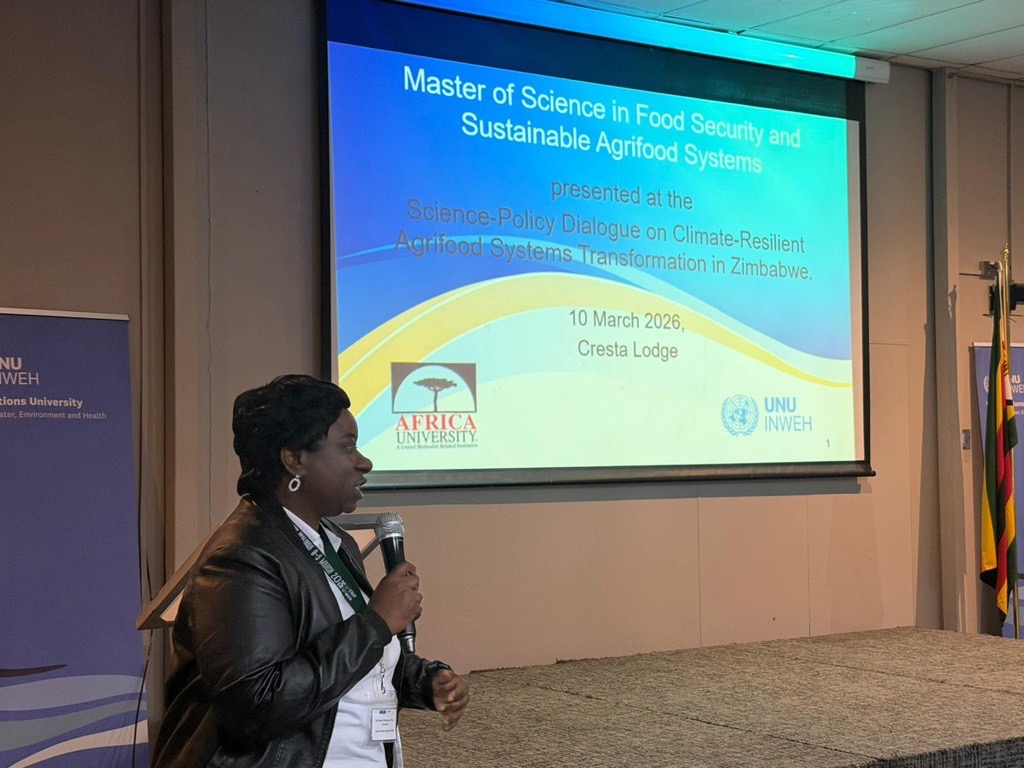
Dr. Denice Chikwanda, Head of the Department of Agriculture and Environmental Sciences at Africa University presents on the joint Master of Science developed with UNU-INWEH on Food Security and Sustainable Agrifood Systems.
The programme also featured a dedicated session on Zimbabwe’s Agrifood Systems Transformation Strategy 2, focusing on implementation pathways, coordination mechanisms and performance monitoring frameworks. During this session, a new policy brief published by UNU-INWEH, in collaboration with authors from the UNU Hub on REACH-AFRICA at the University of Pretoria, the London School of Hygiene & Tropical Medicine, the Ministry of Lands, Agriculture, Fisheries, Water and Rural Development of Zimbabwe, and the International Water Management Institute, was shared with participants. Titled “Digital Agriculture and AI for Climate-Resilient Smallholder Farming in Zimbabwe,” the brief highlights how artificial intelligence and digital technologies can support smallholder farmers and accelerate climate adaptation in the agricultural sector. Its key findings were presented and discussed with participants during the session.

Sogol Jafarzadeh, UN and Government Relations Coordinator & Gender Capacity Building Focal Point for Africa (UNU-INWEH) and H.E. Adler Aristilde, Ambassador of Canada to Zimbabwe and Chair of the HeforShe Movement.
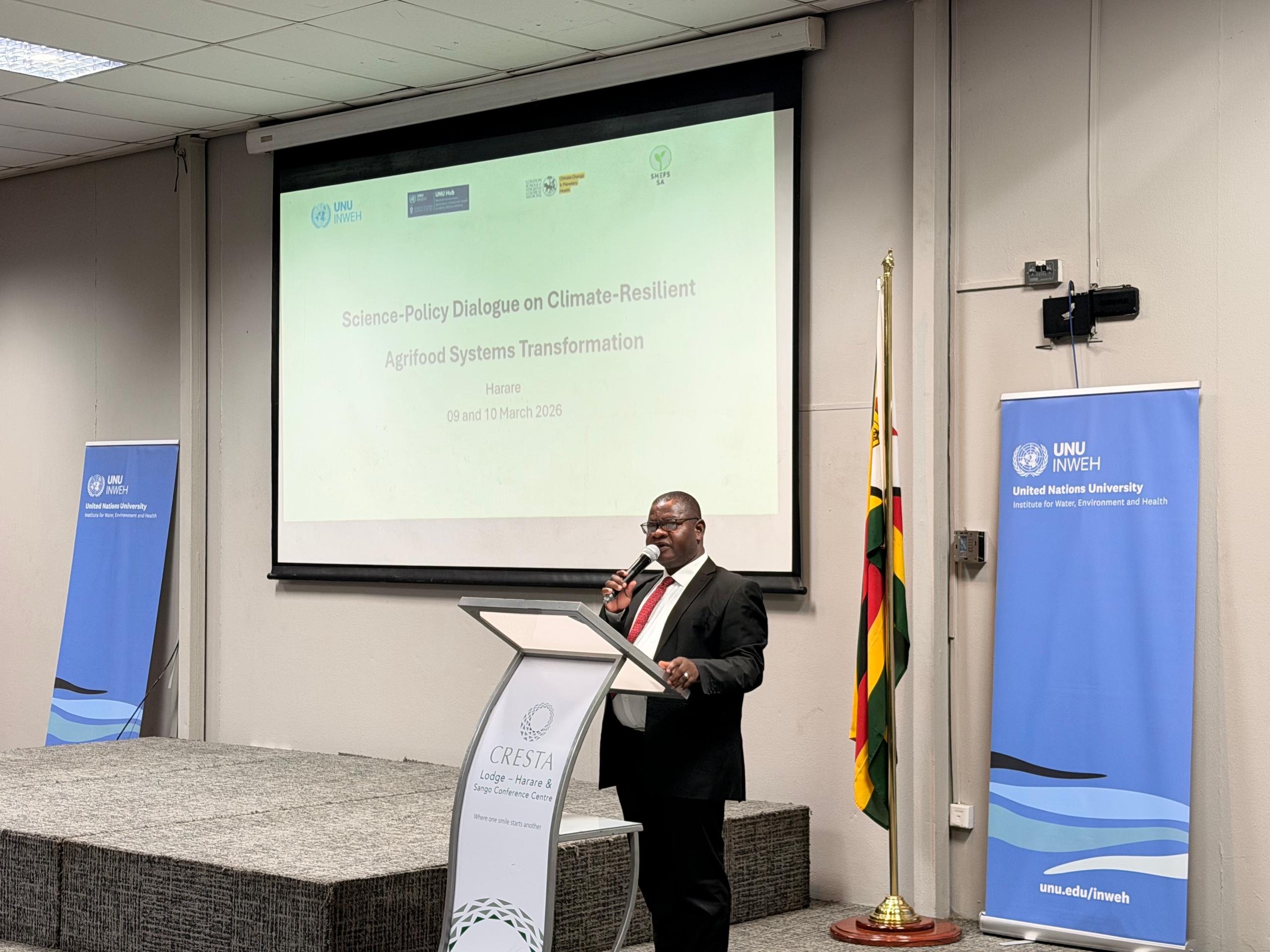
Professor Obert Jiri, Permanent Secretary in the Ministry of Lands, Agriculture, Fisheries, Water and Rural Development, delivered the keynote address during the high-level closing session.
In his remarks, he underscored the vital role of organic fertilisers in restoring soil health and highlighted the importance of science-driven, evidence-based policymaking to support the transformation of climate-resilient agrifood systems. He also called for stronger engagement of young people in harnessing artificial intelligence for agricultural innovation. “We must embrace AI solutions and provide young people with the right support and enabling environment to develop AI-based approaches for addressing climate challenges,” he said.
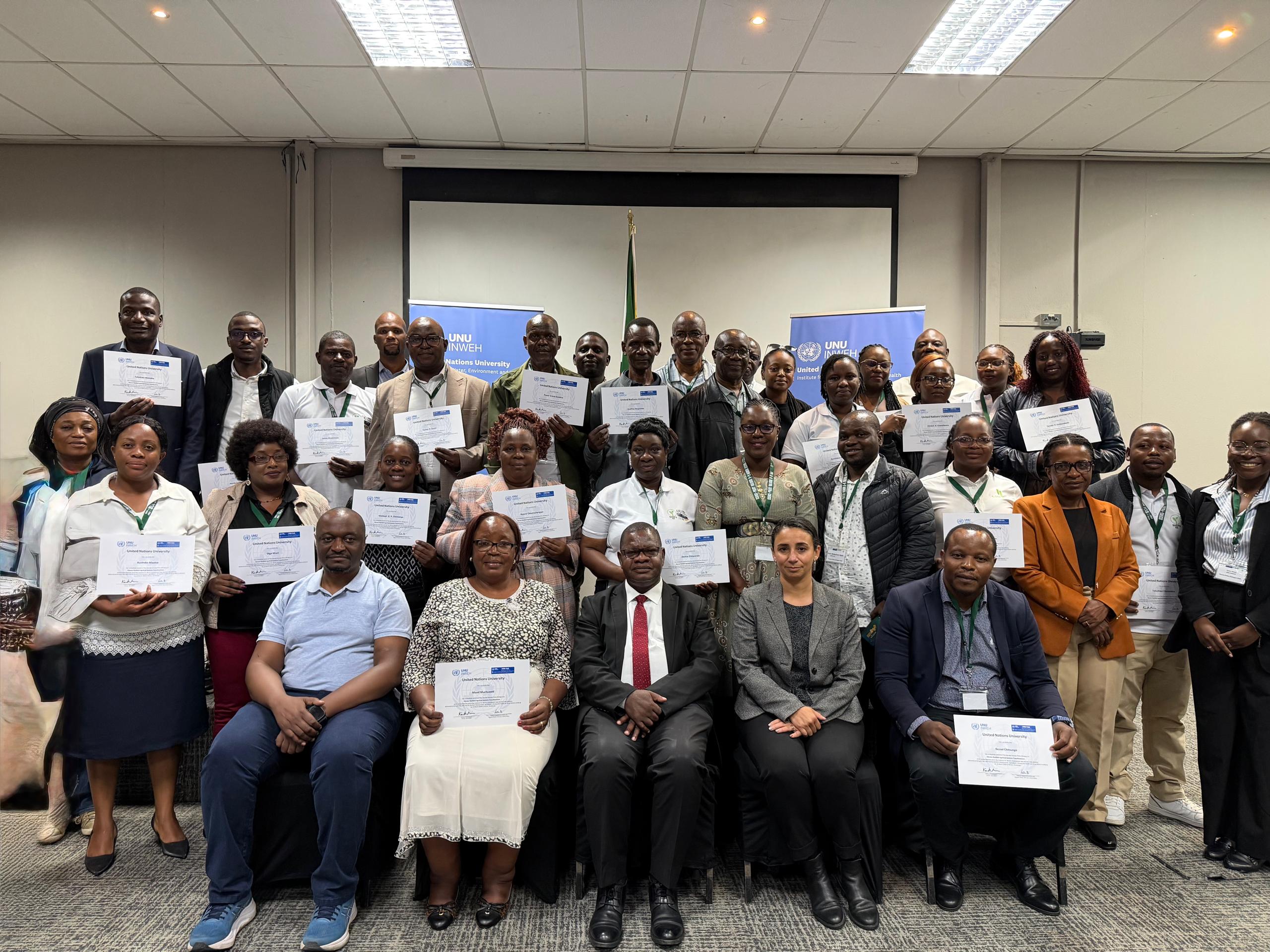
Participants proudly display their certificates alongside Prof. Dr. Jiri, Permanent Secretary of the Ministry of Lands, Agriculture, Fisheries, Water and Rural Development, following the successful completion of the Science–Policy Dialogue.
The Dialogue concluded with the presentation of certificates to participants and a renewed commitment to advancing a more climate-resilient, inclusive, and gender-responsive agrifood system in Zimbabwe. Building on the priorities outlined in Zimbabwe’s Agriculture, Food Systems and Rural Transformation Strategy 2 (AFSRTS 2), stakeholders agreed to carry forward the dialogue’s key recommendations into ongoing policymaking, programmes, and research collaborations. Priority areas identified included investment in irrigation, strengthening small grains value chains, and scaling digital agriculture solutions to support smallholder farmers.