

Lab-to-market is a complex path.
You may see in our feed that many of our fellows are making exciting discoveries about organisms and molecules with astounding effects on very real problems, but these observations mostly come from laboratory conditions.
The truth is that, for biotechnological theory to have an impact on sustainable development, it has to be instrumentalized and scaled to be applicable in real-life situations, and that is a science in itself.
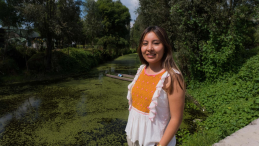
The less-traveled path of turning an organism into something that can be commercialized is lined with setbacks, but it is just as important as the discovery of potential. This is what Argentine fellow María Jesús Lami did during her fellowship at Estación Experimental del Zaidín, in Granada, Spain, where she tested ways to formulate a locally isolated strain of the Plant Growth Promoting Bacterium Sustzeromonas that could actually help farmers when applied.
PGPMs help reduce demand for agrochemicals by interacting with plants and soil to improve nutrient and disease resistance. But they have their own ecological dynamics once introduced to the agricultural system.
María Jesús' results show that substrate, plant age, and method of inoculation all have effects, which underscores the importance of local agrobiotechnological R+D capabilities and thorough testing.
We want to thank Maria Jesus' supervisor, Julian Dib, from PROIMI, CONICET, and her mentor in Granada, Manuel Espinosa Urgel, for their continuous efforts towards applicability.