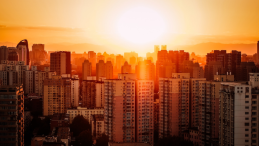


While large parts of the world experience another summer of record-breaking temperatures and even our oceans are hotter than ever, it is impossible to ignore the fact that where you live can make extreme heat much more dangerous. Cities are often several degrees warmer than their surrounding rural areas because buildings, roads and concrete absorb and retain heat, while trees and vegetation that provide cooling are scarce. This phenomenon is known as the urban heat island (UHI) effect.
With consequences being far from theoretical, an early analysis reported by New Scientist estimated that the June 2026 European heatwave may have contributed to between 17,000 and 25,000 deaths, with around 20,000 considered the most likely estimate. While the figure is preliminary, it highlights the immense human toll that extreme heat can inflict in just a matter of days.
What is an urban heat island?
An urban heat island is a built-up area that is significantly warmer than nearby rural landscapes. Dark surfaces such as asphalt and rooftops store heat during the day and slowly release it at night, while a lack of trees reduces shade and cooling through evaporation. “Waste heat” from vehicles, industry and air conditioning further raises temperatures while a cooling effect at night is hindered by the dense development and lack of ventilation.
The difference is especially noticeable after sunset. While rural areas cool relatively quickly, cities often remain uncomfortably warm overnight. These “tropical nights” where temperatures do not drop below 20°C prevent people from recovering from daytime heat and increase the risk of heat exhaustion, cardiovascular stress and death, especially among older adults, young children and people with chronic illnesses.
Why do urban heat islands matter and are they becoming a bigger problem?
Urban heat islands have existed for long, but climate change is making them much more dangerous. Rising global temperatures cause cities to experience hotter days and warmer nights than ever before.
According to the World Weather Attribution (WWA) initiative, the June 2026 heatwave across Western Europe would have been virtually impossible without human-induced climate change. The researchers found that the extreme daytime temperatures were made more than 10 times more likely, while the exceptionally hot nighttime temperatures are now around 100 times more likely than they were just a few decades ago. This matters because such factors in combination with the urban heat island effect worsen exactly the prolonged heat exposure and insufficient nighttime cooling situations that are so dangerous to human health.
According to the WHO, heat consistently causes more weather-related deaths in Europe than any other climate hazard, and it is not for nothing that extreme heat is often called the "silent killer" because its impacts are less visible than floods or storms.
Urban heat islands also deepen inequalities. Low-income neighbourhoods often have fewer parks and trees, but more paved surfaces, which often leaves residents with fewer options to escape dangerous temperatures. People who live in such places or who work outdoors are especially vulnerable.
What can cities do?
The good news is that urban heat islands are not inevitable. Cities can reduce their intensity through thoughtful planning and incorporating nature-based solutions into their urban planning.
Planting more trees, expanding parks, installing green roofs and walls, using reflective or lighter-coloured building materials and replacing unnecessary paved surfaces with vegetation can all help lower urban temperatures. Designing neighbourhoods that improve airflow and provide shade also makes cities more resilient.
A city like Paris, for example, has actively been trying to mitigate the heat island effect by making trees its allies in de-impermeabilizing about 40 per cent of Parisian territory and creating so-called “cool islands” – parks and other spaces in which the temperature can be between 2°C and 4°C cooler than elsewhere in the city. Paris has also invested in cleaning the Seine river and opened bathing zones with free access during summer.
Air conditioning can help reduce indoor temperatures and may be particularly important in settings with vulnerable populations, such as care homes and hospitals, or in areas where extreme heat is most intense. At the same time air conditioning raises outdoor temperatures even further. Because of that, investing in good planning in parallel to reducing emissions to not further worsen global warming is a more sustainable strategy in the long term.
Urban heat islands show that the way we build our cities can either amplify climate risks or help reduce them. Choosing the latter will become increasingly important while we move more and more towards extreme heat becoming the new normal in European summer months. For further reading, here are five other examples of cities leading the way in resilience, sustainability and inclusivity in the fight against climate change and five facts on unbearable heat to help explain how rising temperatures pose severe risks to human health.