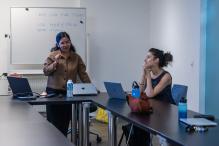


Many of our fellows nowadays are breaking through technological barriers and working to bring the latest technologies to the LAC region, but this time, we bring you a story of classic, old-fashioned, gritty lab work troubleshooting, the kind that everything else is built upon.
But first, here is a little context about RNA. Whenever a cell needs to do something, it emits a message coded in Ribonucleic Acid. These messenger molecules take the information from the DNA to the system where it will be executed. So RNA is all around us.
Viruses and pathogens also use RNA, so cells are packed with foreign RNA inhibitors.
RNA is a relatively unstable molecule because its instructions should be destroyed after reading to avoid overexpression.
So, working with RNA that needs to be pure, isolated, and uncontaminated is one of the most challenging endeavours in molecular biology.
On the other hand, you can now understand why the existing RNA in a sample is a real-time snapshot of all the invisible processes happening in an organism or cell. And this is particularly relevant for diagnosing parasitic diseases, like neurocysticercosis, which turn up in tests only when the parasite is well established and treatment is thus ineffective.
And that is precisely what fellow Lucia Garcia from IMPAM, in Buenos Aires, Argentina, wants to do with this disease, which is the leading cause of acquired epilepsy worldwide: to turn microRNAs into markers for timely disease diagnosis.
Now, you must have noticed the "micro" suffix. miRNAs are non-coding regulatory molecules that only have around 30 or so base pairs. They are tiny but can elude the body's defense mechanisms and are a good candidate for less-invasive diagnostic methods.
So, as part of the long development process of such diagnostic kits, Garcia went to the Vale Institute of Technology in Belem do Para, Brazil, to develop laboratory protocols that will allow her to start processing real patients' samples, no doubt relying on the latest sequencing and bioinformatics techniques, but only after being able to isolate and handle these tiny and elusive molecules of RNA.
After a good old-fashioned dose of trial and error in the lab, she got positive results, allowing her group to go on to the subsequent phases of this critical work. We thank her tutors and mentors in this fellowship, Drs. Marcela Cucher and Amanda Herreira Vidal for their commitment to this research.