


En 2025, les chiffres préliminaires de l’OCDE ont révélé une contraction historique de l’aide publique au développement : l’APD des membres du CAD est tombée à 174,3 milliards USD, soit -23,1 % en termes réels par rapport à 2024. L’aide bilatérale, l’aide humanitaire et les contributions multilatérales sont toutes en recul, ce qui affecte directement les capacités d’action dans plusieurs domaines clés de la transition écologique, notamment l’adaptation, la résilience, l’eau, l’agriculture et la biodiversité. Au-delà du constat budgétaire, cette évolution interroge l’état du multilatéralisme et les arbitrages désormais imposés à l’ensemble des acteurs.
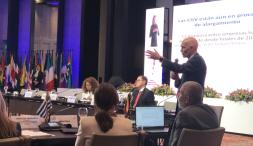
À partir de ces données, cette table ronde propose de discuter des conséquences concrètes de cette évolution pour les institutions internationales, les ONG et les pays partenaires.
La rencontre réunira :
- Eva Beuselinck, responsable de la division Policies and Networks à la Direction de la coopération pour le développement de l’OCDE, pour éclairer les grandes tendances de l’aide internationale ;
- Dr. Mboundor Diouf, chercheur associé à l'Université Paris 1 Panthéon-Sorbonne, spécialiste de l'économie du développement, des ressources naturelles, de l'énergie et du développement durable en Afrique, qui apportera la perspective d'économies subsahariennes partenaires directement concernées ;
- Alisée Pornet, conseillère auprès de la Direction à l’AFD et co-autrice de Géopolitique du développement, sur l’évolution et la diversification des instruments de financement ;
- Gaëtane Wicquart, directrice 3ZERO chez Acted, sur les conséquences opérationnelles pour les acteurs de terrain.
Organisée par le Bureau de Paris de l’Université des Nations Unies, et facilitée par sa Directrice Sabine Becker-Thierry, la discussion croisera lecture institutionnelle, expérience de terrain et enjeux de financement pour mieux comprendre ce que la baisse de l’aide change pour la coopération internationale et la transition écologique.