Key messages
• Exploration, technology development and exploitation are distinct yet institutionally entangled. Exploration contracts can include extraction trials, national programmes combine mining technologies with climate and biodiversity work, and sustained public investment creates pressure to continue. The distinction must be maintained deliberately.
• What remains unknown carries policy weight. The IPBES concept of “maintenance of options” recognises biodiversity’s contribution to keeping future possibilities open, including benefits that are not yet known. This gives value to the deep ocean in decision-making processes which must account for long-term potential.
• The design of an assessment can shape its conclusion. Short time horizons, average values and unstated comparators can make a case appear stronger or weaker than the evidence allows. The aims of assessments should be multi-faceted in nature, and the interests involved must be transparent.
• Access to data is not the capacity to use it. Equitable participation in deep-ocean governance depends on knowledge infrastructures and institutional capacity, not only on open repositories.
• Cooperation is tested by its outcomes. Openness coexists with security concerns and national interests; international agreements gain substance when they produce decisions that serve interests shared beyond any single state.
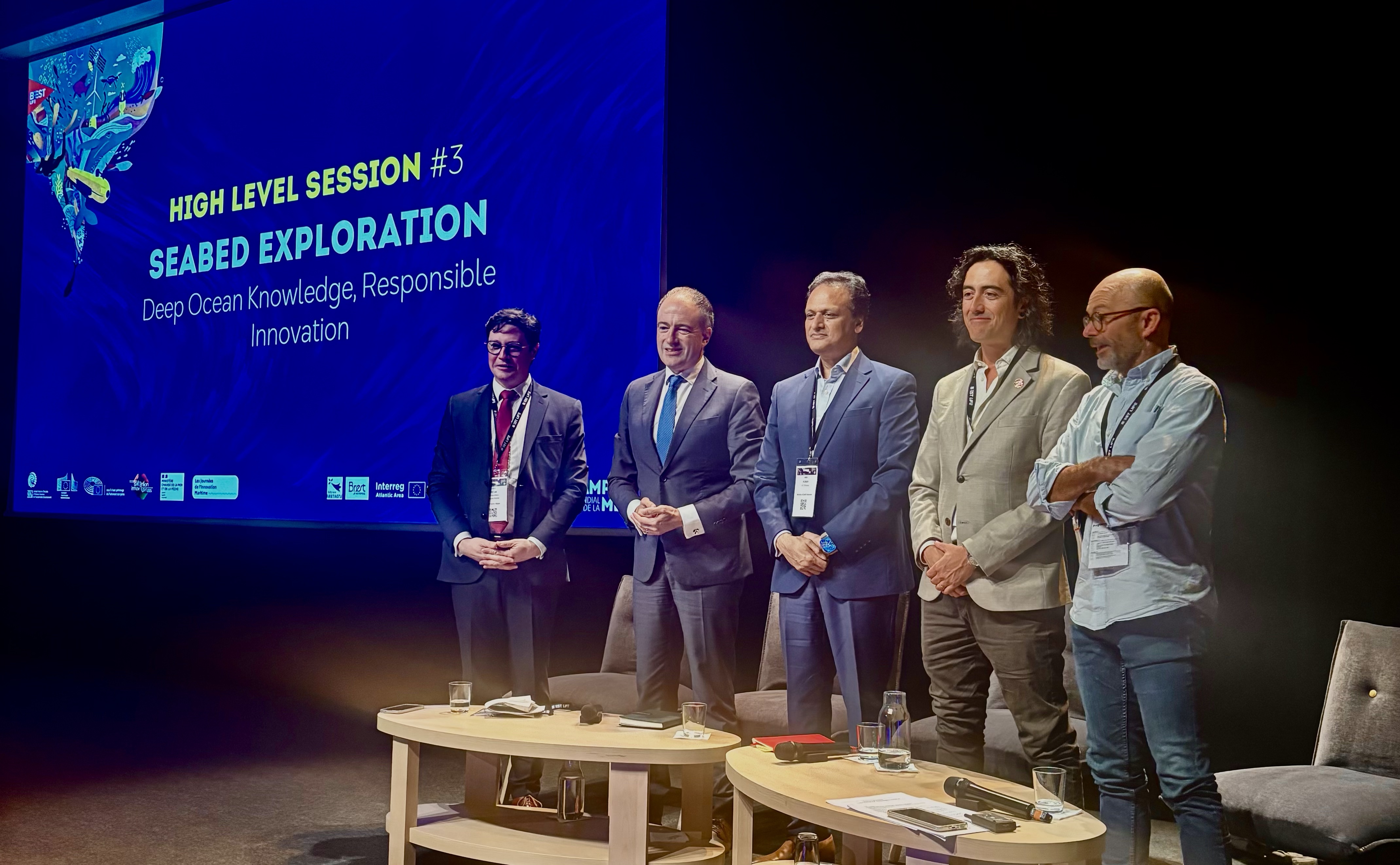
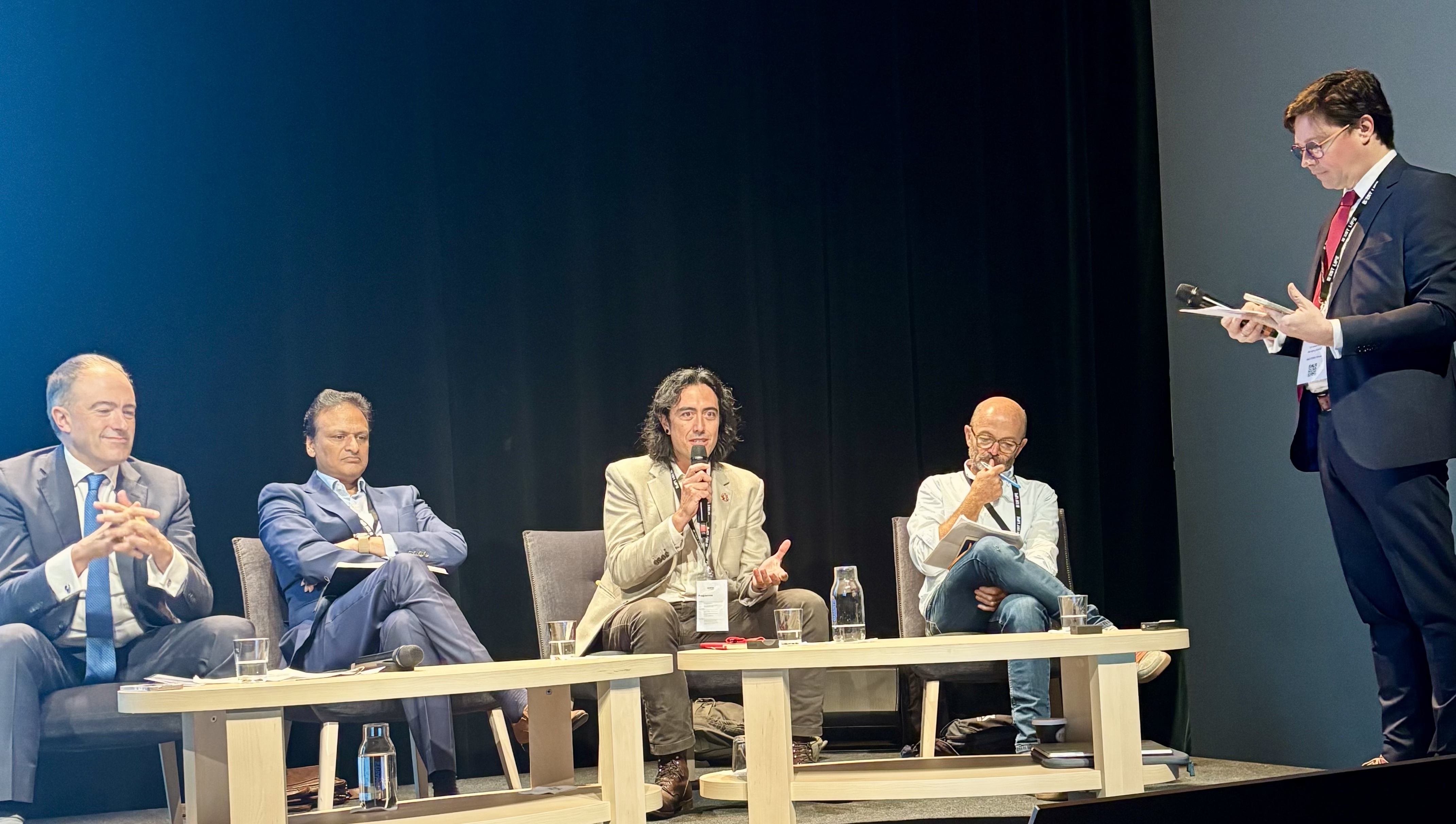
Autonomous and remotely operated vehicles in the ocean, seafloor observatories, instrumented cables and data infrastructures in the deep sea are opening some of the least studied environments on the planet. Greater access raises a number of questions that technology alone cannot answer: what should this knowledge be used for, how do we assess equitable benefits, and who is equipped to decide? The technological, environmental and political aspects of deep-sea exploration for different purposes, including research, mining and geopolitical interests, were discussed at the high-level session “Seabed Exploration - Deep Ocean Knowledge, Responsible Innovation”, held on 8 October at Sea Tech Week, an international event on marine science and technology that took place in Brest, France, 6-8 October 2026.
The panel’s scope was broader than seabed mining, covering exploration, observation, data and cooperation. It extended questions examined the previous day at the workshop “Deep Sea Mining - Environmental Impact Assessment and Mitigation”. Read together, the two sessions suggest that technological reach must be matched by the scientific, economic, legal and political capacity to interpret what is found, preserve future choices and negotiate how responsibilities and benefits are shared.
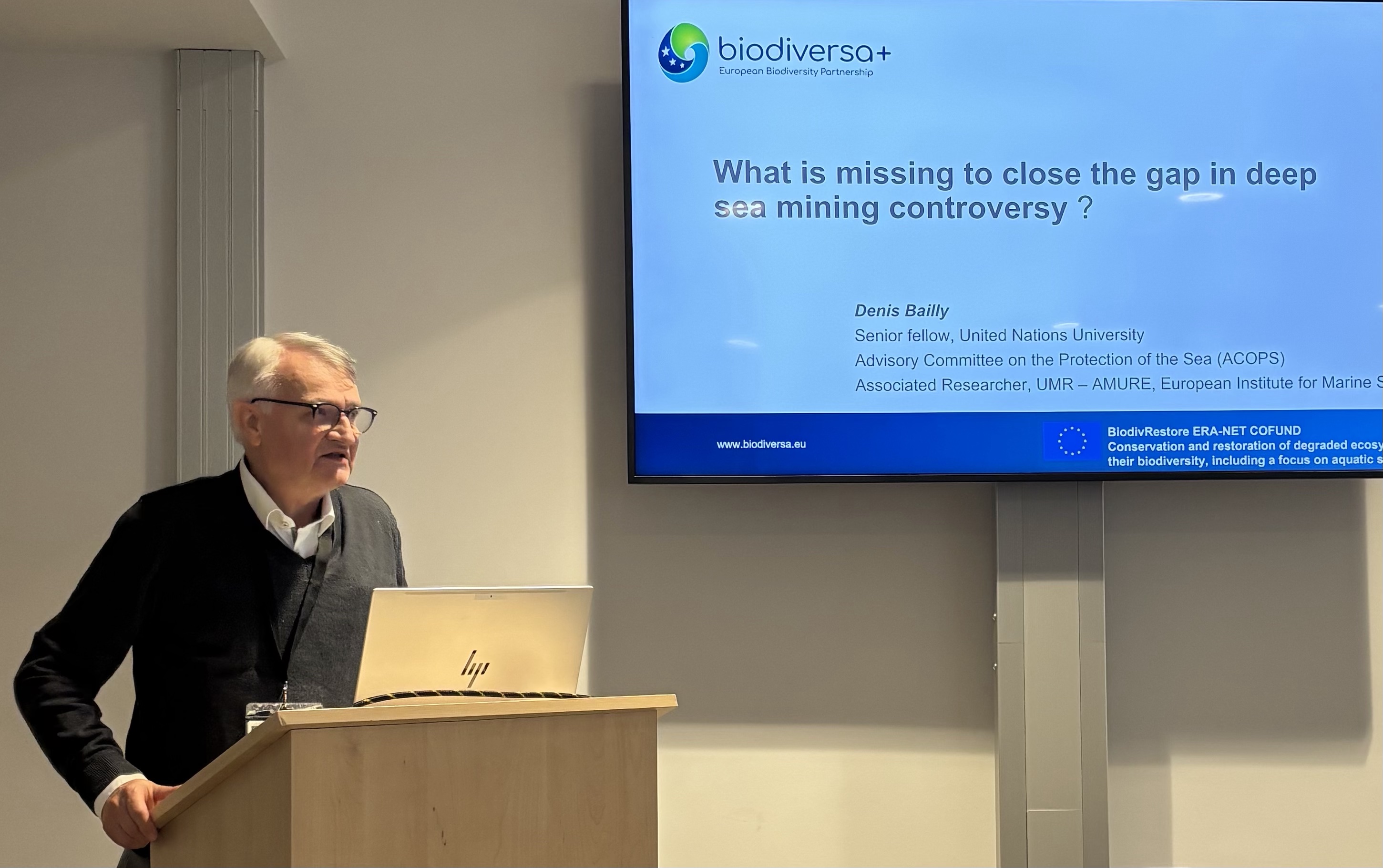
The workshop was organised by India’s National Institute of Ocean Technology (NIOT), where UNU Paris Senior Fellow Denis Bailly offered a political-economy reading of the deep-sea mining controversy; while the high-level session featured Dr Jack O’Connor, Senior Scientist at the UNU Institute for Environment and Human Security (UNU-EHS), alongside Dr Srinivasa Kumar, Secretary of India’s Ministry of Earth Sciences; Éric Banel, France’s Director General of Maritime Affairs, Fisheries and Aquaculture; and Pierre-Marie Sarradin of Ifremer (Institut français de recherche pour l'exploitation de la mer), France's national public institute for marine science and ocean research.
1. Three decisions that tend to be bundled together
Research infrastructure can serve several objectives, from understanding ecosystems to developing subsea technologies. These purposes can also become bundled. Yet the discussion repeatedly highlighted the importance of distinguishing among three separate debates: whether to invest in knowledge generation, whether to develop technological capabilities, and whether to pursue commercial exploitation.
As Pierre-Marie Sarradin noted, scientific exploration and pilot extraction studies increasingly coexist within programme frameworks. Scientific exploration, technology testing and commercial exploitation therefore need to be distinguished within programmes that may connect them. National initiatives could bring ecosystem research, technological development and resource assessment under a common framework. India’s Deep Ocean Mission, as Kumar described, has six verticals including submersibles, underwater robotics and mining technologies alongside climate services and biodiversity conservation.
This convergence can create an assumption that progress in one domain legitimises progress in another. Yet technological feasibility alone does not answer environmental, legal, or societal questions. France's call for a precautionary pause on exploitation reflects this distinction. The current scientific understanding built on knowledge, protection, security and international cooperation, as Éric Banel stressed, remains insufficient to fully assess the environmental implications of seabed mining.
The discussion also pointed to the influence of path dependency. As Bailly observed, decades of public investment can create momentum behind technological trajectories whose commercial viability remains uncertain. Public investment in deep-ocean science and engineering may generate important knowledge and innovation regardless of whether mining proceeds. Conversely, demonstrating technical capability does not resolve broader questions about environmental risk or public benefit.
Maintaining these distinctions is therefore essential. Clarity regarding which decisions have been made, and which remain open for discussion, is a prerequisite for public accountability.
2. What is not yet known has policy value
One recurring theme was that uncertainty should not be viewed simply as a lack of information but as a form of knowledge in itself.
Drawing on UNU-EHS' work on the relationship between ecosystem resilience and human resilience, O’Connor emphasised that the deep ocean’s significance extends beyond functions already documented by science, not limited to the storage and transport of heat and carbon. Through a systemic-risk lens, nature supports adaptation to climate change and resilience to extreme events. Direct observation leaves substantial uncertainty about the full extent of its contributions.
The perspective resonates with the “maintenance of options”, a category of nature’s contributions to people recognised by the Intergovernmental Science-Policy Platform on Biodiversity and Ecosystem Services (IPBES), which refers to the capacity of ecosystems, habitats, species and genotypes to keep options open for future quality of life. The deep ocean, in this reading, holds possibilities that may become apparent only to future generations. Some are already visible: deep-sea observation can support tsunami early warning, and life under extreme conditions extends understanding of what biology makes possible.
The discussion highlighted that uncertainty operates in two directions. It concerns not only the impacts of human activities, but also the possibility of losing ecological functions before they are understood. Denis Bailly similarly noted that some societal contributions of deep-sea ecosystems, including those associated with nodule fields, may remain unidentified.
From this perspective, present knowledge gives an incomplete account of value. Where change may be irreversible, assessments should make that uncertainty explicit, particularly when consequences extend beyond those making the decision.
3. The time horizon can determine the answer
Many of the debates surrounding the deep ocean are shaped by competing timescales. Ecological systems evolve over decades or centuries, while political decision-making, investment cycles and public funding frameworks tend to operate over much shorter horizons. How a question is framed in time can therefore significantly influence the conclusions reached.
Drawing on UNU’s work on ecosystem resilience and policy integration, O’ Conor highlighted the disconnect between ecological timescales and political horizons. In cost-benefit terms, he noted, nature-based approaches tend to fare poorly against engineering options, whose benefits can be specified in amount and timing. In the deep ocean, where processes unfold more slowly still, this deserves further research and attention when assessing the impacts of ecological degradation or the benefits of protective measures.
The discussion suggested that similar tensions shape decisions about scientific infrastructure and observation systems. Kumar illustrated the same tension in funding terms through seafloor cables: their value to tsunami warning offers an immediate societal benefit, while their contribution to understanding ocean circulation over decades is harder to demonstrate in the short term. This points to a broader challenge: research investments often generate some of their most important returns only over time. Strengthening links between observation systems and end users, including fishers, ports and coastal communities, can help make these long-term investments more tangible and relevant.
The question of timescales also extends to economic evaluation. Bailly drew attention to the uncertainties embedded in comparisons between seabed extraction, terrestrial mining, recycling, resource efficiency measures and alternative supply strategies. He questioned whether available modelling provided a sufficiently robust basis, given assumptions about mineral composition, processing, prices and equipment. Reliance on average values can obscure variability and the sensitivity of economic feasibility to underlying assumptions. His presentation also raised changing mineral demand and the environmental implications of operating at scale. These concerns identify uncertainties to examine rather than establish a verdict on profitability.
The structure of an assessment therefore deserves as much scrutiny as its results: which benefits are counted, over what period, how uncertain losses are represented, which alternatives serve as comparators, and whether variability is tested rather than averaged away. An aggregate figure can also obscure who benefits and who bears the risks.
4. Sharing data is necessary; sharing the capacity to use it goes further
A recurring theme throughout the discussion was that no single institution or country can generate the knowledge needed to understand the deep ocean alone. Data sharing has therefore become a foundational principle of contemporary ocean science, enabling a more comprehensive understanding of ecosystems that span national boundaries and exceed the observational capacity of any individual actor.
Sarradin stressed the FAIR principles: findable, accessible, interoperable, reusable, as the basis for a global picture of a domain too vast for any single actor. Similar commitments were reflected in the discussion of international research cooperation, including France's support for broad data accessibility and India's efforts to open costly research infrastructure, including research vessels, to international scientific collaboration. Together, these initiatives reflect a growing recognition that shared knowledge is essential for addressing shared challenges.
Yet the discussion repeatedly highlighted that access to data is only part of the equation. Drawing on UNU’s role in connecting knowledge from research communities with policy, O’Connor argued that data must be discoverable, interpretable and connected to decisions. Uneven and inconsistent ecological information already complicates monitoring of biodiversity and sustainable development objectives in shallow marine environments; the deep sea adds further challenges. Understanding ecosystem condition, not only ecosystem loss, but also matters for assessing climate-related loss and damage, a major concern for vulnerable and developing countries. The ability to obtain data and the ability to use it effectively are fundamentally different capabilities, and building knowledge infrastructures that allow people in different contexts to use data is a matter of equity.
The discussion extended this concern to democratic governance. Bailly pointed to the public sphere: given the public money and geopolitical stakes involved, deep-sea mining must be treated as a democratic question, supported by deep-sea literacy on the environment, policy and governance. Access to a dataset does not, by itself, enable an institution to evaluate an environmental impact assessment, interrogate an economic model or negotiate effectively. That requires expertise, analytical resources, and sustained institutional capacity, and the opportunity to shape research questions rather than merely receive results. Without them, participation remains dependent on assessments produced elsewhere, a particular concern for countries without costly research infrastructure.
5. Cooperation is judged by what it produces
The panel acknowledged that cooperation operates within a strategic landscape. Scientific collaboration, environmental stewardship, national interests, economic competition and security considerations increasingly intersect within the same governance space. Effective cooperation therefore requires acknowledging these realities rather than assuming that scientific openness alone can overcome them.
This tension was reflected in the perspectives shared during the panel. Banel affirmed transparency while recognising that maritime security can constrain data sharing. Kumar highlighted the importance of international collaboration, pointing to the well-established France–India cooperation and the importance of multilateral frameworks alongside national priorities. Openness, scientific cooperation and strategic interests therefore need to be addressed together.
The more relevant question may not be whether cooperation exists, but what it ultimately produces. O’Connor proposed assessing collaboration through the decisions, outcomes and public benefits it produces. Trust requires clarity about who generates data, for what purposes and with what access. International processes, including the Convention on Biological Diversity and the BBNJ Agreement, acquire substance when their outcomes advance shared benefits beyond individual national interests.
The dialogue also highlighted the diversity of actors shaping debates on deep-sea mining. Denis Bailly mapped the coalitions that include scientific and civil-society networks advocating precaution; states supporting different approaches; companies and financial institutions making sourcing commitments; and actors working towards exploitation. These groups bring different interests and interpretations of evidence. The International Seabed Authority (ISA) organises and controls mineral-resource activities in the international seabed Area for the benefit of humankind, with a mandate to ensure effective protection of the marine environment. Bailly observed that actors seeking to move towards exploitation are working within that mandate, so that calls for prohibition raise questions about the institutional framework itself, not only about policy preferences.
The relationship between international regimes matters. The ISA and the BBNJ Agreement, in force since January 2026, have distinct mandates: the latter does not undermine relevant legal instruments, frameworks and bodies, and it promotes coherence and coordination with them. As Bailly noted, environmental assessment, scientific information and ecosystem protection raise practical questions about coordination; shared terminology does not itself ensure compatible requirements or effective cooperation.
The workshop discussion on traceability illustrated the challenge of implementation. Following resources through processing and use matters for accountability and benefit-sharing. Mineral resources in the international seabed Area and marine genetic resources of areas beyond national jurisdiction fall under distinct legal arrangements; their comparison highlights the need for practical systems that give effect to agreed responsibilities.
From capability to the capacity to decide
The two UNU contributions illuminate complementary dimensions of the same challenge. Jack O’Connor connected exploration to human resilience, future options, and usable knowledge. Denis Bailly examined economic assumptions, institutional mandates and the interests shaping the mining debate. Together, these perspectives underline the need to connect ocean science, economics, law and policy, strengthen institutional capacity, and sustain cooperation across distinct regimes.
A central lesson emerging from the dialogue is that the challenge is not solely one of capability. Scientific knowledge, technological innovation and research infrastructure expand what is possible; they do not, by themselves, determine what should be done, under what conditions, or in whose interest. The critical issue is the capacity to make informed, legitimate and accountable decisions under conditions of uncertainty.
UNU Paris is developing its Ocean & Coasts programme at the intersection of research, public policy, international governance and capacity development. The programme aims to connect expertise from across the UNU system and the wider research community with multilateral processes, and to help strengthen the capacities countries need to take part in them. Brest’s marine science and innovation ecosystem offers an important setting for this work, alongside the Mediterranean and Pacific dimensions envisaged for the programme.
The discussions also highlighted a broader implication for ocean governance. As technological capabilities advance, responsible innovation must expand understanding while preserving the ability to choose. Its value depends on whether knowledge informs transparent decisions, whether institutions can participate meaningfully, and whether future generations retain possibilities that today’s choices could close.
Background Note
Under the United Nations Convention on the Law of the Sea (UNCLOS), the seabed beyond national jurisdiction (the Area) is designated as the common heritage of humankind. The International Seabed Authority (ISA) is mandated to organise and control mineral-resource activities in the Area, ensure the effective protection of the marine environment, promote scientific research, and provide for equitable benefit-sharing. The ISA currently administers 31 exploration contracts sponsored by 22 states. Regulations governing commercial exploitation are still under negotiation, making deep-sea mining a subject of ongoing scientific, environmental, economic and governance debate.
About the discussions
High-level session #3: “Seabed Exploration — Deep Ocean Knowledge, Responsible Innovation”, Sea Tech Week 2026, Brest, 8 October 2026.
Speakers: Dr T. Srinivasa Kumar, Secretary, Ministry of Earth Sciences, India; Éric Banel, Director General of Maritime Affairs, Fisheries and Aquaculture (DGAMPA), France; Pierre-Marie Sarradin, Institut français de recherche pour l'exploitation de la mer (Ifremer), Coordinator of the priority theme “Understanding the Deep Ocean” and co-lead of the PEPR deep-sea programme; Jack O’Connor, Senior Scientist, Environmental Vulnerability and Ecosystem Services, UNU-EHS.
Workshop: “Deep Sea Mining — Environmental Impact Assessment and Mitigation”, organised by the National Institute of Ocean Technology (NIOT), India, Brest, 7 October 2026. Denis Bailly, Senior Fellow, UNU Paris, presented “What is missing to close the gap in deep sea mining controversy?” and took part in the discussion.