Mining is indispensable to modern society, yet it remains one of the industries with the greatest environmental footprint. The extraction and processing of minerals can generate acid mine drainage, mobilize heavy metals, alter water chemistry, and leave behind landscapes where few forms of life can survive. For mining to become truly compatible with life, it would take millennia of evolution in environments with extreme acidity, high metal concentrations, and fluctuating oxygen levels for organisms to develop the biological tools required to thrive under such conditions. Fortunately, this has already happened during the history of life on Earth. The organisms that have mastered these hostile environments are microorganisms, particularly acidophilic bacteria, whose remarkable metabolic capabilities can be harnessed for both cleaner mineral extraction and environmental restoration.
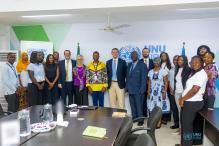
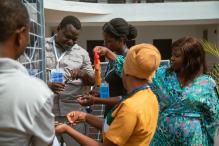
The course Advancing Sustainable Mining: Cultivation and Genomic Analysis of Acidophilic Microorganisms for Biomining and Bioremediation Innovation brought together researchers and young scientists from across Latin America at the Universidad de las Américas (UDLA) in Quito, Ecuador. The five-day program focused on understanding, isolating, and characterizing microbial communities capable of transforming mining practices through biotechnology. Participants were trained in environmental sampling techniques for collecting water and sediment samples from mining environments, providing a foundation for studying microbial life in situ. Laboratory sessions then introduced the cultivation of acidophilic microorganisms involved in biomining and bioremediation, including iron-, sulfur-, and sulfate-reducing microbes with the potential to recover metals or mitigate acid mine drainage.
Participants also learned how genomic prospecting can reveal the hidden diversity and functions of microbial communities. These approaches enable researchers to understand mining microbiomes not as isolated organisms but as synergistic ecosystems whose collective metabolic activities can drive biomining processes.
The evolutionary knowledge encoded within extremophile microorganisms can help reconcile resource extraction with ecosystem stewardship. Participants responded very positively to this approach, highlighting the scientific quality of the training and particularly valuing the bioinformatics and microbiome analysis components.
We extend our thanks to Diana Ayala-Muñoz for coordinating this excellent course and to the Universidad de las Américas (UDLA) for hosting it. Their commitment made it possible to provide a valuable learning experience and strengthened regional capacity.
We extend our thanks to Diana Ayala-Muñoz for coordinating this excellent course and to the Universidad de las Américas (UDLA) for hosting it. Their commitment made possible a valuable learning experience and strengthened regional capacity in sustainable mining biotechnology.