

Dakar, Senegal – 23 January 2026 – The United Nations University Institute for Water, Environment and Health (UNU-INWEH), together with the United Nations Environment Programme (UNEP), in collaboration with the World Health Organization (WHO) and the European Commission’s Health Emergency Preparedness and Response Authority (HERA), convened the Western and Central Africa Regional Workshop on Wastewater Surveillance for Environment and Public Health from 21–23 January 2026 in Dakar, Senegal.
The workshop was held under the UNEP initiative “Support Strategies, Capacity and Data for Global Wastewater and Environmental Surveillance” – Wastewater Surveillance for Africa Initiative (WWS). It brought together government representatives and key stakeholders from 21 countries – Benin, Burkina Faso, Cabo Verde, Cameroon, Central African Republic, Chad, Côte d’Ivoire, Equatorial Guinea, Gabon, Gambia, Ghana, Guinea, Guinea-Bissau, Liberia, Mali, Niger, Nigeria, Republic of Congo, Senegal, Sierra Leone, and Togo – to strengthen regional capacity in wastewater surveillance and foster collaboration across health, environment, water, and research sectors.
The opening session underscored the importance of cross-sectoral and multilateral cooperation in advancing wastewater surveillance in Africa. Welcoming remarks were delivered by Ms. Sogol Jafarzadeh, UN and Government Relations Coordinator and Gender and Capacity Building Focal Point for Africa at UNU-INWEH, followed by Dr. Boly Diop, Head of the Epidemiological Surveillance and Vaccine Response Division at the Ministry of Health of Senegal. Institutional perspectives were provided by Ms. Heidi Savelli-Soderberg, Acting Chief of the Marine and Freshwater Branch at UNEP; Ms. Monica Nolan, Senior Technical Advisor for Wastewater and Environmental Surveillance at WHO; Ms. Angela Tessarolo, Policy Officer at HERA; and Mr. Mamadou Diarrassouba, Executive Director of the ECOWAS Regional Centre for Surveillance and Disease Control. Speakers highlighted the need for harmonized approaches, strengthened governance, and sustained investment in wastewater surveillance across the region.
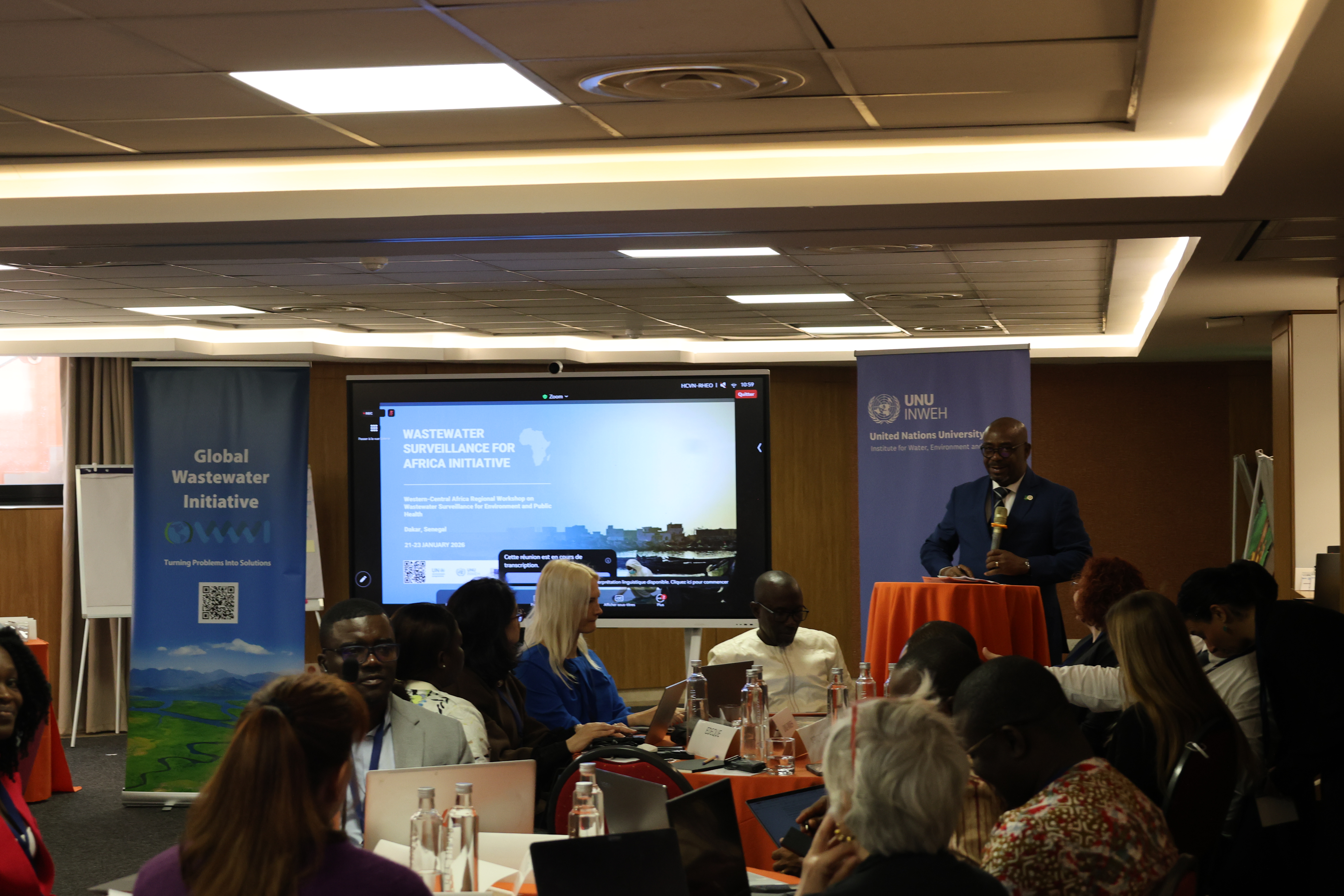
Executive Director of the ECOWAS Regional Centre for Surveillance and Disease Control (RCSDC), Dr. Mamadou Diarrassouba delivering his opening remarks.
The workshop provided a platform for cross-sectoral dialogue on the growing intersection of water, sanitation, environment, and public health. Discussions focused on how wastewater and environmental surveillance can serve as a scalable tool to monitor circulating pathogens, track pollution from land-based sources, and support early warning systems for disease outbreaks and other environmental health risks. The three-day programme built on momentum from previous subregional workshops in Southern, Eastern, and North Africa under the Wastewater Surveillance for Africa initiative (WWS), offering West and Central African participants an opportunity to exchange knowledge, share best practices, and build capacity to plan, establish, and strengthen wastewater surveillance systems tailored to national and regional contexts.
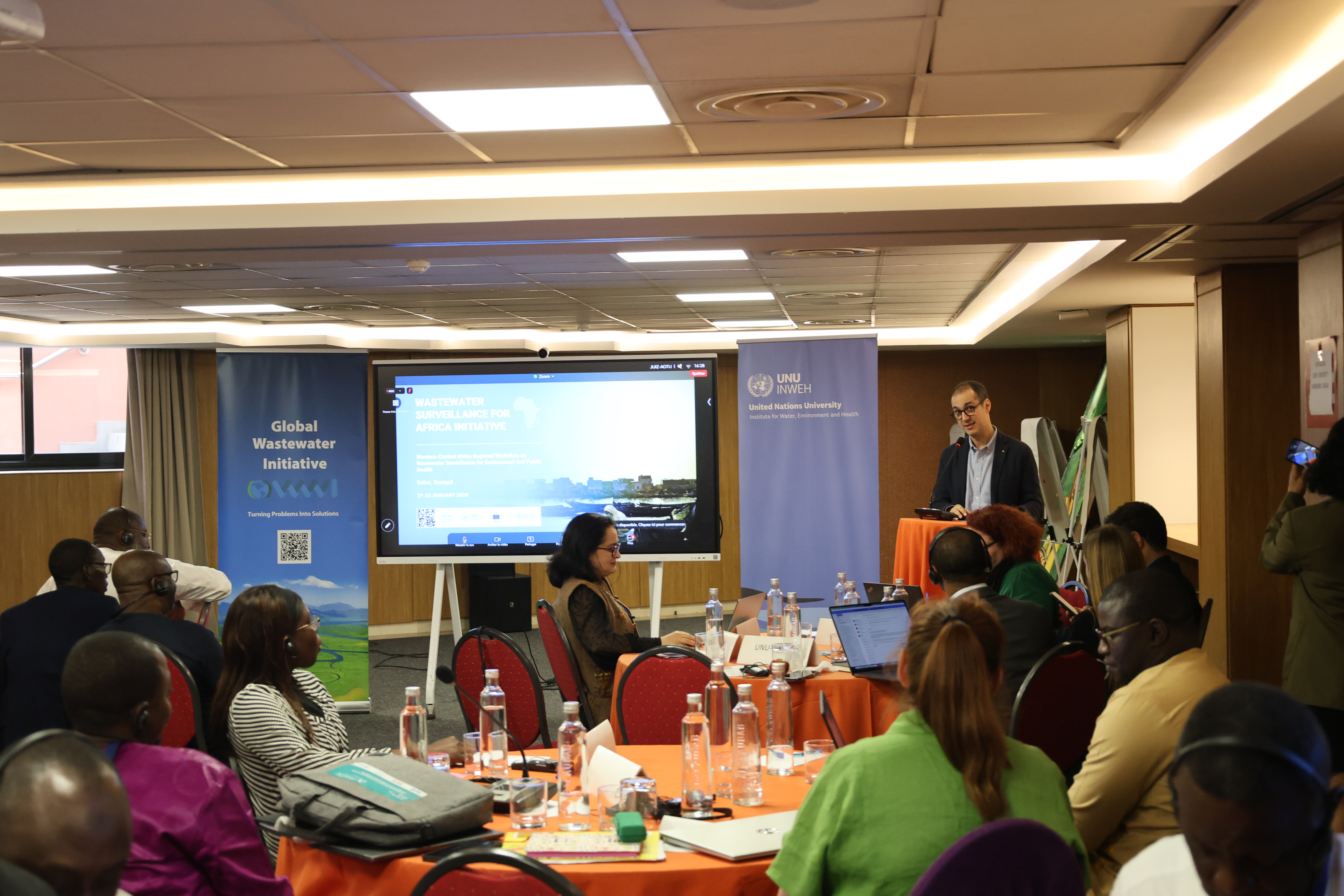
Director of UNU-INWEH, Professor Kaveh Madani, addresses the participants on the importance of the workshop for the region.
“Through this engagement, we ensured that scientific advances are translated into policy-relevant guidance, capacity development, and actionable decision-support tools. Strengthening national and regional capacities to generate, interpret, share, and act on wastewater and environmental data is a critical priority for long-term resilience and preparedness,” said Prof. Kaveh Madani, Director of UNU-INWEH.
Over three days, the workshop featured a mix of plenary presentations, panel discussions, group work, and interactive sessions involving national representatives, international experts, academics, practitioners, and other partners. Participants worked together to identify their national priority capacity needs for wastewater surveillance in an exercise led by Dr. Benard Mware (ILRI) and Taru Miller (UNEP), and they also explored a continental roadmap and harmonized approaches to wastewater and environmental surveillance for Africa through presentations led by Popi Karaolia (UNEP). The workshop also included a presentation by Fatma Guerfali (Institut Pasteur) and Tariro Mbiba (UNU‑INWEH), during which participants were invited to provide input on forthcoming Africa WES initiatives, notably two policy briefs on WES in Africa and online knowledge and learning tools to support WES capacity development in the region. This engagement aims to ensure that these knowledge products are responsive to regional priorities and tailored to the specific capacity needs across Africa.
The programme included valuable presentations and contributions from a wide range of institutions and initiatives, including the Africa Centres for Disease Control and Prevention (Africa CDC), the ECOWAS Regional Centre for Surveillance and Disease Control (RCSDC), Institut Pasteur, the International Livestock Research Institute (ILRI), the ODIN Project, the EU Joint Research Centre (JRC), the Global Wastewater Consortium (GLOWACON), and the National Institute for Communicable Diseases (NICD) of South Africa, among others.
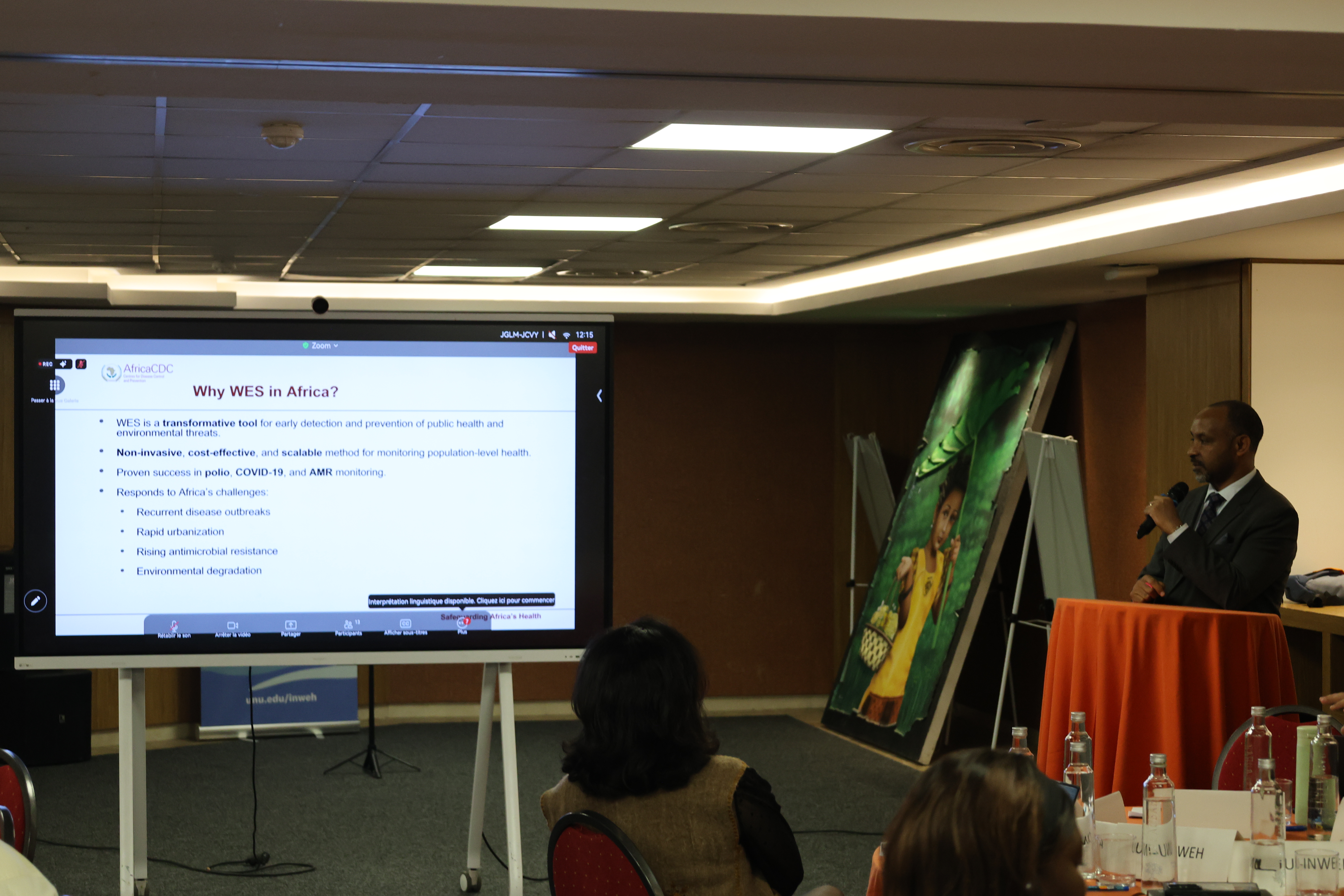
Dr. Merawi Aragaw Tegegne, Head of the Emergency Preparedness and Response Division at Africa CDC sets the scene for current WES practices in Africa.
A key highlight of the workshop was a field visit coordinated by the National Sanitation Office of Senegal (ONAS) to the Cambérène wastewater treatment plant (station d’épuration de Cambérène - STEP) in Dakar, Senegal, where participants observed first-hand how wastewater collection, treatment, and monitoring processes can underpin environmental and public health surveillance. The visit illustrated practical considerations for sampling, laboratory analysis, infrastructure requirements, and cross-sector collaboration, and it underscored the potential for leveraging existing wastewater management assets to generate surveillance data.
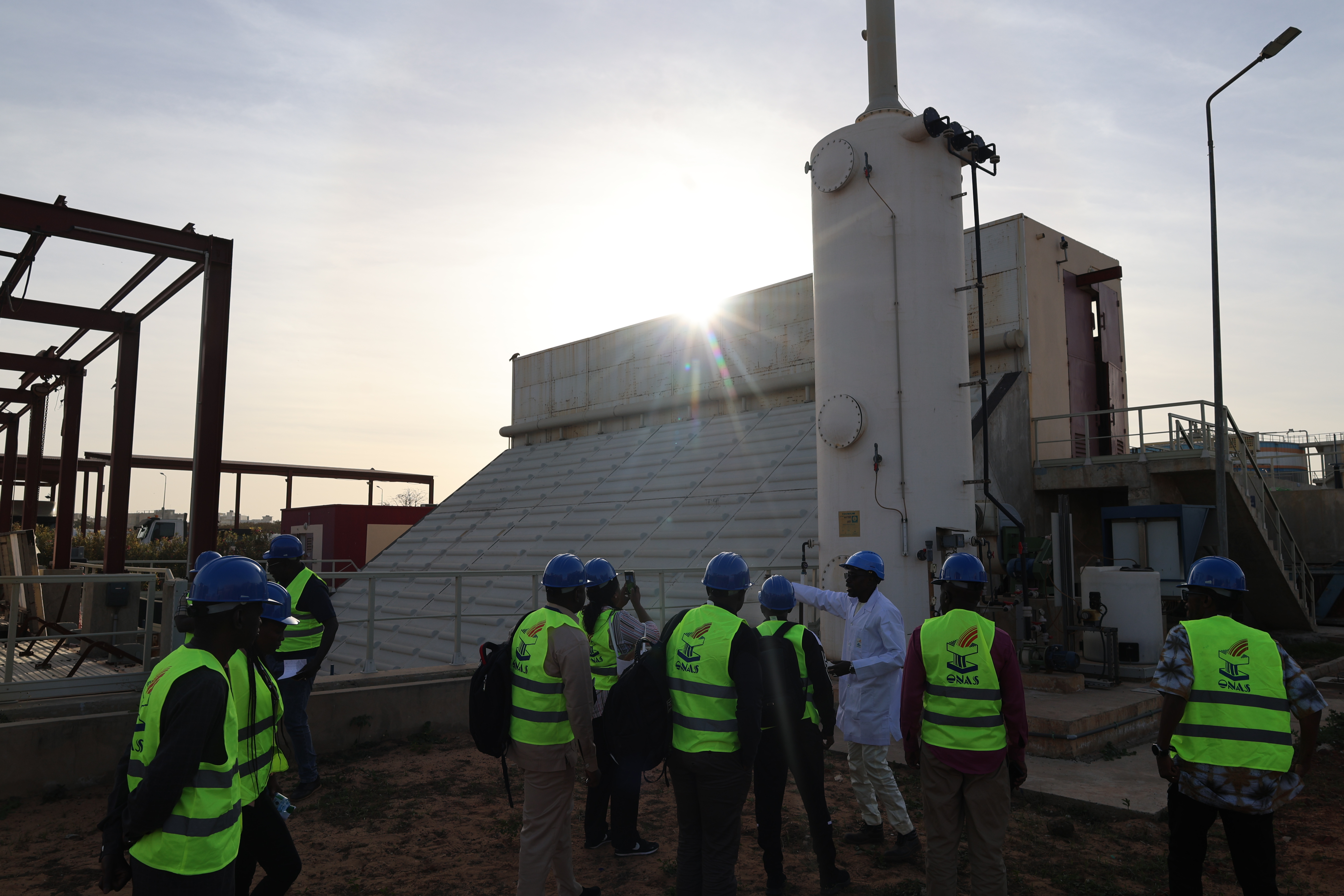
Workshop participants visit the Camberène wastewater treatment plant (Station d’Épuration des Eaux Usées de Camberène) during a field trip.
The leadership of Senegal was recognized for its strong commitment to science-based cooperation and whole-of-government approaches. The active engagement of the Ministries of Health, Environment, and Water and Sanitation, as well as the National Sanitation Office of Senegal (ONAS), underscored the country’s growing role in integrated water, sanitation, and public-health governance, particularly ahead of the High-Level Preparatory Meetings for the 2026 UN Water Conference.
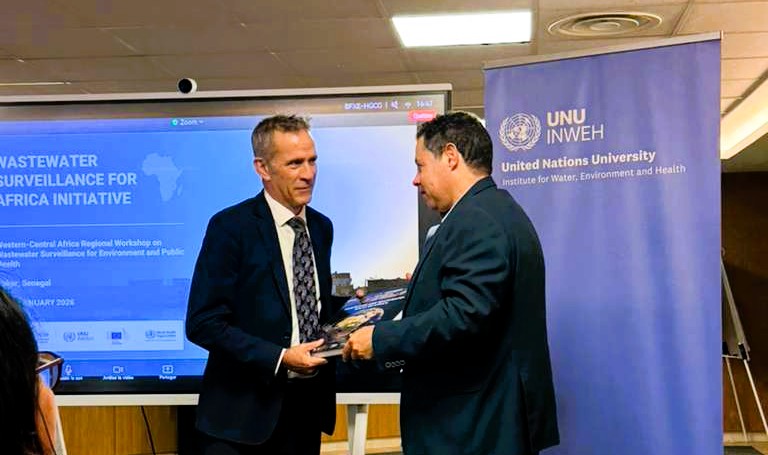
Alex Pires, Programme Management Officer at UNEP, presents H.E. Marcel Lebleu, Ambassador of Canada to Senegal, with the publication “Sanitation and Wastewater Atlas of Africa” (UNEP, 2021) as a token of appreciation.
The closing session reaffirmed strong institutional commitment to advancing wastewater surveillance under the WWS Initiative. Mr. Alex Pires, Programme Management Officer at the United Nations Environment Programme (UNEP), delivered the Dakar key messages, highlighting countries’ commitment to strengthening wastewater surveillance through a One Health, multisectoral approach with harmonized methods and regional collaboration. He emphasized the need for clear governance and coordination embedded in national systems, alongside sustainable financing to ensure WES supports early warning, health security, and environmental protection.
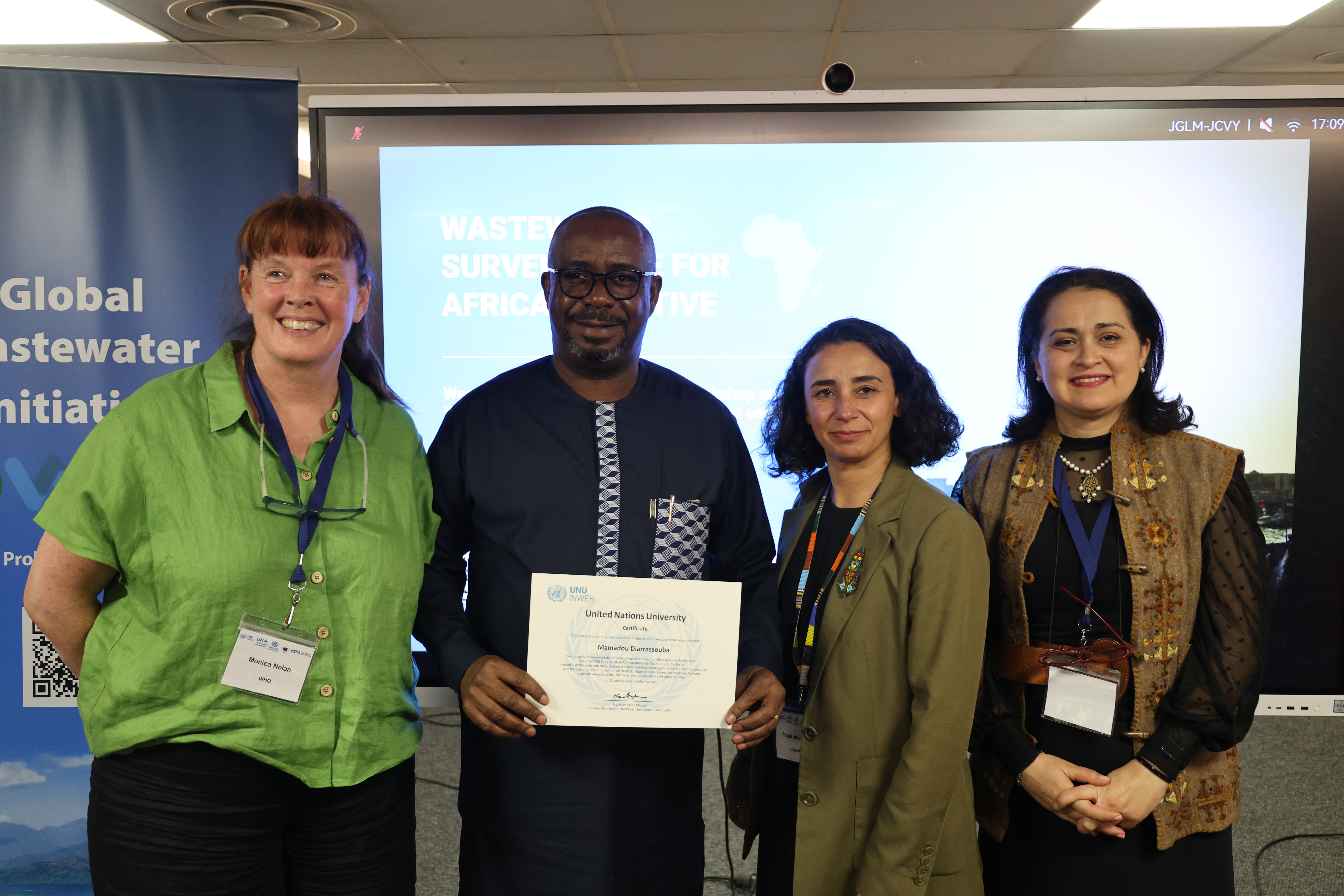
Monica Nolan (WHO), Mamadou Diarrasouba (ECOWAS-RSDC), Sogol Jafarzadeh (UNU-INWEH) and Dhabia Leila Boulahbal (WHO-AFRO).
Reflections were delivered by H.E. Marcel LeBleu, Ambassador of Canada to the Republic of Senegal and Special Envoy for the Sahel; Ms. Angela Tessarolo on behalf of HERA; Dr. Merawi Aragaw Tegegne, Head of the Emergency Preparedness and Response Division at Africa CDC; Ms. Dhabia Leila Boulahbal on behalf of the Sanitation and Wastewater team at WHO; Prof. Kaveh Madani, Director of UNU-INWEH; Ms. Heidi Savelli-Soderberg, Acting Chief of the Marine and Freshwater Branch at UNEP; and Ms. Daba Sène, Regional Director of Sanitation for Dakar at the Ministry of Water and Sanitation of Senegal, who also spoke on behalf of Mr. Assane Diop, Head of the Pollution and Nuisance Prevention and Control Division at the Ministry of Environment of Senegal. Speakers emphasized the importance of sustained regional collaboration, data sharing, and capacity building to ensure that wastewater surveillance contributes effectively to public health preparedness and environmental protection.
The Government of Canada, host country of UNU-INWEH, was acknowledged for its longstanding support as the Institute marks 30 years of scientific excellence and global impact. In his closing remarks, H.E. Marcel Lebleu, Ambassador of Canada to the Republic of Senegal and Special Envoy for the Sahel reaffirmed Canada’s commitment to multilateral cooperation and evidence-based policy, and highlighted UNU-INWEH’s convening role in advancing integrated water and health solutions.
To conclude the workshop, representatives were presented with UNU-INWEH certificates in recognition of their meaningful and active participation throughout the three-day workshop, acknowledging their sustained engagement, contributions to discussions, and commitment to collaborative learning.
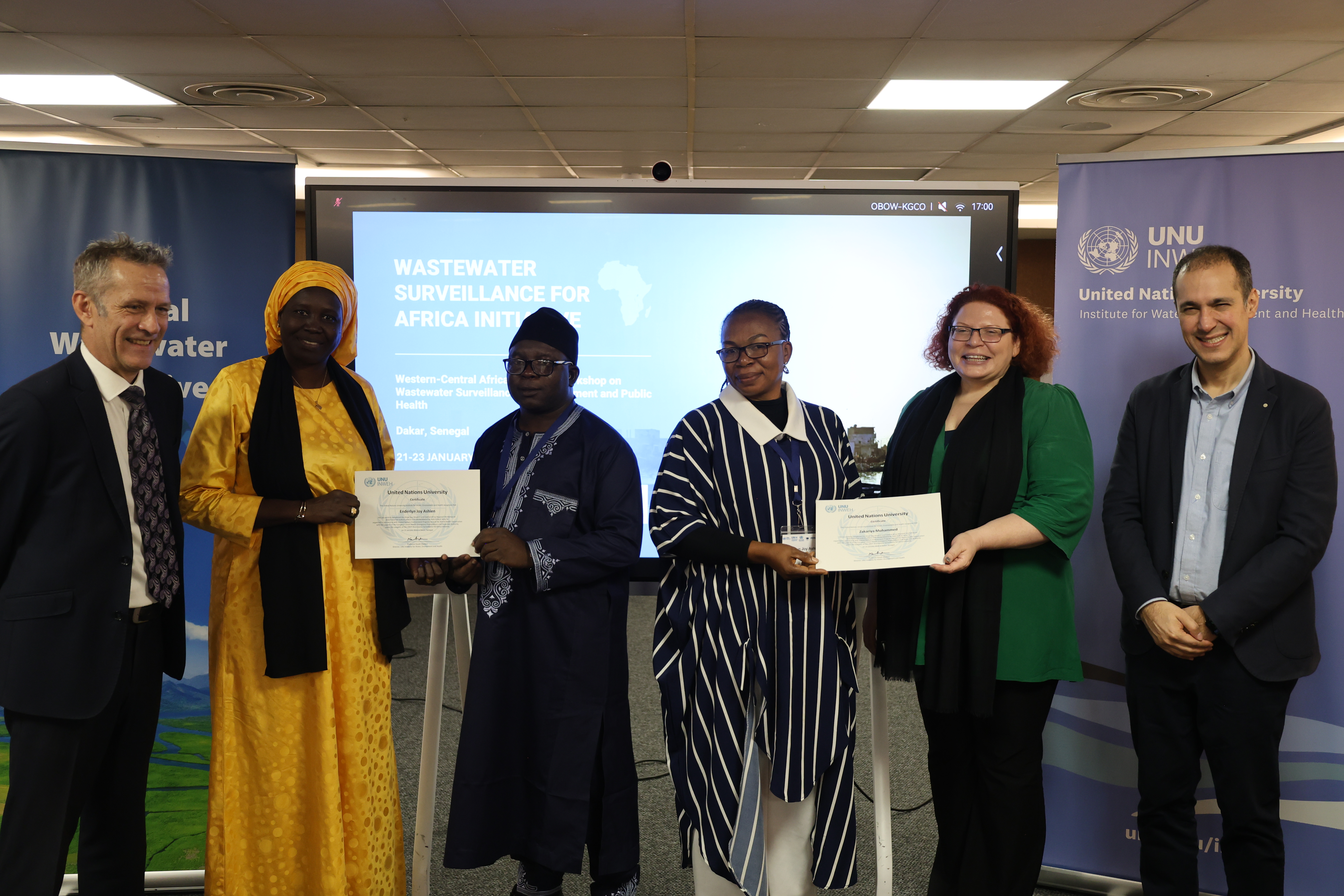
Certificates are presented to the Nigerian government representatives Mr. Zakariya Mohammed and Ms. Enderlyn Joy Ashien by H.E. Lebleu, the Canadian Ambassador, Mme Daba Sene (Government of Senegal), Ms. Heidi Savelli-Soderberg (UNEP) and Prof. Kaveh Madani (UNU-INWEH).
The Western and Central Africa Regional Workshop underpinned the importance of sustained investment in wastewater and environmental surveillance as a cornerstone of public health resilience, climate adaptation, and sustainable development across West and Central Africa, highlighting that stronger data, stronger institutions, and stronger partnerships are essential to protect communities today while preparing for the health and environmental challenges of tomorrow. By fostering dialogue across disciplines, institutions, and borders, the workshop reinforced the value of regional cooperation in translating scientific innovation into policy action. The partnerships and priorities identified in Dakar are expected to contribute to healthier, more resilient societies across Western and Central Africa and to inform broader continental and global efforts on water, environment, and health.