

In this Science Talk, Mr. Kabir Uddin presents how accurate, timely land cover information has become fundamental to sustainable natural resource management, climate adaptation, biodiversity conservation, disaster risk reduction, and evidence-based policymaking. Advances in Earth observation, artificial intelligence, cloud computing, and geospatial analytics have transformed land cover mapping into an operational capability. However, scientific innovation alone is not sufficient. Sustained user engagement, institutional collaboration, and national ownership are essential to ensure that land cover information is trusted, adopted, and effectively used in policy and management decisions.
Drawing on more than two decades of experience leading the development of the Nepal National Land Cover Monitoring System (NLCMS), the Regional Land Cover Monitoring System (RLCMS), and related national land cover initiatives across the Hindu Kush Himalaya, Mr. Uddin highlights how advances in remote sensing, machine learning, and cloud-based geospatial platforms have enabled operational land cover monitoring at scale. He further demonstrates how collaboration with governments, development partners, academia, and end users has translated scientific innovation into nationally owned systems supporting land-use planning, forest monitoring, greenhouse gas inventories, climate and biodiversity reporting, and readiness for results-based climate finance, including REDD+.
This Science Talk concludes by exploring how machine learning, cloud-native geospatial technologies, and strong science–policy partnerships can further strengthen operational environmental monitoring, accelerate climate action, and support resilient landscapes and sustainable development across the Hindu Kush Himalaya and beyond.
Speaker
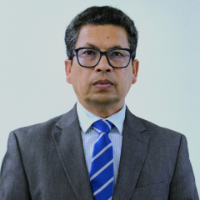
Mr. Kabir Uddin
Research Fellow, Geospatial Analytics for Disasters and Ecosystem