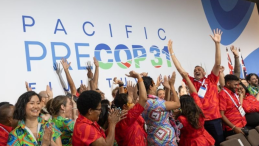


On 22 June 2026, UNU-IAS contributed to the Global Sustainable Development Congress 2026 (GSDC), which convened leaders and professionals across higher education, government, industry and civil society to exchange ideas and expertise and advance collaborative sustainability solutions.
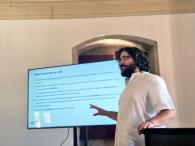
As part of the event, UNU-IAS and UNESCO Jakarta co-organized the joint roundtable session From Frameworks to Action: Preparing Climate-ready Teachers. It brought together educators, higher education institutions, education ministries and other education stakeholders to discuss how teachers could be better prepared to deliver quality climate change education. UNU-IAS presented an analysis of international frameworks and guidance on climate change education and introduced the draft Climate Change Competency Framework for Educators (C3FE), which was developed by consolidating key competencies for educators. During the session, teachers, representatives of higher education institutions and education ministries, and other education stakeholders reviewed the draft framework and provided feedback on its clarity, feasibility and adaptability to diverse local contexts. Discussion focused on the competencies that educators need to teach climate change effectively, support learner action and assess climate learning.
In opening remarks, Shinobu Yume Yamaguchi (Director, UNU-IAS) encouraged participants to provide feedback and help improve the sustainability initiatives of the two UN organizations. Prof. Yamaguchi underscored the importance of consultative inputs to enhance the framework's relevance and adaptability. Jonghwi Park (Academic Programme Officer and Head of Innovation and Education, UNU-IAS) moderated the session and Nafissa Insebayeva (Consultant, UNU-IAS) introduced the C3FE, which comprises five competency domains: what to teach; how to teach; how to care for learners; how to assess; and how to support action.
Roundtable participants tested the C3FE through a co-design process that included discussion, examples and recommendations. Participants reflected on each domain, focusing on success indicators, barriers against implementation, support needs and recommendations for local adaption. This feedback will be used to further enhance the framework before UNU-IAS launches a Climate Change Educator Diploma programme, which will be aligned with the Greening Education for Teachers initiative of UNESCO.
The GSDC was convened by Times Higher Education and held on 22–25 June 2026 in Jakarta, Indonesia.