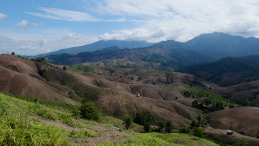


For the Iraya Mangyan Indigenous communities on the Philippines’ Mindoro Island, the plant and animal species that inhabit the island are more than cohabitants; they are sacred parts of their culture.
They tell stories. They provide knowledge. They keep people safe.
But the forest and its species are increasingly threatened by factors including extreme weather events linked to climate change and land degradation caused by human activity.
To better understand these impacts, local communities, the Government of the Philippines, an NGO and a team of UNU-EHS researchers are working together to examine how changes to nature affect communities and to develop methods for assessing losses to biodiversity and ecosystems – impacts that are often difficult to capture or quantify.
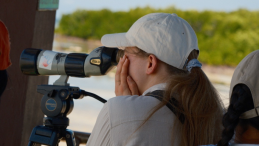
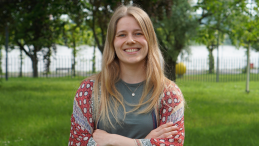
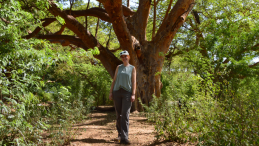
UNU-EHS researcher Lisa Hartmann was featured in an article by Mongabay exploring the Iraya Mangyan communities’ deep connection to nature, especially endemic birds and plants. Hartmann recently conducted meetings and workshops with Indigenous communities on the island as part of the FRAME-ECO project, which focuses on understanding and assessing these interconnected losses.
“Our consultation found that livelihoods, cultural practice and spiritual life are all rooted in the same relationship with forest, river and land,” she told Mongabay. “Freshwater, food, medicinal plants and building materials come from these ecosystems, but so do intergenerational knowledge systems, spiritual connections to sacred forest sites, and a place to rest and recover.”
As threats and risks increase, understanding and assessing their impacts on ecosystems, cultures and ways of life is becoming increasingly important.
“What stood out was how directly ecological loss translates into cultural and social loss,” she said.
The project collected data using its recently developed framework for assessing loss and damage, which includes losses to biodiversity, cultural practices and spiritual connections. The framework can help countries document and report these impacts.
Read the full article here.