

Across Latin America, cities are grappling with deep-rooted inequalities, environmental stress and the need for more inclusive and people-centred urban development models. Addressing these challenges requires not only technical solutions but also strong community engagement and locally grounded knowledge.
In this interview, published by Plataforma OSICO, UNU-EHS expert Liliana Narvaez reflects on the importance of inclusive urban transformation, community-led processes and the role of local actors in shaping more resilient and equitable cities.
Drawing on her professional experience, she highlights how participatory approaches can help bridge gaps between policy, research and lived realities, and why urban solutions must be designed with, not just for, the communities most affected by environmental and social risks.
The interview contributes to broader discussions on sustainable urban development by centring on human experiences, collective action and the need for long-term, context-sensitive approaches.
Read the full interview in Spanish here and find the English translation below
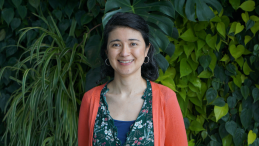
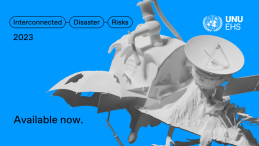
Introducing Liliana Narvaez, co-author of the report “Interconnected Disaster Risks 2025: Turning Over a New Leaf”
Liliana Narvaez is a Colombian geologist and senior research associate at the United Nations University Institute for Environment and Human Security (UNU-EHS). She graduated from the University of Caldas and holds a master's degree in Geography of Environmental Risks and Human Security from the University of Bonn and UNU. Her research focuses on risk, adaptation and the role of ecosystem health in disaster risk reduction.
She is co-author of the UNU-EHS report “Interconnected Disaster Risks” since its first edition in 2021 and has participated in its dissemination in the media in Latin America and Spain.
About the United Nations University Institute for Environment and Human Security (UNU-EHS)
The United Nations University Institute for Environment and Human Security (UNU-EHS) was established in 2003 in Bonn, Germany. The institute conducts research focused on promoting human security and well-being by addressing present and future risks arising from environmental hazards and climate change. Its main areas of work are risk and adaptation, and transformation. In addition to its research work, UNU-EHS offers master's level training opportunities and hosts several international projects and capacity-building courses on issues related to global environmental risks and sustainable development.
More information about UNU-EHS is available at: https://unu.edu/ehs
The United Nations University Institute for Environment and Human Security (UNU-EHS) has produced the report “Interconnected Disaster Risks 2025: Turning Over a New Leaf”, which moves from diagnosing problems to outlining solutions.
The report argues that many of the current responses are merely superficial adjustments. To achieve lasting change, it is essential to question the social structures and patterns of thinking that have perpetuated the challenges we face.
“Society is at a crucial juncture,” says Prof. Dr. Shen Xiaomeng, Director of UNU-EHS. "For years, scientists have been warning us about the damage we are doing to our planet and how to stop it. But we are not taking meaningful action. We know that climate change is getting worse, yet fossil fuel consumption continues to break records. We already have a waste crisis, but household waste is projected to double by 2050. Time and again, we see the danger, but we keep moving towards it. In many cases, we approach the precipice with our eyes wide open, we know how to turn back, and yet we keep walking as if we don't see it. Why do we do this?"
To answer this question, the report offers a holistic analysis of human motivations and how real change can be achieved. It also presents real-life examples of positive transformations that can serve as models and inspiration.
To explore these issues in greater depth, today we have the privilege of interviewing Liliana Narvaez, one of the authors of the study, who has kindly agreed to share her thoughts. To this end, I have formulated a series of questions focusing on the five areas that the report identifies as priorities for driving profound systemic change.
- ‘Society is at a crucial juncture’
Rethink waste: From trash to treasure
José Esteban Gabarda: What specific examples does the report give of how waste can be turned into valuable resources for communities?
Liliana Narvaez: The report analyses the issue of waste in depth and argues that the take-make-dispose model is completely unsustainable. Normally, when we talk about waste, the focus is on what to do with it, how we are going to manage it and how communities should, for example, recycle more. But the underlying question – which we do not always ask ourselves – is why we are generating so much waste in the first place. If we really want to change, that is where we should focus. Management solutions are also necessary and must be implemented, but they should not be the only ones or the most important ones. In order to solve the waste problem, we must first think about why we generate so much of it. In this way, we can begin to promote a circular economy that encourages durability (more durable products that do not break so quickly), repair (products that we can repair when something happens to them, rather than the idea that new is better because repairing is more expensive) and reuse (products that, at the end of their useful life, can return to the production chain, i.e. they can be reused for something else without posing a risk to human health or the planet). At the community level, promoting composting, for example, is something we can all do with our organic waste and reap the benefits of fertiliser for our gardens.
José Esteban Gabarda: What structural changes would be necessary for the circular economy to cease to be the exception and become the norm?
Liliana Narvaez: According to our research and the Theory of Deep Change, for the circular economy to become permanently established, we need to change the underlying values and mindsets that have prevailed in our society for many years. As I mentioned earlier, if we focus on why we produce so much waste and understand that this is the problem we need to tackle, then we will be able to design consciously, contributing to a circular flow of materials. This will enable us to ask our governments to enact laws that support the repair of consumer goods, for example.
José Esteban Gabarda: What role do local communities play in implementing this transformative change?
Liliana Narvaez: For real change to be successful, it must be embraced by all actors in society. Governments, the private sector, local communities and individuals all play an important role in transforming the world we live in. Local communities have immense power, as they are usually the first and sometimes the most affected during a crisis. For example, when there are floods associated with the accumulation of waste in a water source, local communities can demand that the authorities, beyond waste treatment, promote a culture of circularity at the local level.
José Esteban Gabarda: What lessons can we learn from experiences such as Kamikatsu in Japan or the communities in Thailand and Mexico mentioned in the report?
Liliana Narvaez: Kamikatsu serves as a global example to help us understand that change is possible and is already happening. This is not a utopia; there are people who are already trying to live in zero-waste communities. Since 2003, this town has been promoting the elimination of waste as much as possible. Nearly 80% of waste is recycled there (four times more than in the rest of the country) and separated into 45 categories, some for composting, others for reuse (e.g. clothing exchanges), recycling, upcycling or repair.
Realign with nature: From separation to harmony
José Esteban Gabarda: How can the integration of ancestral and indigenous knowledge contribute to a more balanced relationship with ecosystems?
Liliana Narvaez: Indigenous peoples around the world relate to nature in a very different way from most of us. While we have grown up believing that we are superior beings and that we are separate from nature, for many of them, there is no such superiority; we are all nature and therefore separation is non-existent. For example, for Australian Aborigines, everything in nature is an extension of themselves, as everything is interconnected and therefore fundamental to their well-being. Therefore, when they contemplate the landscape, they “feel” part of it, and some might consider a kangaroo a “brother” or “sister”, demonstrating a sense of family.
José Esteban Gabarda: What are the risks of continuing to treat nature as a resource separate from our societies?
Liliana Narvaez: As long as we continue to believe that we are superior and that nature has nothing to do with us beyond how we use it for our pleasure and benefit, we will never be able to live in true harmony. The resources that nature provides us are not infinite, and at some point we will face shortages, for example, of our water resources, as some communities around the world are already facing. In addition, our activities continue to contribute to the increase in greenhouse gas emissions, which comes back to us in the form of more severe negative impacts associated with climate phenomena.
José Esteban Gabarda: What challenges did you face in compiling the real stories included in the report related to ecological restoration?
Liliana Narvaez: When we conducted the research for our report, we realised that there were many interconnected stories that could be applied in different geographical areas and thus learned from. Ecological restoration was no exception; just as we saw stories from Thailand, we could also see them in Mexico and Europe. The report also seeks to highlight that change is possible and is already happening in many places.
José Esteban Gabarda: How can this change help prevent natural disasters in contexts of increasing climate vulnerability?
Liliana Narvaez: As mentioned earlier, when you feel part of a family, you really care and work together for the well-being of that family. If we all change our relationship with nature, we will care about what is happening to it and we will be able to do something about it. When people care for what matters to them, we can make a real difference in the climate crisis. For example, in a coastal area, instead of eradicating all greenery and favouring a world of concrete, if we learn to live with nature and conserve mangroves and coastal vegetation, we will have protective shields against strong winds and flooding associated with hurricanes, thereby reducing our levels of vulnerability.
Reconsider responsibility: From me to we
José Esteban Gabarda: How can a culture of shared responsibility be fostered among governments, businesses and citizens in the face of interconnected risks?
Liliana Narvaez: Recognising interconnectivity, we are all connected and the only way to face current challenges is by working together. All sectors have a responsibility to act for the collective good and move away from the tendency to seek individual gain.
José Esteban Gabarda: What examples of solidarity or collective action does the report highlight as signs of hope?
Liliana Narvaez: The report highlights the Montreal Protocol, which regulates the production of nearly 100 substances that affect the ozone layer, as one of the positive examples where collective action achieved something for the benefit of all. The agreement is often considered the most successful international environmental treaty in history, ratified by 197 countries. This example of successful global cooperation and solidarity for a common goal has led to steady improvements, and the ozone layer is expected to recover completely by 2066.
José Esteban Gabarda: How can ordinary citizens contribute to the proposed transformative changes?
Liliana Narvaez: There are many ways, ranging from changing mindsets to solidarity transformed into actions such as donations. However, one simple idea that we can all begin to put into practice is the way we understand our neighbourhood and who we call our neighbours. If we start to think that our neighbourhood goes beyond political and geographical boundaries and that our neighbours are, in fact, all the inhabitants of planet Earth, we can surely begin to change the way we see others. We will also feel more solidarity and a desire to help our neighbours, no matter how far away they are.
José Esteban Gabarda: What final message would you like to convey to world leaders reading this report?
Liliana Narvaez: We would like to remind all leaders that change is possible. As I mentioned in the previous question, the Montreal Protocol is a good example of global efforts for the common good. When we all work together, real change can take place.
Reimagine the future: From seconds to centuries
José Esteban Gabarda: Why is it so difficult for decision-makers to think long term, and how can we change that mindset?
Liliana Narvaez: Our brains are wired to seek immediate rewards, so it is easy to prefer shortcuts to get to the good stuff faster. However, this mindset does not help us think about the long-term consequences. One way to change this is to create mechanisms that help us think about how today's decisions can have a long-term impact, such as the Committee for the Future in Finland, which acts as an instrument of the Finnish Parliament and represents the interests of future generations.
José Esteban Gabarda: What role can education play in cultivating a more conscious and resilient intergenerational vision?
Liliana Narvaez: Education helps us understand the interconnectedness of our complex world, creating a global classroom in which we build a sense of belonging among ourselves. Education has the potential to change societies' worldviews and values, as well as to create unity and peace.
José Esteban Gabarda: How would you define the concept of ‘risk tipping points’ mentioned in the report?
Liliana Narvaez: In the 2023 edition, we address the issue of tipping points, which are defined as ‘the moment when a given socio-ecological system is no longer able to buffer risks and perform the functions expected of it, after which the risk of catastrophic effects on those systems increases considerably’. To give a concrete example, imagine we are in a car travelling at full speed and there is an abyss ahead of us. One option is to ignore the risk and fall off the cliff. Another is to change course, but still continue in the same direction, even if we are not going so fast. And the other is to stop completely and think about what to do to avoid falling off the cliff. We need to rethink how we can really solve the problem and not just apply half-measures or ignore it, as we sometimes do.
José Esteban Gabarda: Which of the five transformative changes do you consider most urgent and why?
Liliana Narvaez: The changes presented in the report are interconnected, so that when we work on one, the other four also benefit and progress is made in some way. For example, when we rethink waste generation and promote the circular economy, nature also benefits and begins to be more respected, bringing us closer to it. Similarly, thinking about a world without waste means thinking about our neighbours around the planet and future generations who will also benefit if we change our way of thinking. Finally, decisions around circularity have an impact on our well-being. By having less waste, our stress levels are reduced and we can feel happier with the world we live in.
Redefine value: From economic wealth to planetary health
José Esteban Gabarda: What alternative indicators to GDP does the report propose to measure well-being and sustainability?
Liliana Narvaez: GDP is not a good measure of human well-being; it is a measure of economic performance. We need other indicators that go beyond the economic sphere. For example, the Gross National Happiness (GNH) index in Bhutan, which was launched in the 1970s. This index includes 33 indicators on topics such as psychological well-being, health, education, time use, cultural diversity, ecological diversity and standard of living. The Bhutanese government adjusts its policies and resource allocation based on the results of the calculation. For example, if the index shows a low level of psychological well-being, policymakers prioritise initiatives to address this issue. In addition, Bhutan was quite successful in its response to the COVID-19 pandemic, focusing on public health and social support over economic indicators, a strategy guided by the FNB approach.
José Esteban Gabarda: How can public policies incorporate the value of ecosystems and social resilience into their economic decisions?
Liliana Narvaez: Currently, ecosystems are only valued for their economic value, which is very limited. It is necessary to also value them for their non-economic aspects, for example, for their carbon sequestration services or as places of recreation for our mental health. They also support species that are important to the planet and regulate climatic events, for example by mitigating the floods or droughts we face. Therefore, economic decisions should only be one part of the decision-making process, but not the only one to be taken into account. The well-being that ecosystems provide us with to sustain life as we know it and to find peace and joy is something that goes beyond the economic.
José Esteban Gabarda: How can the theory of ‘Deep Change’ influence policies?
Liliana Narvaez: By encouraging decision-makers to reflect more deeply on problems and analyse existing systems, facilitating a vision of a more positive future for all.
José Esteban Gabarda: What impact do you hope this report will have on the fight against climate change and other global risks?
Liliana Narvaez: We hope that it will encourage people to look at how systems currently work, identify what is wrong and stop assuming that change is impossible. These systems are created by humans, so we can change them. The report seeks to show a possible reality that is within our reach.
José Esteban Gabarda: Finally, if you don't mind, I'd like to ask you a slightly more personal question: What is your personal vision of the world we could build if we implemented these five profound changes?
Liliana Narvaez: A world in which we can enjoy its beauty without being stressed or worried all the time. Life should not be a struggle; we should all be happy and healthy. These five changes would allow us to get closer to that reality.