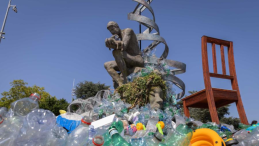


We are using the planet’s natural resources faster than they can regenerate. Global extraction of raw materials is projected to reach 160 billion tonnes by 2060, a 60 per cent increase from 2020. At the same time, current consumption patterns are driving a growing waste crisis, with over 2 billion tonnes of household waste generated each year, placing increasing strain on our planet. As highlighted in the latest Interconnected Disaster Risks report, Turning Over a New Leaf, this is not just a waste issue but a systemic one. How we design, use and discard materials reflects assumptions that prioritize continuous consumption over long-term sustainability. Addressing this challenge requires rethinking these assumptions and our relationship with waste.
Here are five facts highlighting the growing crisis of resource depletion:
We are quickly depleting our mineral resources
Metals and critical minerals underpin modern life, from infrastructure to electronics and clean energy systems. Many of these resources are effectively non-renewable, taking millions of years to form. Lithium, for example, is essential for rechargeable batteries used in phones and electric vehicles, and demand is rising rapidly. However, at our current rate of consumption, reserves could be depleted by around 2050. At today’s rates, over 75 per cent of lithium mined by then may end up as waste rather than being recovered.
Short product lifecycles are driving mounting waste
Although mineral resources can take millennia to form, the products made from them are often used only briefly. Smartphones, designed to last between 4 and 7 years, are often replaced after just 2 years in Europe. This pattern is a major driver of e-waste, now the fastest-growing waste stream globally. Product designs that prioritize disposability – often reinforced by planned obsolescence – further limit opportunities to reuse or recycle materials. This is the consequence of our “take-make-waste” economic model, as valuable materials are extracted from the environment and ultimately tossed away.
Valuable materials are being lost in the process
Much of what we discard still holds significant value, yet it is rarely recovered. In 2022, e-waste containing metals such as copper, gold, silver and platinum was worth an estimated $91 billion. Despite this, most of the value is lost due to low recycling rates and inefficient recovery systems. For instance, in 2022, 62 billion kilograms of e-waste were generated, yet only around 14 billion kilograms were formally collected and recycled in an environmentally sound manner. As a result, valuable resources are continuously lost rather than kept in circulation.
Resource depletion threatens the energy transition
The shift to renewable energy is highly resource intensive. Metals such as copper and aluminum are needed for power grids, while lithium, cobalt and nickel are essential for batteries and energy storage. With soaring demand for renewable energy and artificial intelligence, there are considerable concerns about future supply constraints. Lithium, for instance, could face shortages by mid-century if current consumption patterns continue. Without rethinking the current linear model, resource scarcity risks slowing the very transition it is meant to support.
Scaling the circular economy is essential
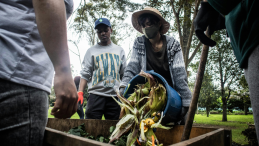
Solutions already exist, but they need to be scaled. Recycling technologies are improving, particularly for lithium-ion batteries and other critical materials, with recovery rates potentially reaching up to 90 per cent. By 2050, recycled lithium could supply a significant share of global demand. Achieving this requires systemic change, including integrating reuse and recycling into supply chains and strengthening take-back systems. Policies such as “Right to Repair” laws can further support this shift by extending product lifespans and reducing pressure on natural resources.
Suggested citation: "5 Facts on Critical Minerals and the Waste We Can’t Afford ," United Nations University, UNU-EHS, 2026-04-28, https://unu.edu/ehs/article/5-facts-critical-minerals-and-waste-we-cant-afford.