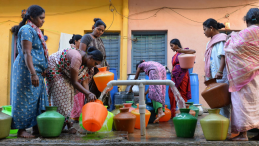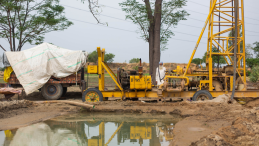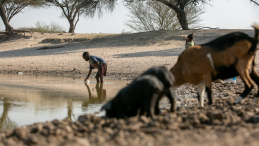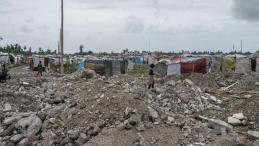


When reservoirs shrink and droughts arrive, everyone notices. People are asked to be sustainable in their water use, restrictions begin and politicians respond. But what if it happens underground and we do not see it? Much of the world’s water loss is not happening in lakes or rivers, but underground where most people never see it.
Three years after the Interconnected Disaster Risks report on tipping points warned about groundwater depletion, scientists say the overall picture has not improved. In many places, it has simply continued.
“The Colorado River Basin is one such example”, explains Caitlyn Eberle, lead author of the IDR report. “A recent study showed that the basin has lost roughly as much groundwater in the last two decades as the total capacity of Lake Mead. If Lake Mead itself disappeared, it would likely dominate international news. But, because the loss occurred underground, it is largely unnoticed.”
Spending savings instead of income
Hydrologists often describe aquifers as a bank account, where water is deposited by rainfall and rivers, and withdrawn by pumping for agriculture or residential use. Similar to a bank account, the aquifer must be balanced: if withdrawals consistently exceed deposits, it can lead to “overdraft”, where the aquifer is depleted faster than it can recharge.
This overdraft is already happening in many regions, with studies showing severe depletion in parts of India, north-eastern China, and western United States. United Nations University Institute for Water, Environment and Health has called this situation “water bankruptcy”: withdrawing and polluting water beyond renewable inflows and safe depletion limits.
Risk tipping point
As groundwater is depleted, the water table drops further and further away from the Earth’s surface. Eventually, people will face a risk tipping point when the water table drops consistently out of reach of their wells. At this point, the water will be inaccessible from the existing well infrastructure, forcing people to take action.
Effects felt above ground
Around 30 per cent of the world’s fresh water is stored as groundwater, supplying drinking water for billions of people and supporting 40 per cent of the world’s irrigated agriculture. When groundwater levels fall, harvests can become less reliable, production costs increase and pressure shifts to rivers or rainwater. In some areas, farmers change crops or even move away entirely.
Scientists are not saying that all aquifers are close to empty, as many still recharge naturally. The issue is more concentrated, but still incredibly severe, since key agricultural regions are extracting far faster than nature can replace. Agricultural intensification combined with new technologies and policies that make groundwater cheaper to use has accelerated extraction rates, leading to alarming levels of aquifer depletion. We can no longer consider groundwater as a boundless source of easily-accessible fresh water.
Instead, we can now see that it has limits and is becoming increasingly inaccessible, with worrying implications for its use as a coping mechanism when rains fail. We still need drastic changes in our global agricultural system to be mindful of the limits of groundwater systems and our ability to access this water. Regulations and technologies need to ensure the sustainable use of groundwater and preserve this resource for when we need it most.
To learn more, the dedicated technical report on the groundwater depletion tipping point case is available here.