


This was the question that guided the three-day Doctoral School ‘Researching regionalism(s): Conceptual, thematic and global approaches’ co-organised by @Ghent University Doctoral School and @United Nations University – CRIS by Iana Ovsiannikova and Frank Mattheis from 21 until 23 October 2026.
The School addressed the state of play in different schools of thought, its evolving concepts and theories, situating the studies of regionalism in historical and global contexts and offering thematic insights into how regionalism research can be conducted.
@Fredrik Söderbaum, UNU-CRIS Associate Research Fellow, addressed the state of play and the theories of regionalism, highlighting that the field is now much more integrated today, while increasingly integrating into the broader social science theories.
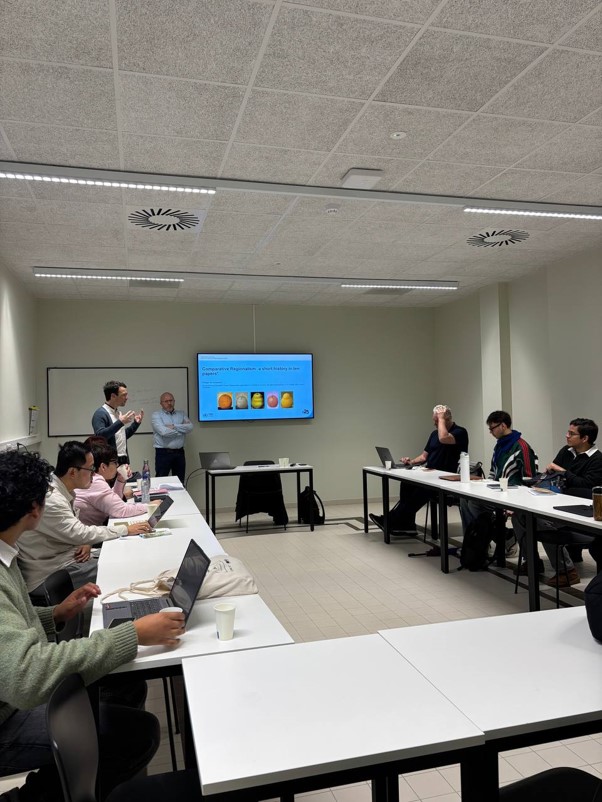
@Mariana Caldas offered a regionalism perspective to studying memory politics and how memory politics can inform our understanding of regions.
@Ueli Staeger, UNU-CRIS Associate Research Fellow, shared the informality lenses in studying of regions, shedding the light of how much we can miss if treating regional organisations only through the formal mandates.
@Stefano Palestini analysed regional democracy defence and the role of regional organisations in it across the contexts of Latin America and Africa.
@Fabienne Bossuyt, UNU-CRIS Professoral Fellow, presented externally-induced region-building on the case of EU promotion of regionalism in Central Asia, asking a critical question of who sets the agenda in regionalisation.
@Philippe De Lombaerde, UNU-CRIS Director, presented ten academic articles to understand the evolution of the field: from economic approach of regional integration to multi-case approach utilising the constructivist framework.
@Frank Mattheis, UNU-CRIS Senior Research Fellow, presented a framework to study the emergence of regions and their global outreach.
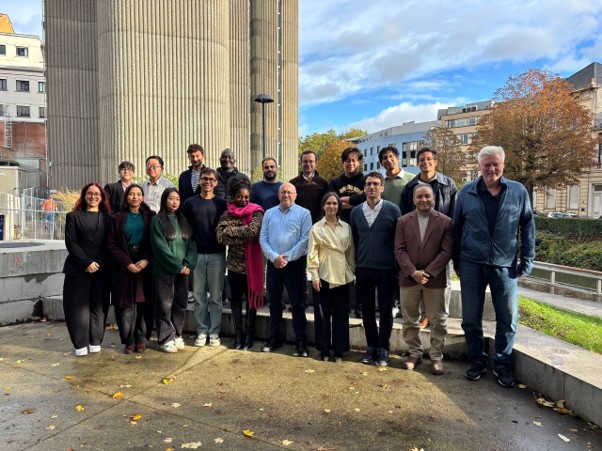
The 18 participants, coming from ten different countries and diverse disciplinary backgrounds, engaged with the topic to explore how far the regionalism approach can be applied to their own research. The School concluded with the presentation of participants’ ongoing PhD projects.