

Countries do not have to face every challenge alone. Sometimes, the most useful solution is already being used somewhere else, for example in a country dealing with a similar problem, but possibly under different circumstances.
That is the idea behind South-South cooperation. It is a process where two or more countries from Latin America, the Caribbean, Africa and Asia exchange to share experience, knowledge, technology and resources, and is becoming an important way to tackle challenges such as climate change, food insecurity, public health, digital inequality and disaster risk.
What is South-South cooperation?
South-South cooperation comes down to countries helping each other by sharing what they know and what works. The countries involved decide together what they need and how they want to cooperate.
In 1978, 138 UN Member States adopted the Buenos Aires Plan of Action, which laid out principles for cooperation among developing countries, including equality, mutual benefit and respect for national priorities.
Today, this can take many forms. A country might share experience in preparing for floods, another might provide expertise on renewable energy, or several countries might work together to develop more sustainable farming methods. The point is not simply to copy a solution, but to learn from one another and adapt what works to local circumstances.
Why does South-South cooperation matter?
Many of the problems countries face today do not stop at borders. Climate change, disasters, food insecurity and gaps in access to technology can affect countries in very different ways, but there is often something to learn from each other without having to reinvent the wheel.
South-South cooperation creates a space for that learning. Countries can exchange practical experience, strengthen their capacity and adapt solutions that have already been tested elsewhere. That can save time and resources, as well as sometimes avoid repeating the same mistakes.
It also changes the way we think about development. Knowledge does not only flow in one direction. Countries in the Global South are generating their own ideas, technologies and approaches, from climate-smart agriculture and green technologies to digital innovation and public health.
For sustainable development, that matters. The Sustainable Development Goals are ambitious, and progress has been uneven. No single country has all the answers. South-South cooperation is one way to make better use of the knowledge and experience that already exists. It adds another route to international cooperation, one that is based on sharing experience between countries that may understand each other's challenges particularly well.
To facilitate cooperation, sometimes a country or organization outside of the Global South helps connect or support cooperation between two or more countries through ‘triangular cooperation’. This can bring additional funding, expertise or technology to a partnership while keeping local knowledge and priorities at its centre.
At United Nations University Vice-Rectorate in Europe (UNU-VIE), there is a strong focus on facilitating South-South cooperation. Through triangular cooperation, UNU-VIE’s Pan-African Cooperation and Educational Technologies division facilitates the exchange and collaboration between Global South entities, countries outside of the Global South and international organizations.
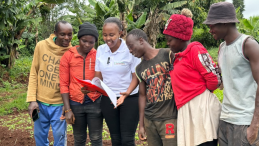
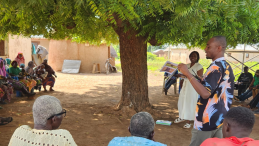
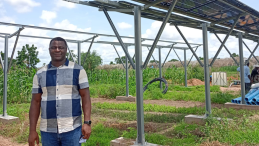
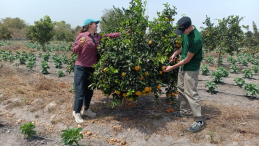
For example, through South-South cooperation and triangulation, we facilitate the sharing of knowledge and tools between Africa and Latin America to support women in developing green businesses and strengthening the role of institutions delivering capacity-building for a gender just-energy transition, funded by the International Development Research Centre. Collaboration is also taking place across West African smallholder farming systems with universities, research organizations, local governments and farmers. In Ghana and Senegal, partners are co-developing locally grounded inclusive learning for more climate-resilient agriculture, while farmers and researchers in Mali and The Gambia are connecting and collaborating on the implementation of agrivoltaic systems, funded by the German Federal Ministry of Research, Technology and Space.
This work shows what South-South cooperation can look like in practice and how it can go beyond sharing knowledge by creating opportunities for people to develop, test and adapt solutions together. UNU-VIE helps turn local experience into knowledge that creates the conditions for people to develop solutions that work where they are – and to learn from each other along the way.