Capacity development is a cornerstone of development cooperation, including in migration management, as it strengthens institutions' ability to address challenges at both the policy and operational levels. UNU-MERIT has extensive experience in bridging the gap between migration research and policymaking through a range of capacity development initiatives targeting governmental officials. Building on this expertise, in 2025, UNU-MERIT's Capacity Development Office started cooperating with IOM's African Capacity Building Centre (ACBC) to deliver capacity development activities focused on international migration law and migration data.
Last year, in November 2025, migration policy officials from across Africa gathered in Moshi, Tanzania, for two intensive week-long Migration Law and Policymaking (MiLAP) trainings, held at the IOM ACBC's premises. This training was funded by the Repatriation and Departure Service of the Netherlands (R&DS).
The trainings were offered jointly by UNU-MERIT, R&DS and IOM ACBC, bringing together mid- to senior-level government officials who play a central role in shaping national migration strategies in their countries—creating a unique space for collaboration, learning, and peer exchange. From UNU-MERIT, Prof. Melissa Siegel, Dr Lalaine Siruno and Ms Cristina Mancigotti joined the implementation of both training intakes.
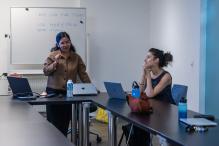
Over two weeks, 39 participants explored the core subjects: global and regional migration, international law in the context of migration, migration data, the essentials of migration policymaking, and the monitoring and evaluation of migration policies and programming. Through interactive lectures, case studies, and hands-on exercises, the group examined how global legal frameworks intersect with national priorities, and how data can be used more strategically in designing and assessing policy.
A particularly valued aspect of the training was its practical approach. Rather than remaining in the realm of theory, participants were encouraged to analyse real-world policy challenges from their own countries. This not only deepened the learning experience but also strengthened cross-country dialogue, allowing officials to compare approaches and share lessons learned.
By the end of the week, the group left Moshi equipped with new tools, refreshed perspectives, and a stronger professional network. MiLAP proved to be more than just a course: it became a platform for strengthening capacity, building shared understanding, and empowering African migration officials to navigate an increasingly complex policy landscape.
Reconnecting from Moshi
Building on the momentum of the trainings held in November 2025, a follow-up webinar in January brought together participants from both training intakes for a moment of reconnection, reflection, and renewed learning. Around 20 participants joined the online session, demonstrating strong and sustained interest in staying engaged beyond the initial training experience.
The webinar provided a valuable opportunity for participants to reconnect with colleagues from their own intake and to meet peers from the other group, fostering a broader network of exchange. Participants reflected on how the knowledge and skills gained during the November trainings had translated into their daily work, sharing concrete examples of how the learning outcomes had supported their professional practice.
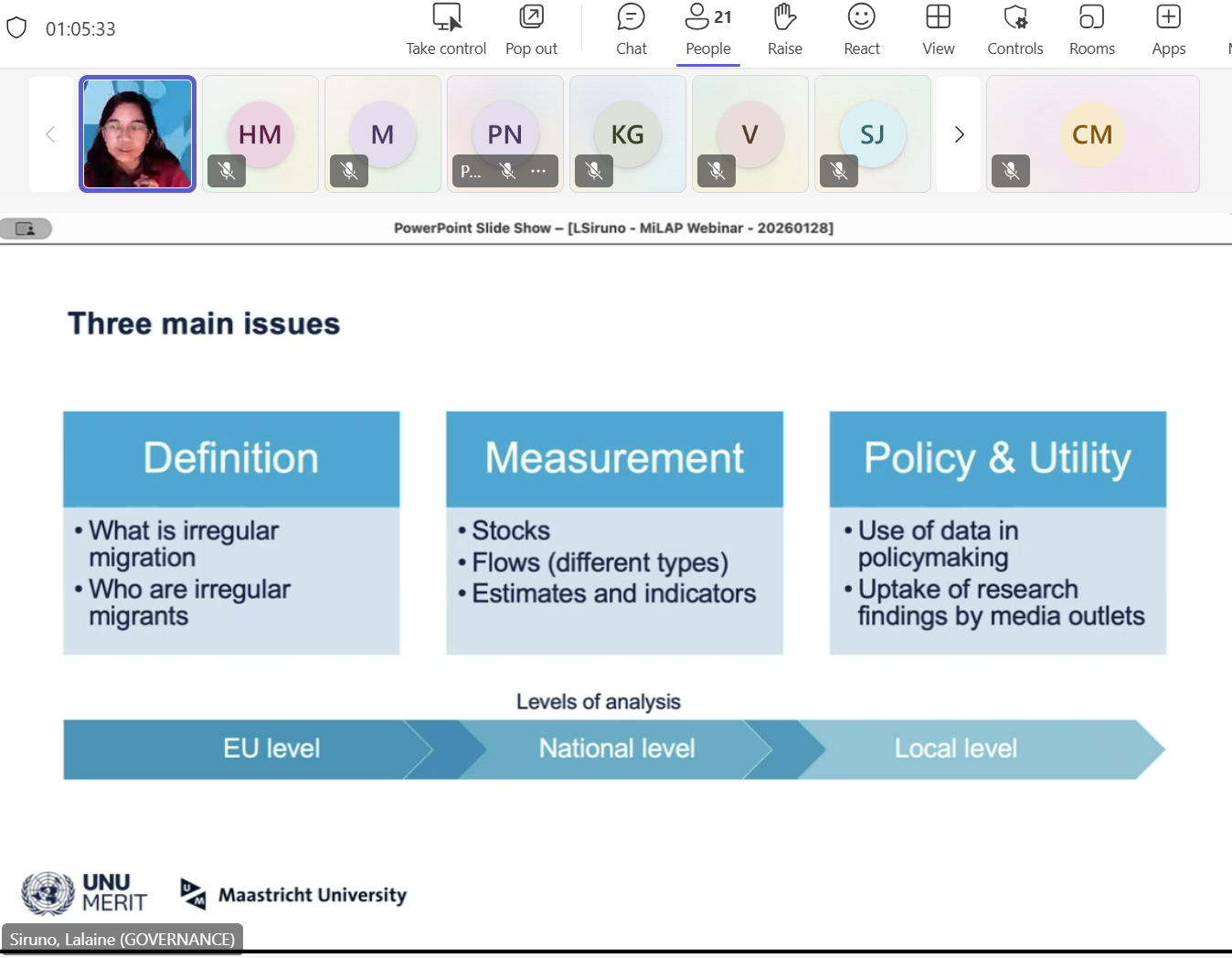
A key component of the webinar was a thematic input on irregular migration in Europe, delivered by Dr Lalaine Siruno, "The size of Europe's irregular migrant population: key findings from the Horizon Europe MIrreM Project (Measuring Irregular Migration and Related Policies)". This session offered fresh perspectives and deepened participants' understanding of current developments in the field, while creating space for discussion and critical reflection.
Looking ahead, this January webinar marks only the first step in continued engagement with the training community. In addition, at the end of April 2026, a residential follow-up training of one week will be hosted in Maastricht, continuing the discussions held in Moshi and deepening the themes of, but not limited to, irregular migration, international migration law and return migration, through lectures, case studies, simulation exercises, and on-site visits.
MiLAP is a capacity-building training funded by the Repatriation and Departure Service of the Kingdom of the Netherlands, co-funded by the European Commission.

Suggested citation: Cristina Mancigotti., "Learning across borders: Reflections on the MiLAP Training ," UNU-MERIT (blog), 2026-04-15, 2026, https://unu.edu/merit/blog-post/learning-across-borders-reflections-milap-training.