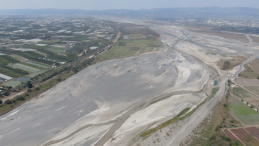


Knowing what the weather will do: A guide for practitioners on impact-based early warning
Practical examples for floods and droughts in Eastern Africa

Impact-based early warning (IbEW) is an emerging paradigm that aims at enhancing the effectiveness of hazard early warning by moving from forecasting “what the weather will be” to knowing what “it will do”. It does so by integrating risk and impact information to support targeted early action. Despite growing interest, practical frameworks and guidance for transitioning towards IbEW systems remain limited.
This guidebook provides a novel approach and methodology for designing and implementing IbEW systems. Drawing on the outcomes of a research project in Eastern Africa, it guides the co-development and integration of risk knowledge on hazards, exposure, vulnerabilities and impacts into operational hazard forecasting systems.
Specifically, the guidebook: (1) introduces a novel conceptual framework for IbEW that links risk knowledge with early action; (2) presents a modular step-by-step methodology combined with concrete application examples from drought- and flood-related risks and impacts in Kenya; and (3) provides implementation checklists, guiding questions and practical tools to support the process from design to operationalization. Importantly, the IbEW framework and applications centre on the inclusion of vulnerable groups, who often experience risks and impacts differently from the wider population and possess distinct capacities that can support effective early action.
This guidebook is intended for practitioners, policymakers and civil society organizations working from local to regional scales, and contributes to global efforts to advance Early Warning for All.