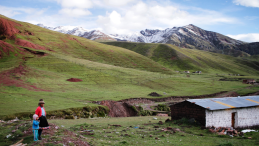


Mountain regions face some of the most complex climate risks worldwide. Steep terrain, remoteness and fragile ecosystems magnify the impacts of hazards such as landslides, floods, avalanches and glacial lake outburst floods (GLOFs). As highlighted in this publication authored by two of UNU-EHS' mountain risk experts, hazards in these settings can isolate entire communities and disrupt water, energy, transport and communication systems downstream.
To protect people’s lives and livelihoods, as well as mountain ecosystems, mountain regions need infrastructure that is designed, maintained and managed with their unique risks in mind. Here are five ways to strengthen that resilience:
Build infrastructure that can maintain essential services during crises
Disaster-resilient infrastructure should be robust enough to continue functioning during shocks, because single assets often serve as lifelines in mountains. Landslides, rockfalls and flash floods frequently damage roads, bridges and power lines, cutting communities off from health services, markets and emergency support. Using advanced materials, such as high-performance concrete, can help infrastructure withstand such extreme events. Slope-stabilizing techniques, like reinforcing soil with geosynthetics like Polyester or anchoring unstable rock, can reduce the chance of road collapse, similar to how elevated roads can help avoid floodwaters. At the same time, small, decentralized systems such as solar mini-grids or local water purification units allow communities to keep essential services running even if larger networks fail. Early-warning and monitoring technologies, including sensors on slopes and mobile backup communication systems, provide vital alerts when something starts to go wrong.
Combine Indigenous and local knowledge and Ecosystem-based Adaptation with engineering techniques
For generations, mountain communities have developed ways to live safely with the risks present in their environment. Practices such as terracing in the Andes or using deep-rooted native plants to stabilize slopes in the Himalayas help reduce erosion, slow water run-off and prevent landslides. These approaches are cost-effective, use local materials and are well adapted to steep terrain. When such nature-based solutions are used for Ecosystem-based Adaptation (EbA), healthy ecosystems such as wetlands, grasslands and forests can help to buffer hazards. For example, restoring high-altitude grasslands in South Africa improves water security and reduces sediment that can damage pipes and dams. In Afghanistan, replanting local species in vulnerable watersheds has helped reduce avalanche and erosion risks around homes and farmland. When these nature-based approaches are combined with engineering measures, they create stronger, more sustainable protection for communities.
Base planning and investment on multi-hazard risk assessments
Mountain hazards often interact. A heavy rainfall event can trigger a landslide, which blocks a river, which then causes flooding downstream, for instance. Climate change makes these interactions more unpredictable, because warming is happening faster at higher elevations, causing glaciers to melt and permafrost to thaw. This destabilizes slopes and increases the risk of Glacial Lake Outburst Floods (GLOFs). Because old patterns no longer reliably predict future risks, planning must be based on up-to-date, multi-hazard assessments that combine information on climate trends, environmental change and how people use land and resources. Such assessments can help authorities identify safer locations for roads, schools or power lines and encourage the use of designs that can withstand the hazards most likely to occur.
Mobilize financing through partnerships and innovative climate funding
Mountain infrastructure is more expensive to build and maintain due to difficult terrain and higher costs of delivering goods and services. Low population density in many mountain areas limits financial returns, making investment in these communities challenging. Therefore, it is important that public–private partnerships, long-term donor support and innovative climate financing can fill financial gaps. Successful initiatives, such as catchment-based "water funds" in South Africa or community-managed water systems in South Sudan, illustrate how through flexible funding, local participation and sustained support infrastructure can become more reliable and more equitable.
Strengthen collective action to safeguard lives, livelihoods and ecosystems
Improving resilience in mountains is a shared effort. When governments, communities, researchers and international partners work together, they can bridge data gaps, link early-warning systems and respond more quickly to emerging risks. Cross-border cooperation is especially important as rivers, watersheds and hazards do not follow human-made borders. At the same time, strengthening local governance and ensuring that Indigenous Peoples and marginalized groups can actively participate in decision-making can lead to solutions that last and are fair for all.