

Dr. Dewi is interested in enhancing the early warning systems through an integration of vulnerability and exposure components in multiple sectors, and in optimizing impact-based early warning in reducing disaster losses. Dr. Dewi is currently working on a project in co-developing an actionable impact-based early-warning systems in the IGAD region.
Dr. Maria Dewi is an Associate Academic Officer at MCII division.
Dr. Dewi is a disaster risk and climate resilience specialist with 7 years of experience across the UN system. She works at the intersection of science, policy and operations to advance impact-based forecast and warning services, and risk analytics for climate-related hazards.
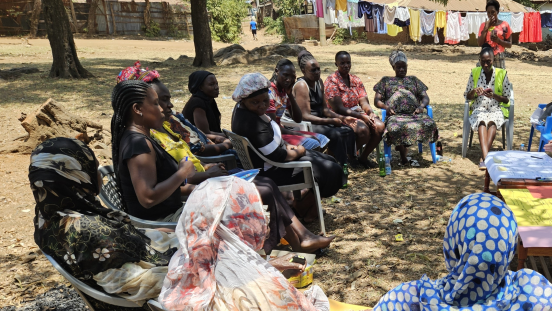
Dr. Dewi worked on the EarlyWarning4IGAD project in the IGAD Region of the Greater Horn of Africa, with Kenya and Ethiopia as pilots. She led the day-to-day activities of the project, and coordinated with consortium partners. In this project, she contributed to the co-development of the impact-based early warning approach for drought and flood, and engaged with the stakeholders throughout the project. Dr. Dewi has an interest in improving practitioners' understanding of risk to include what and how hazards might affect people and key sectors, enabling anticipatory actions that can reduce disaster losses.
Prior to joining UNU-EHS, Dr. Dewi served as the Disaster Risk Reduction Expert at the UN ESCAP and UNITAR in Asia and the Pacific region. She led data and analytical teams in developing decision-support tool on multiple climate risk scenarios and climate adaptation priorities, and supported the operationalization of IBFWS in the Asia and the Pacific region. She was one of the main authors of UN ESCAP’s flagship publication, named the Asia-Pacific Disaster Reports, training manuals and policy briefs. She also contributed substantially to the WMO State of the Climate Reports.
She delivered numerous capacity-building activities to multi-stakeholders on risk assessment and the use of decision support tools, methodological approach on impact-based forecasting and risk analytics, engaging national disaster management authorities, national meteorological and hydrological services, sectoral ministries, academics, UN agencies and other organizations at regional and national settings.
Her interests are in disaster risk reduction and climate change adaptation, decision support system tools, and impact-based forecasting and warning services.
For more information please visit her Research Gate or Linkedin profile.