

Harare, Zimbabwe – on 27 March 2026, Zimbabwean leaders, water experts, youth, and community organisations convened at Mukuvisi Woodlands in Harare for the Zimbabwe Water Conference under the theme “From Wetlands to Water Security: Zimbabwe’s Leadership in a time of Global Water Bankruptcy”, a high-level platform translating the warnings of UNU-INWEH’s Global Water Bankruptcy Report into concrete national action. Anchored under the Ministry of Lands, Agriculture, Fisheries, Water and Rural Development, the Conference served as the flagship gathering of the Zimbabwe Water Dialogue, commemorating the International Day of Forests, World Water Day and World Meteorological Day under the integrated themes “Forests and economies”, “Water and gender” and “Observing today, protecting tomorrow”.
The Conference took place at a pivotal moment as the African Union has declared 2026 the Year of Water, under the theme “Assuring Sustainable Water Availability and Safe Sanitation Systems to Achieve the Goals of Agenda 2063”. Building on this continental mandate and the Global Water Bankruptcy Report, the Zimbabwe Water Conference presented a whole-of-government and whole-of-society mechanism for 2026–2028 to drive integrated water, climate, biodiversity and economic reforms.
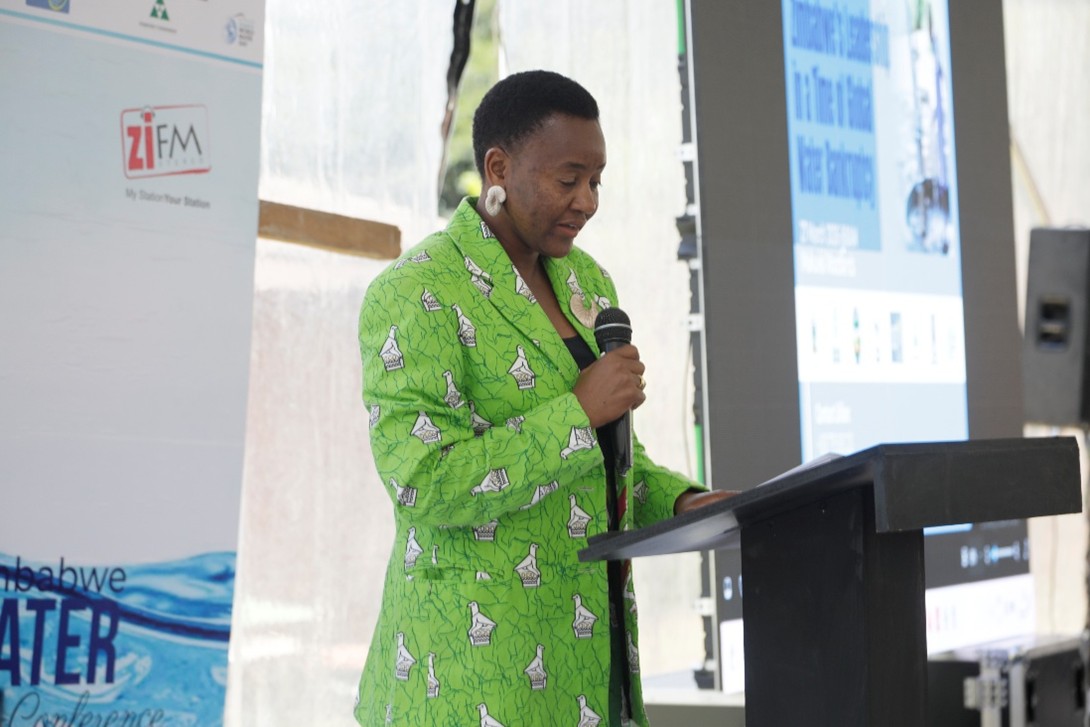
Hon. Angeline Gata, Deputy Minister of Primary and Secondary Education of Zimbabwe, delivering the keynote address.
Representing the Environment Patron and Wildlife Ambassador, First Lady H.E. Dr Auxillia Mnangagwa, Hon. Angeline Gata, Deputy Minister of Primary and Secondary Education, delivered the official keynote address. Hon. Gata underscored that “Water has become the defining development issue of our time” and stressed that schools, communities and institutions must become agents of water stewardship, climate resilience and wetlands protection. “Water security is no longer a sectoral issue” she said, “it is a national, continental and global issue and Zimbabwe is not isolated from these realities”. Hon. Gata’s keynote reaffirmed Government’s commitment to aligning national programmes with global priorities, including the Global Water Bankruptcy Report, the African Union’s Year of Water, Agenda 2063 and regional SADC water frameworks, while reinforcing accountability and citizen participation across all levels.
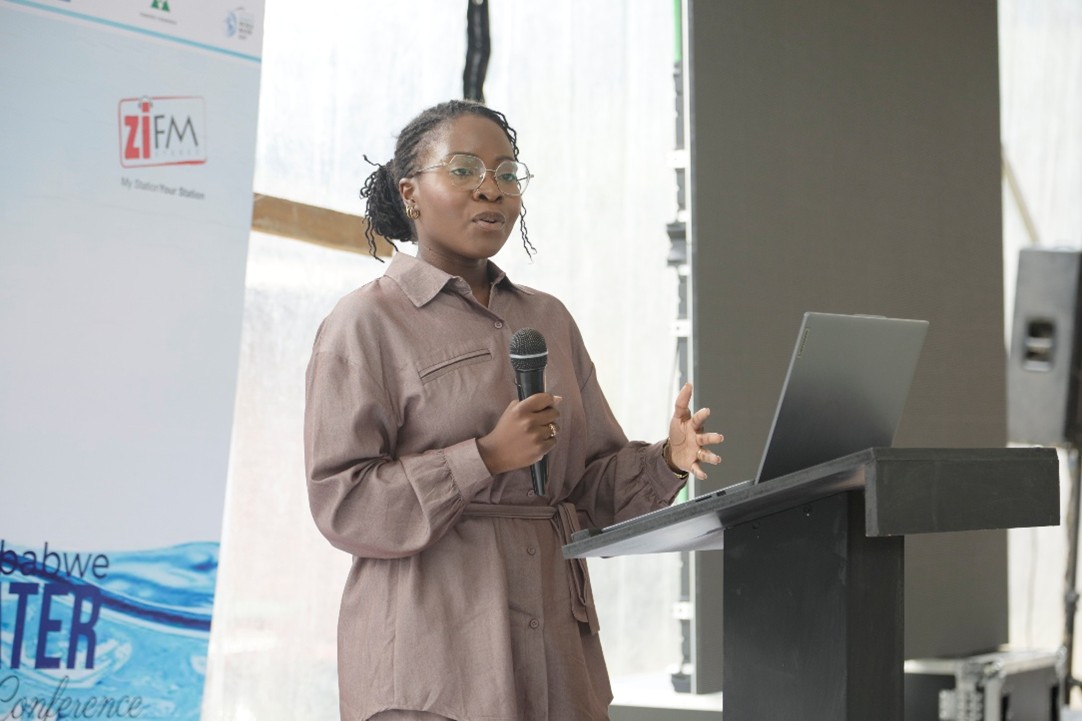
Ms. Tariro Mbiba, International Affairs and Policy Associate at UNU-INWEH presenting on the Global Water Bankruptcy Report.
Ms. Tariro Mbiba, the International Affairs and Policy Associate at UNU-INWEH presented key messages from the Global Water Bankruptcy Report and their global implications as well as context-specific implications for Zimbabwe. She highlighted that the report serves as a global wakeup call. “We have gone beyond crisis” she said “We are in a post-crisis state which requires different actions and different framing. The way we have previously understood and tackled water problems is no longer appropriate for the reality we now face.”
Ms. Mbiba explained that water bankruptcy is not a distant risk but a present diagnosis: long-term overuse, pollution, and ecosystem degradation have pushed many water systems beyond recovery, so the old hydrological normal will not return, and countries must fundamentally reset policy and investment around transparent water accounting, protection of remaining natural water capital, and equity-centred transitions. She highlighted the Zimbabwe Water Conference as a critical opportunity to bring together government, basin authorities, communities, youth, civil society, and the private sector to move beyond rhetoric and co-design concrete actions, positioning the meeting as a stepping stone for Zimbabwe to arrive at the upcoming UN Water Conference with a clear national narrative, priority commitments, and a shared roadmap for water reform in the era of global water bankruptcy.
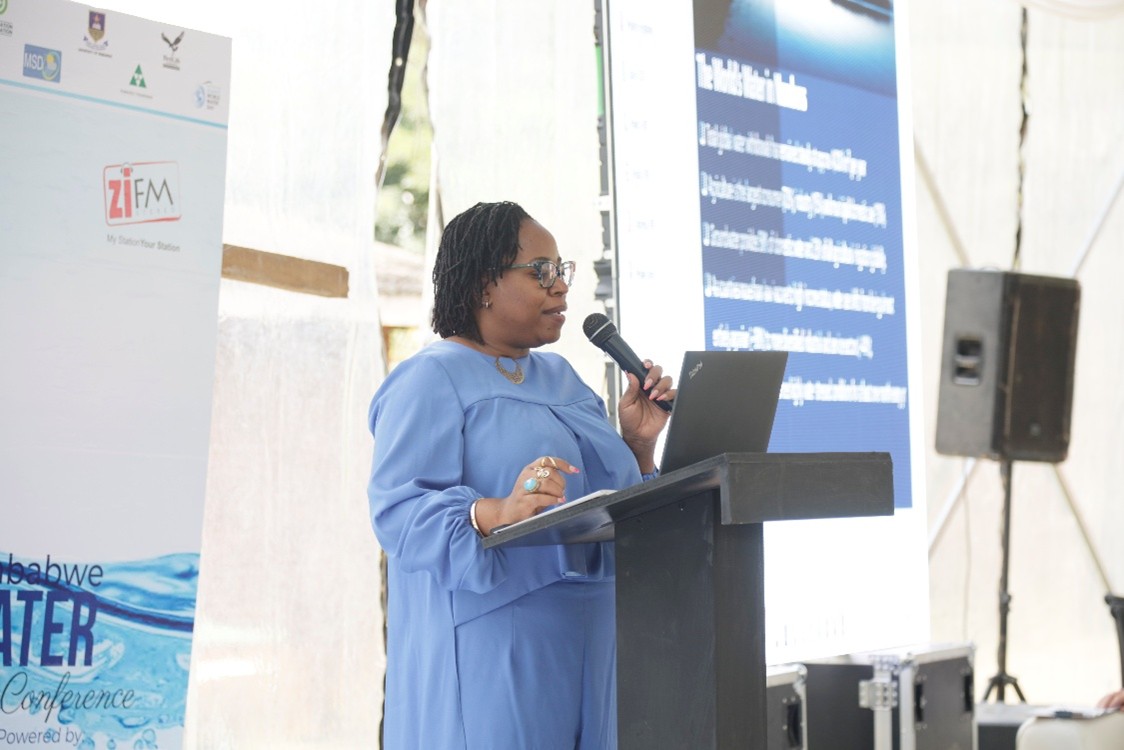
Dr. Muchaneta Munamati, National Project Coordinator of UNESCO ROSA delivering her presentation on the UN World Water Development Report.
Dr. Muchaneta Munamati, National Project Coordinator with the UNESCO Regional Office for Southern Africa (ROSA), presented the key findings of the UN World Water Development Report, emphasizing the critical role of science, innovation, and regulation in addressing water bankruptcy conditions. She underscored this year’s World Water Day theme, “Water and Gender,” noting that women and girls remain disproportionately disadvantaged in water management. “It is important that we adopt a gender transformation approach that actively challenges deep-seated patriarchal values so that we can improve water security for women,” she stated. Dr. Munamati also emphasized the need for robust disaster response mechanisms to foster inclusive climate adaptation and ensure targeted, equitable interventions.
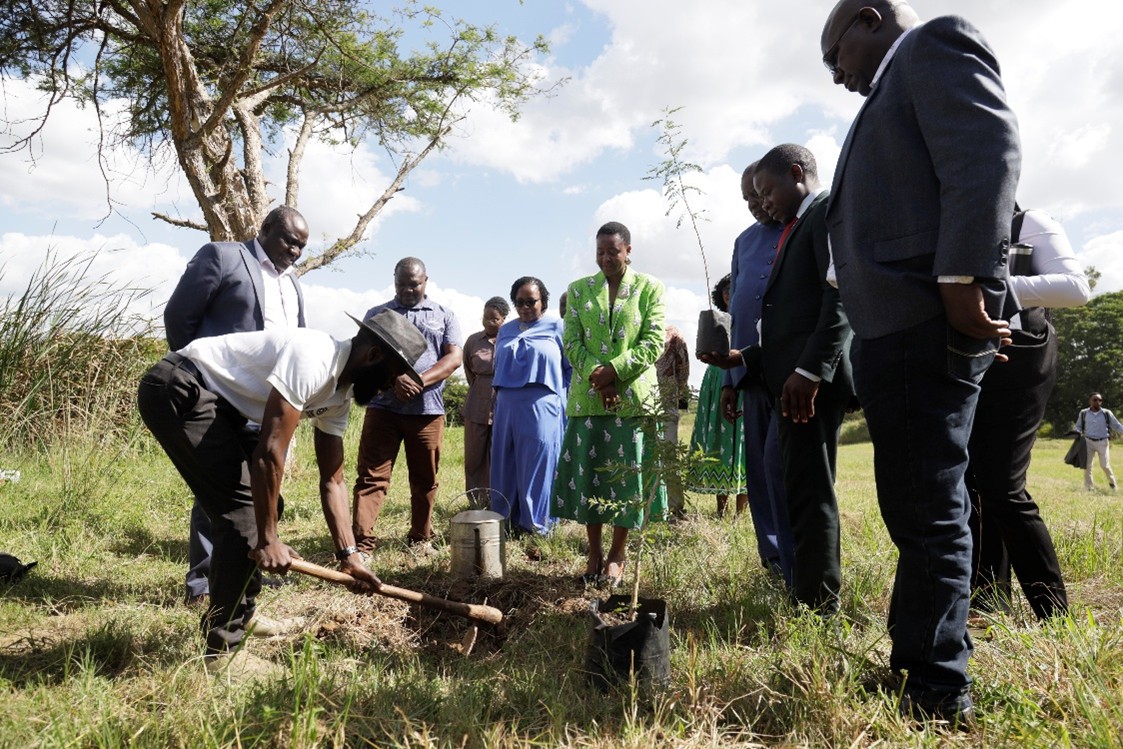
Delegates close the Zimbabwe Water Conference with a symbolic tree-planting ceremony.
The Conference programme combined plenary sessions, technical panels, school-led presentations, and an interactive exhibition featuring government agencies, private sector institutions, conservation organisations and youth innovation hubs. A tree-planting ceremony, school competitions and multimedia storytelling on the themes of World Water Day, World Meteorological Day and the International Day of Forests reinforced the message that local communities and young people sit at the heart of Zimbabwe’s water future.