


 |  |  |  |
Media plays a pivotal role in shaping how societies understand and respond to emerging global risks. In the context of water, it can raise public awareness, translate complexity into accessible narratives, and catalyze action to address one of the defining challenges of our time: water bankruptcy.
The 2026 Global Media Awards (GMAs), themed “Water Bankruptcy — Every Drop Counts,” aims to deepen public understanding of water security as a critical human, environmental, and economic priority. It seeks to foster informed dialogue and responsible action across all levels of society. By promoting human-centered storytelling alongside rigorous analysis, the Awards encourage a shift beyond crisis-driven narratives toward solutions-oriented reporting that highlights pathways for resilience, adaptation, and systemic change.
At its core, the GMAs aspires to transform audiences from passive observers into informed agents of change.
Submissions are now open. We invite outstanding television and digital media news, stories, and documentary programs that creatively explore issues related to water preservation, consumption, scarcity, and the growing risk of water bankruptcy.
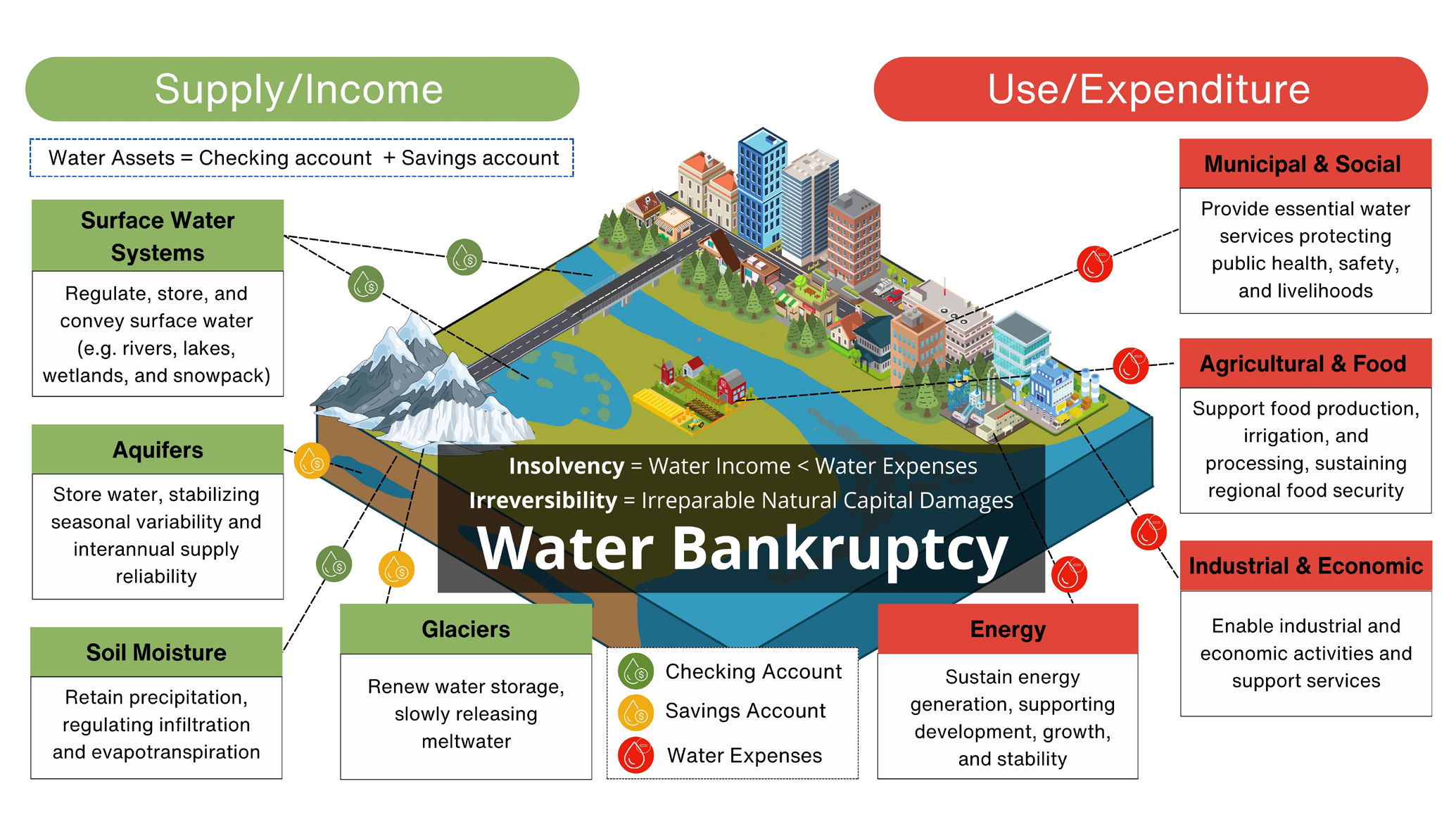
A simple illustration of water income and water expenses in a human–water system. Water bankruptcy is the outcome of both insolvency and irreversibility conditions, i.e., when water use (expenditure) exceeds water supply (renewable and non-renewable assets) for an extended period resulting in irreparable damages to the underlying natural capital that contributes to water production and stability of the hydrological cycle. Source: Global Water Bankruptcy Report.
Applications Open
Join us as we recognize media's role in protecting future generations by digging deeper, documenting the roots and finding a way forward for the well-being of our societies. We invite news stories and documentaries. Entries should be submitted using the registration form. There is no fee.
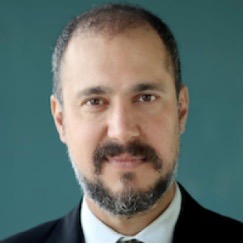 Professor Kaveh Madani Director, United Nations University Institute for Water, Environment and Health Water is the foundation of life, economies, and ecosystems. Yet across much of the world, we are no longer simply facing water scarcity only; we are confronting a far more profound and systemic condition: water bankruptcy. As outlined in our recent work at UNU-INWEH, in many regions, human–water systems are already in a state of failure, where long-term water use has exceeded renewable supply, and both quantity and quality along with the state of water-dependent ecosystems have been degraded beyond recovery. Societies have drawn down not only annual freshwater “income,” but also the natural “savings” stored in aquifers, glaciers, soils, wetlands, and river systems. This is not simply a question of scarcity or temporary crisis; it is a condition defined by both insolvency and irreversibility, requiring a transformational reset in how we manage water, combining mitigation with adaptation to new realities. |
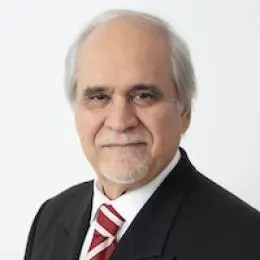 Dr. Javad Mottaghi Lead, Global Media Academy, United Nations University Institute for Water, Environment and Health, and Adjunct Professor, Department of International Business, HEC, Montreal Water bankruptcy is one of the most urgent global challenges of our time. Declining freshwater resources driven by climate change, pollution, mismanagement, and overuse threaten food security, public health, economic stability, and social cohesion. Its deepest impact will be felt by the next generation, who risk inheriting depleted resources, higher costs, and increased conflict over water. Addressing this crisis is both a societal necessity and an intergenerational responsibility. Media has a vital role to play by elevating water security from a technical issue to a public priority. Through informed reporting, investigative journalism, and solutions-focused storytelling, media can raise awareness, hold decision-makers accountable, highlight innovation, and inspire responsible behavior. By shaping public understanding and influencing policy agendas, the media can be a powerful driving force in mobilizing collective action helping safeguard water resources and secure a sustainable future for society and generations to come. |
Awards Categories and Prizes
There are two categories:
- Television
- Digital Media
The GMA recognize outstanding and innovative video/television, and digital media content that brings the issue of Global Water Bankruptcy to life. Eligible submissions include news stories and programs, documentaries, AI-generated content, narrated videos, interviews, social media videos, animations, and productions that use on-screen graphics to communicate complex ideas. Entries should clearly explore both the underlying drivers of water bankruptcy—such as overuse, mismanagement, pollution, and climate change—and the solutions needed to address this growing global challenge.
While Water Bankruptcy must remain the central theme, the Awards welcome a diverse range of storytelling formats, including documentary, reportage, and docudrama. Submissions may also include news features, dramatic interpretations, animation, and AI-assisted productions, provided they demonstrate strong narrative quality, accuracy, and public relevance.
All entries should align with the overarching theme of the Awards: “Water Bankruptcy — Every Drop Counts.”
The award criteria for each category are:
- Accuracy
- Relevance
- Impartiality
- Audience engagement
- Production quality
- Solutions oriented
- Innovation
Three cash prizes will be awarded in each of the following 2 categories:
Television Awards
1st Award: CAD $ 2,000.00
2nd Award: CAD $ 1,000.00
3rd Award: CAD $ 1,000.00
Digital Media Awards
1st Award: CAD $ 2,000.00
2nd Award: CAD $ 1,000.00
3rd Award: CAD $ 1,000.00
Eligibility
The Awards are open to public and private media organizations, as well as independent content producers and freelancers worldwide.
All television and digital media content— including news stories, programs, and documentaries—produced or co-produced in any country between May 15, 2024 and September 15, 2026 are eligible for submission. Each program may be entered only once. Independent producers, directors, and freelancers may submit entries without affiliation to a broadcast network.
Each participant can submit one (1) entry, in Television and one (1) entry in Digital Media including Facebook, Instagram, YouTube, AI, etc., categories, either reportage, documentary, news story, animation, AI generated content or docudrama. Submissions may range from short-form content of a few seconds to long-form productions of up to 52 minutes in duration. In the case of co-productions involving multiple organizations, entries must be submitted by one party with documented consent from the other co-producer(s).
Entries must be free from political propaganda or intentional commercial advertising. A wide range of storytelling approaches is encouraged, including traditional reporting, animation, and Artificial Intelligence (AI)-assisted production. Works incorporating dramatized or narrative techniques—such as docudrama—are also eligible, provided they are grounded in rigorous research, faithfully represent the essence of real events, and clearly disclose any reconstruction or creative interpretation.
DIGITAL CLARIFICATION: Digital Media includes online articles and social media posts, including video programs: Entries in the digital media category must contain multiple different digital executions of the subject across various platforms. There must be work that is from at least two of the following media platforms: Radio/Television, OTT Video platforms (shorts, online miniseries, etc.), podcasts, social posts, news posts, multimedia website reports (containing text, video, audio, embedded socials, public comments, etc.), specialist websites or microsites.
Registration
The Programs competing for the 2026 Global Media Awards on Water Bankruptcy - Every Drop Counts should be registered in the competition by filling in the registration form .
Through the registration form , applicants must provide all requested information including:
Immediately after submitting the registration form, all entries (MP3, MP4, WAV) must be submitted by WeTransfer or similar file transfer services to UNU-INWEH by no later than September 15, 2026 at 11.59pm EST (deadline). Entries should be sent to: awards.inweh@unu.edu.
No registration fee is required for participation.
By entering the Program(s) in the competition, participants shall guarantee that the Program(s) design and production comply with applicable law, especially copyright law. By registering under these awards, participants declare and guarantee that they are the exclusive owners and/or have the exclusive availability of all exploitation rights of the Program(s), also in the name and on behalf of any third-party owners.
Aims and Goals
- Positioning media as a critical actor in addressing the emerging global reality of water bankruptcy. Elevating water security from a technical concern to a societal and political priority. Strengthening public understanding of its human, environmental, economic, and security implications, by fostering informed dialogue and responsible action across all levels of society.
- Enhancing the capacity of media professionals to report on water issues with rigor, depth, and impact. Promoting investigative, evidence-based, and solutions-oriented journalism that goes beyond episodic crisis coverage to examine systemic drivers, governance failures, and pathways for transformation. Advancing human-centred storytelling alongside accountability reporting to encourage more nuanced, constructive, and action-oriented narratives.
- Catalyzing cross-sectoral engagement by connecting media with governments, academia, civil society, industry, and international organizations. This approach supports more coordinated responses to water challenges and helps embed water considerations into broader public discourse, linking them to climate change, health, food systems, economic resilience, and social equity.
- Shifting audiences from passive awareness to informed engagement. By amplifying credible knowledge, spotlighting innovation, and promoting practical, scalable solutions, it seeks to contribute to a more informed global public and to accelerate the transition toward resilient, equitable, and sustainable water systems for current and future generations.
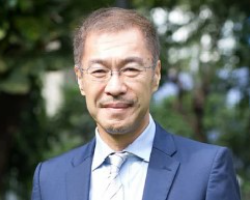 Mr. Shigeru Aoyagi Founder and Director General, Pale Bleu Dot Foundation, Japan - Former UNESCO Regional Director for Asia and the Pacific Water is far more than a natural resource. It is the foundation of life, human dignity, and peaceful coexistence. Throughout history, access to water has shaped civilizations, supported livelihoods, and sustained ecosystems. Yet today, growing water scarcity and mismanagement are increasing pressures on societies and regions around the world. When water becomes scarce, tensions can rise between communities, across borders, and among generations. Conversely, when water is managed fairly and sustainably, it becomes a powerful instrument for cooperation, dialogue, and peace. For this reason, responsible and insightful media reporting is essential. By informing the public, highlighting solutions, and giving voice to affected communities, journalists help transform water challenges into opportunities for collective action. The Pale Bleu Dot Foundation is honoured to support the 2026 Global Media Awards: "Water Bankruptcy - Every Drop Counts". We believe that informed storytelling can inspire responsible stewardship of water and contribute to a more peaceful and sustainable world. Let every drop remind us not only of our shared vulnerability, but also of our shared responsibility for peace. |
Jury
The Jury for each of the two categories shall be formed of eleven members. The Jury members are invited by the Awards organizers at their discretion, considering their recognized media expertise, balanced representation and other criteria considered relevant. The Jury shall be presided by a chairperson, appointed by the organizers, among the renowned experts with whom they collaborate.
If an organisation enters a program in the competition and there is a member of the Jury that is linked to that organisation, they will not vote on that program.
Jury Members
Television Jurors
1. Chair: Professor Saachi Jain, Cardiff University School of Journalism, Media
2. Silvia De Felice, Commissioning Editor International Co-productions Rai Documentary- Italy
3. Sung Won Choi, Head, Low Birthrate Crisis Response Broadcasting Task Force, KBS, Korea & Former Head of the Int’l News Team & head of the Disaster Broadcasting Team, COO & CFO of KBS America in Los Angeles
4. Elaine Cobbe, Foreign Correspondent / Grand Reporter, based in Paris
5. Dinara Bekenova, Chief Program Officer of Freedom Media -Kazakhstan
6. Annasahet Kakayev, Deputy Chairman of the State Committee of Turkmenistan for Television, Radiobroadcasting and Cinematography (TVTM) - Turkmenistan
7. Gisèle Nnemi Nga, Deputy Director and Editor-in-Chief at the AUB in Algiers
8. Haroon-or-Rashid, Former Director General of Bangladesh TV
9. Steve Maximay, A Caribbean climate risk systems architect & former UN-FAO Climate Change Advisor (Caribbean)
10. Qazi Junaid Naseer, Controller of Presentation at Pakistan Television with two decades of professional experience as a producer and director
11. Vali Iorga, Director, news channel of Television Romania
Digital Media Jurors
1. Chair: Flavia Voinea, Journalist, Manager of Bucharest FM Radio Romania Regional Network
2. Dr. Claire Cordelia Grant, OD, MBA, PMP, Immediate Past President of the CBU-Caribbean Broadcasting Union
3. Dr. Ridha Najar, Immediate Past Director ASBU Media Academy – Tunis
4. Joao Francisco Pinto, Founding Member - Macau Portuguese & English Press Association- Macau-China & former Chairman of ABU News Exchange
5. Nedra Weerasinghe, Executive Group Director/COO -Capital Maharaja Group Sri Lanka
6. Davide Di Stadio, Creative and Content Production Manager, RAI Digital and Transmedia- Italy
7. Wendy Everett, Journalist - leading her own media consultancy in Australia and former Director of ABU News
8. Lauren Beldi, supervising producer of the ABC’s “The World” Australia
9. Budi Nugroho, Head of RRI Manado, Indonesia, & former Head of RRI Banda Aceh, Indonesia
10. Nguyen Thuy Hoa, former Deputy Editor-in-Chief of Voice of Vietnam online newspaper, & Director of VOV's International Cooperation Dept.
11. Tunde Aina, Chief Operating Officer of Star Times in Nigeria
Learn more about the esteemed members of the TV and digital media juries
For further comments or questions, you may contact:
Dr. Rohit Ramchandani, Innovation & Strategic Partnerships Officer, UNU-INWEH.
Dr. Javad Mottaghi, Lead, Global Media Academy, UNU-INWEH.