

Water serves as the foundational infrastructure linking climate, energy systems, agriculture, public health, ecosystems, and human society. As technological progress accelerates, humanity faces an urgent challenge: establishing clear boundaries to align innovation with natural planetary limits.
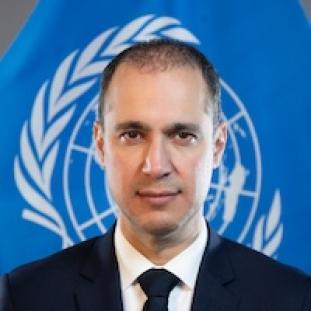
UNU-INWEH Director Professor Kaveh Madani will deliver the opening keynote, shifting the conversation from standard discussions of water scarcity to the paradigm of Global Water Bankruptcy.
The rapid growth of artificial intelligence and digital infrastructure brings this issue into sharp focus. Though often viewed as virtual or intangible, data centers rely on physical facilities that draw heavily on electricity, land, and local water supplies – frequently in regions already experiencing severe water stress. Technological advancement cannot be viewed as infinite or detached from its footprint. Its ultimate value depends on its resource consumption, social impact, and long-term consequences.
The session unfolds across two core segments:
Part I: The Water–Energy–Agriculture–Heritage Nexus
Explores how energy decisions directly impact water availability, why agricultural production continues to be the largest consumer of water resources, and how the rising resource demands of artificial intelligence, data infrastructure, and the global energy transition place additional pressure on a closed budget.
Part II: Cities and Territories
Focuses on local and regional governance, where physical infrastructure, urban planning, resource allocation frameworks, and community needs can be aligned to drive concrete policy solutions.
Organized as a high-priority institutional and media session at REGEN House, this event addresses a central question: Who should be permitted to draw from a hydrological account that is already in deficit?