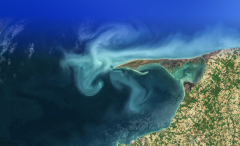


Vienna, Austria, 27 March 2026 — The United Nations University Institute for Water, Environment and Health (UNU-INWEH), in partnership with the United Nations Office for Outer Space Affairs (UNOOSA) and the Committee on Earth Observation Satellites (CEOS), successfully concluded an intensive five-day training on Earth Observation (EO) for Resilience and Humanitarian Aid. Held at the United Nations Office at Vienna from 23 to 27 March 2026, the training aimed to strengthen the capacity of UN personnel to effectively utilize geospatial and satellite-derived information in operational, programmatic, and emergency response contexts.
The programme was supported by the United Nations Platform for Space-based Information for Disaster Management and Emergency Response (UN-SPIDER) and leading CEOS member agencies including the Italian Space Agency (ASI), the French Space Agency (CNES), the German Aerospace Center (DLR), and the European Space Agency (ESA).
Thirty-five participants from across the UN system took part in the programme, reflecting strong inter-agency commitment to integrating space-based technologies into development and humanitarian work. The course was designed to directly advance the UN 2.0 vision by fostering a forward-looking institutional culture and strengthening capabilities in data, digital fluency, and innovation.
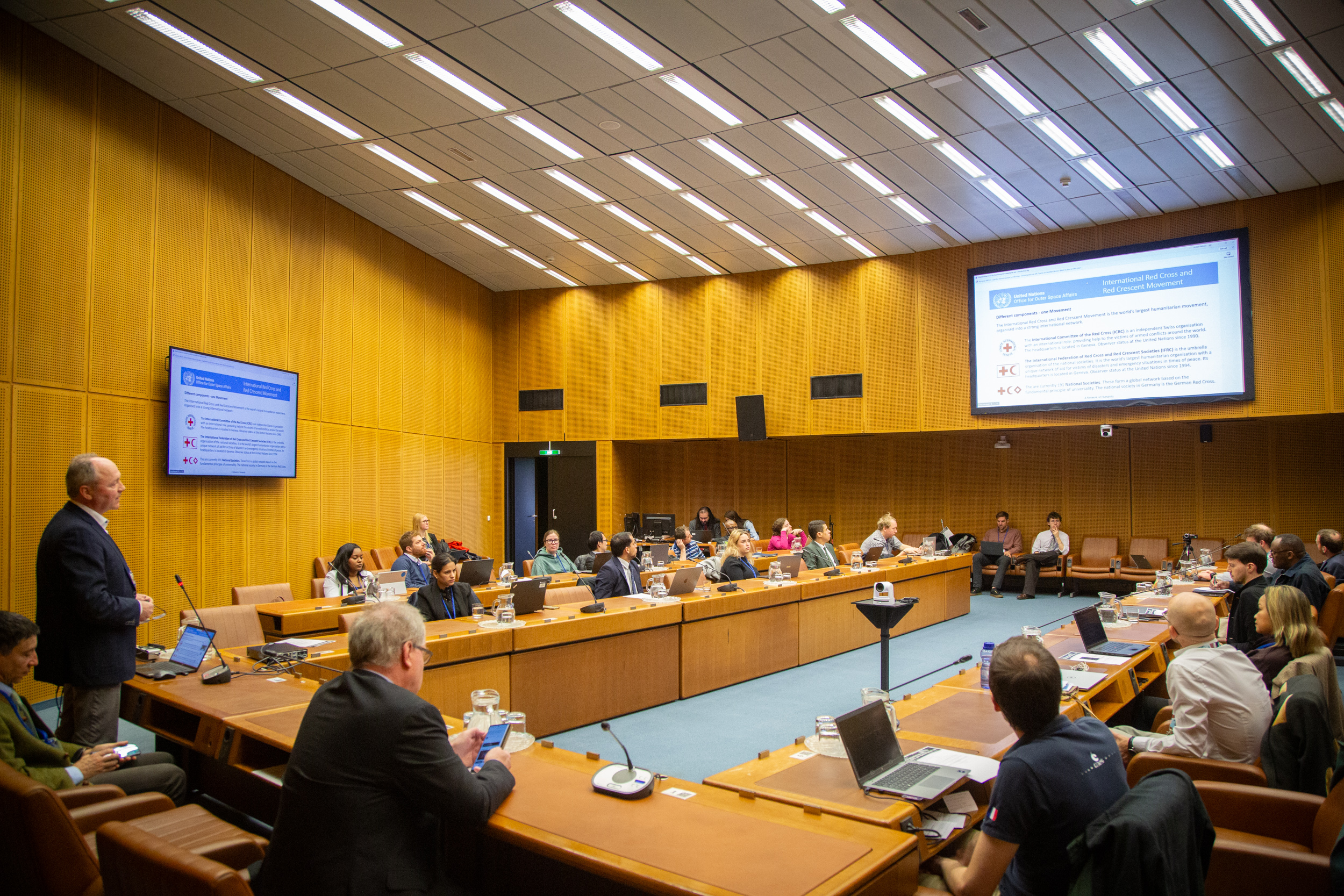
The training focused on building participants' ability to integrate Earth observation data into operational workflows through hands-on exercises and guided collaboration with technical experts. Sessions covered a range of applications, including flood monitoring, environmental analysis, damage assessment, and resilience planning. Participants gained practical experience using EO platforms and tools to support evidence-based decision-making in crisis and development contexts.
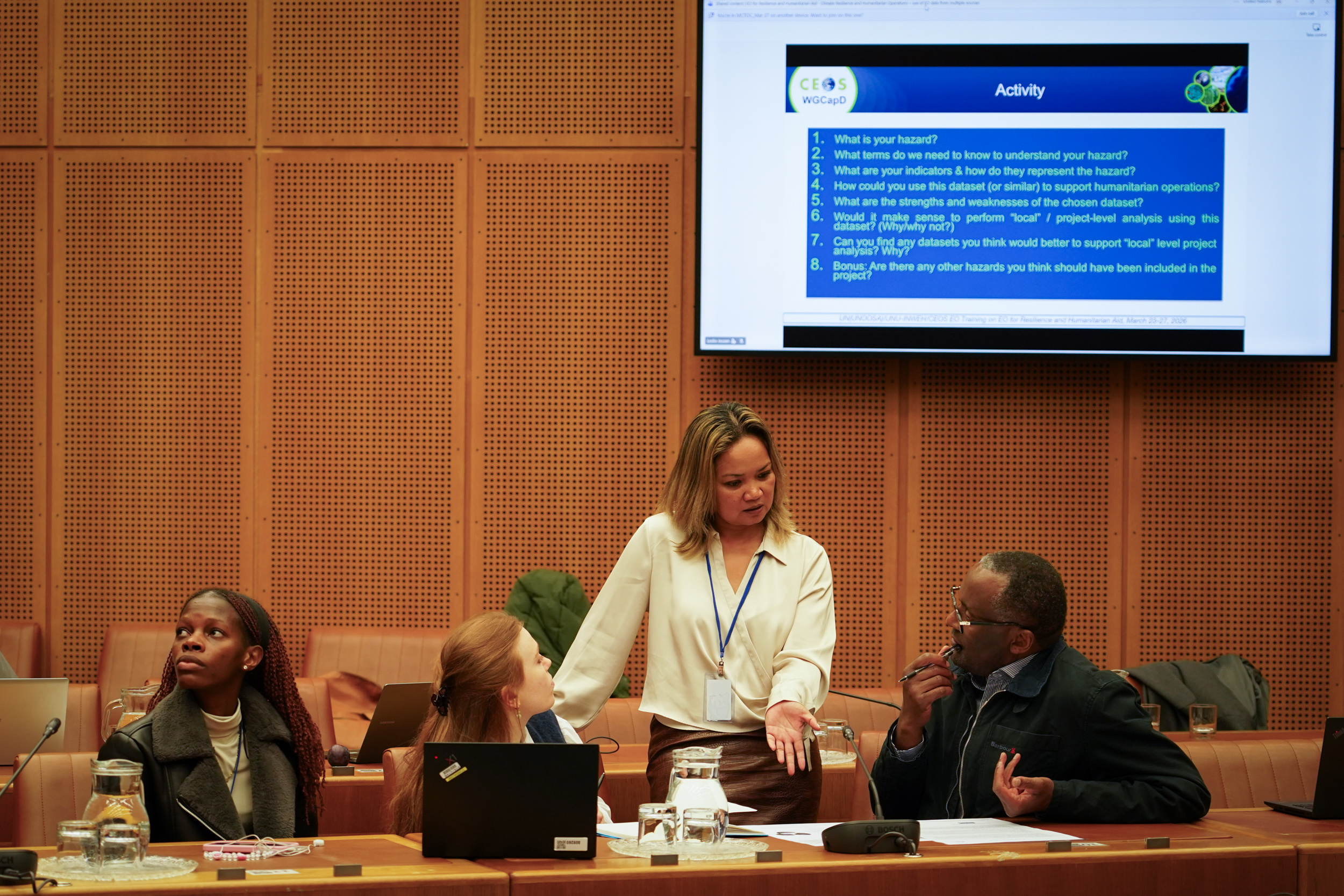
The programme underscored the critical role of timely and reliable geospatial data in improving preparedness and response to environmental and humanitarian challenges. By bridging technical expertise with operational needs, it equipped participants to translate satellite-derived insights into actionable strategies for their respective agencies and programmes.
Building on the partnership, UNU-INWEH, UNOOSA, and CEOS aim to further expand capacity development in Earth observation and continue to nurture a global network of experts dedicated to data-driven decision-making and resilient humanitarian programming worldwide.