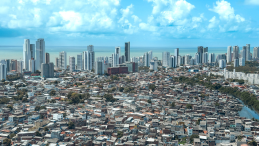
For years, urban development in Barrio 20, a neighbourhood in Buenos Aires, Argentina focused on some of the most pressing challenges of its residents: housing, water, sanitation, infrastructure and public services. Home to around 9,600 families living within 48 hectares, Barrio 20 is densely populated. Many homes were built without formal planning or permits, and inhabitants of the neighbourhood have been struggling with access to basic services as well as inequality. Climate action was not perceived as a priority and was therefore not initially part of the conversation around how to make neighbourhood improvements to increase the quality of life of its inhabitants.
When residents, local organizations, government representatives and researchers began working together in the Transformative Urban Coalitions (TUC) project led by UNU-EHS, a different perspective was fostered. What if some of these everyday challenges were also related to climate change?
Anabella Ullo, a young architect who works for the Housing Institute of the city of Buenos Aires, remembers the moment when that question first came up. She had already been involved in the neighbourhood’s upgrading process when TUC came in and added a climate perspective to work that was already underway to improve life in the neighbourhood.
“With the project, we were able to adopt various environmental perspectives that we hadn’t been considering up to that point”, she says.
For Nidia Molina, who lives in the neighbourhood, the change was less about suddenly discovering climate change than about finding words for things people already felt.
“It was like translating what the neighbours needed but might not have said,” she explains. The needs could sound almost ordinary, such as more shade and a bit of green. “I want a tree right outside my front door so that tomorrow my neighbour can park their car in the shade”, Nidia recalls a neighbour saying. She almost laughs at the memory of how simple that wish seemed. “It seemed like a neighbourhood joke, something so simple. But nevertheless, our neighbourhood was devoid of greenery.”
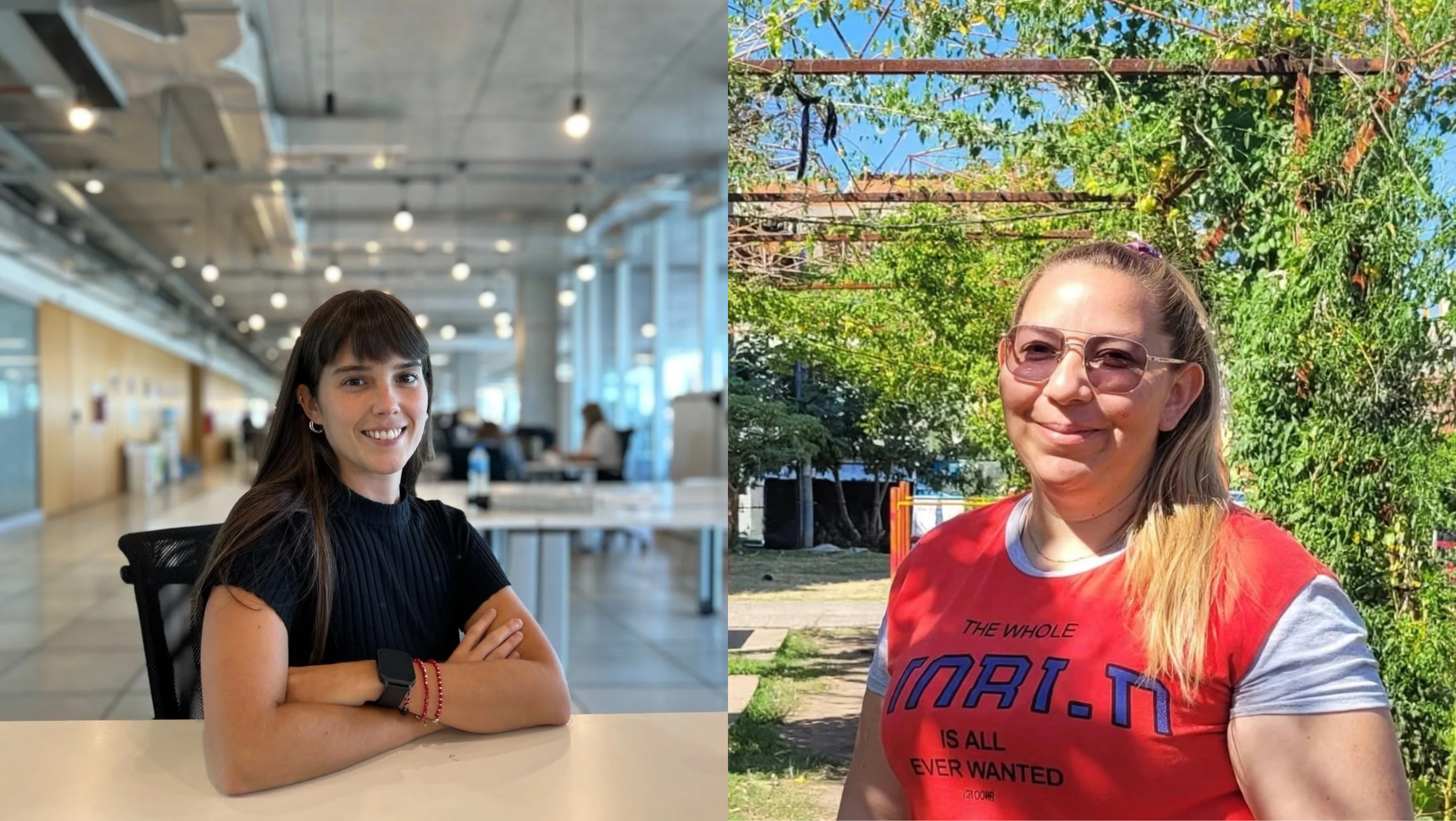
The physical absence of parks was indeed something that was a problem, but even more so was the absence of the idea that greenery could belong in Barrio 20 at all. Anabella explains how TUC brought those valuable insights:
“What this project entails, from the perspective of sustainability, is shifting our outlook on climate change and showing how small actions incorporated into an existing project can change or improve quality of life.” - Anabella, Buenos Aires architect
To improve the quality of life, there were workshops and participatory meetings that sometimes took place in a neighbour’s home, sometimes in a workshop space and sometimes in an office. It was important that everybody could easily access such meetings, and that there was space for people to bring different kinds of knowledge to the table.
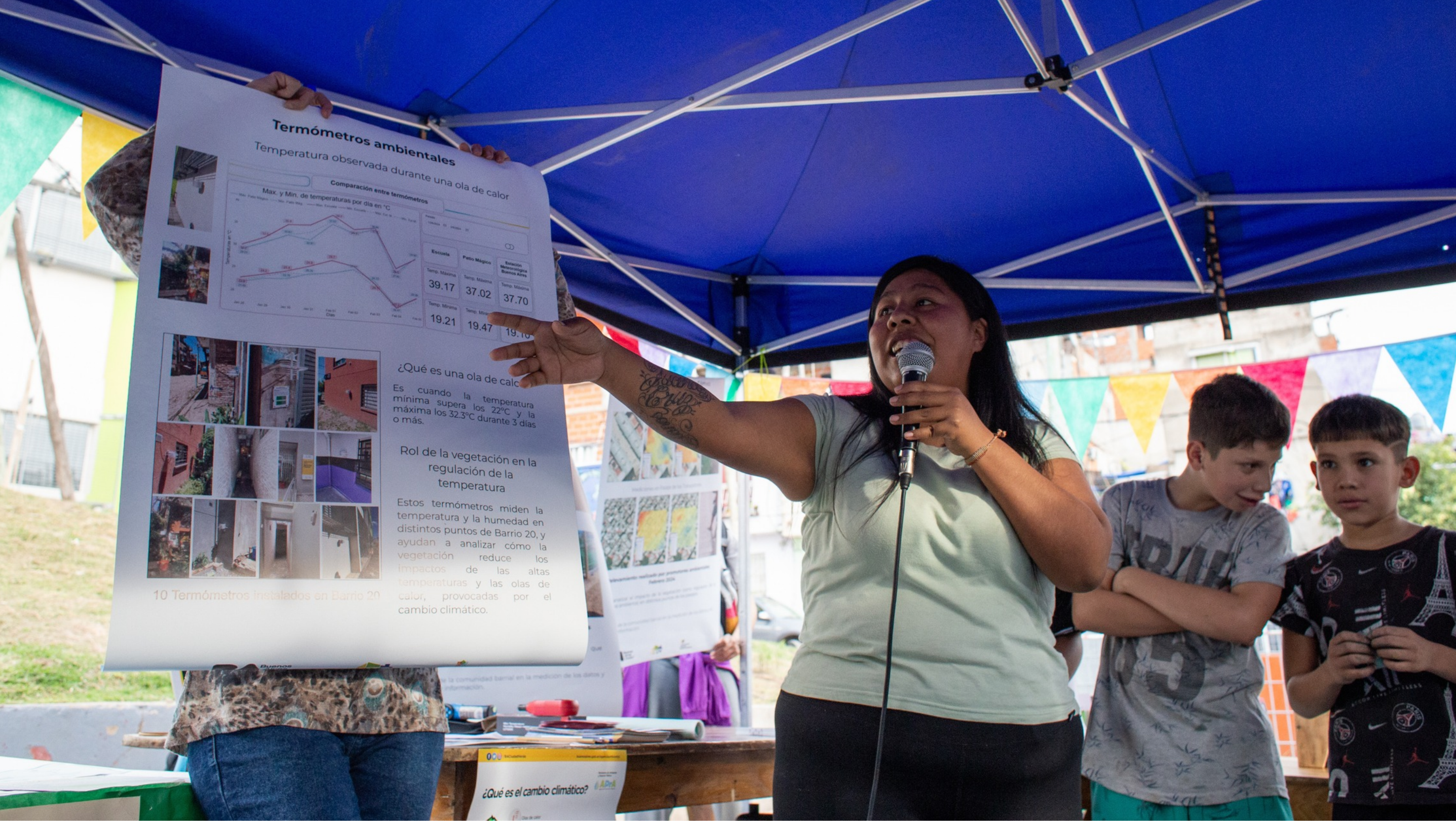
“We started with participatory roundtables and workshops”, Nidia points out.
“The merit of the work and, even more so, the results have been so significant that the change has been immense.” – Nidia, Barrio 20 resident
If one would take a walk through the neighbourhood, some of those changes are easy to see. There are green spaces, and murals appeared on walls that before were just plain concrete.
“We created artistic murals in our neighbourhood, in places that even the people living here saw as marginal spaces, because it was a street corner, because there was no lighting or because it was always a grey, dreary spot,” Nidia says. “Today they’re colourful, with beautiful images. That also did people’s mental well-being good, seeing something different on the street.”
Other changes are less visible, even though they respond to a very real problem. Barrio 20 is located in a lower-lying area and regularly deals with flooding. With researchers joining the process, some interventions were rethought. For instance, flower beds became rain gardens – planted areas designed to collect and soak up rainwater to help prevent flooding.
“Rain gardens not only improve the quality of the space by adding vegetation but also enhance how water drains as a result of these interventions,” Anabella explains.
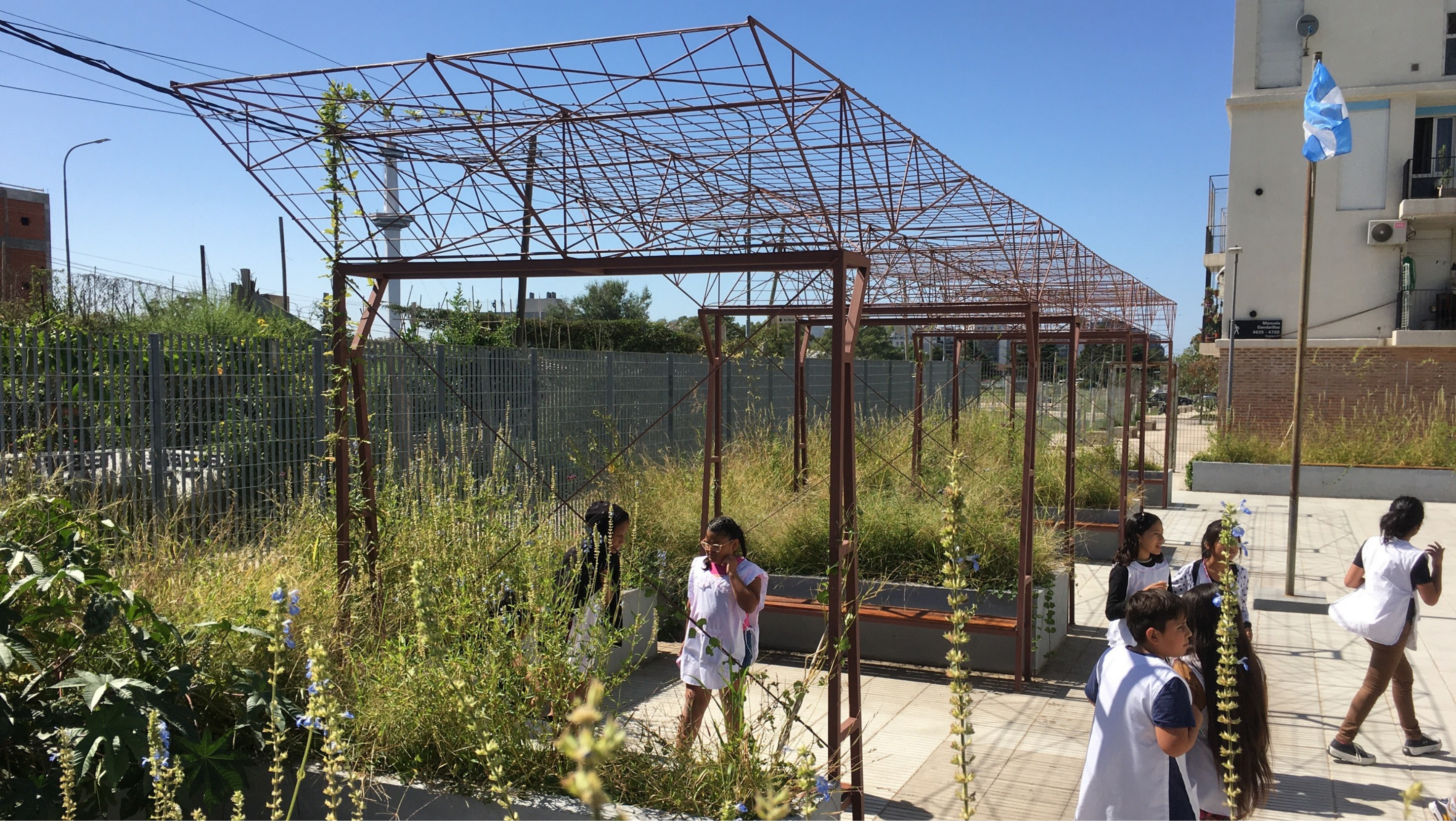
gathering spaces. © Daniel Kosak / IIED-AL
Because TUC brought different groups of people together, something shifted in the process of working on the same problems with people from different positions.
“I think the bonds were strengthened a bit more by sharing activities and working on a common project,” Anabella recalls. “Those bonds that were perhaps more distant before in terms of roles – citizen, government, neighbour – were strengthened much more.”
Nidia adds that for her, the shift was also about dignity. For residents of Barrio 20, being treated as people who can shape their own surroundings has not always been a given. She explains what it does to a person when they are told, implicitly or directly, that they are not the kind of person who gets to decide what happens around them.
“Being able to identify with a place means a lot,” she says. “The movement of the masses – of ordinary people, of ordinary neighbours – conveyed the idea that change needed to come from the inside out. And today, any ordinary neighbour has shed that stigma. The idea that just because you’re a neighbourhood resident, you can’t achieve anything – we’ve broken that down.”
That may be the harder part to measure, because a rain garden can be photographed and a mural has a before and after. Confidence takes a different form and shows up when people come back to another meeting, when they start thinking about how something could work somewhere else and when a project stops feeling like somebody else’s project.
Nidia describes that sense of ownership plainly: “We’ve taken ownership of continuing to nurture it, of continuing to come up with new solutions.”
The same thinking has changed how Anabella sees the work from within the municipal government. She thinks the climate and environmental dimension should not be something added once the plans are finished and the decisions have already been made:
“We aim to apply an environmental perspective from the very moment projects are designed on paper in the office through to their implementation in the community.”
Anabella’s words carry some of the bigger ambition behind what happened in Barrio 20. Contexts and spaces might be different elsewhere and not every neighbourhood can be fit into the same model, but there are aspects worth carrying forward in other places.
“We serve as a model for others or a source of ideas on how to do it” - Nidia, Barrio 20 resident
The interventions in Barrio 20 created physical and social changes, for example. They also created work through cooperatives and brought new people into the process.
Nidia points to other neighbourhoods facing similar challenges. “Around us, in other neighbourhoods that are also going through situations like ours, we serve as a model for others or a source of ideas on how to do it”, she explains. “That’s something really beautiful – it’s very hard to explain – and sometimes people don’t take that moment to stop and think about where we were before and where we are today.”
Anabella then goes on to describe how each person participating in the project is extremely valuable and contributes to the community in their own way. “After the project, we need to continue sustaining this space and be able to share the experience with others and continue mobilizing around issues that affect us all – issues happening globally, worldwide and at the national level.”
Nidia agrees, stating how they now have the capacity to create, replicate and sustain environmental initiatives and climate action collectively from what they learned during TUC. She summarizes it well: “I’m eager to continue developing many of the things I’ve learned. Things I didn’t know before – whether technical, professional or emotional.”
It is not as concrete as the number of environmental measures implemented, for example, but perhaps the project’s most important result is people who no longer see change as something that arrives from outside, and climate action as something irrelevant to them.
“It starts with the human being; it starts with a conversation, with sharing something – that’s what’s needed to implement any tool or structure” Nidia concludes.
--------
Nidia and Anabella's stories are part of “Transformative Urban Coalitions”, a project led by UNU-EHS with financial support from the International Climate Initiative, that works in five cities across Latin America to explore how climate action can be connected to the everyday realities of communities that are often left out of environmental decision-making processes.
In Buenos Aires, Barrio 20 became one of the project’s five pilot areas. There, the project introduced what is known as an Urban Lab: a space where residents, neighbourhood organizations, researchers and public institutions regularly come together to discuss local problems, exchange ideas and work on solutions collectively. Instead of decisions being made only by technical experts or government institutions, the Urban Lab approach creates room for different kinds of knowledge and lived experience to shape the process together. The Instituto Internacional de Medio Ambiente y Desarrollo, IIED – América Latina (IIED-AL) is the partner on the ground.