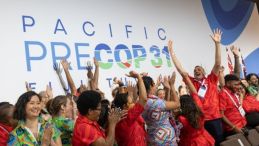
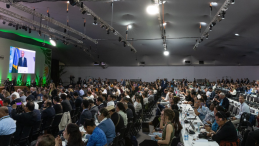
COP 31 in Antalya, Türkiye, is coming to a close. With a climate overshoot scenario looming over, the underlying theme of the conference was implementation, urging countries to take concrete actions on their climate commitments. Much attention was paid to key pillars of the talks such as adaptation, mitigation and climate finance. The COP Presidency’s Climate Action Agenda also brought a long list of agenda items, such as electrification and zero waste, to the table.
In Antalya, UNU-EHS researchers appeared in front of international media, helping to provide context to the negotiations and its big debates, as well as pressing climate stories.
Senior expert Soenke Kreft, was interviewed ahead of COP by the Associated Press Television Network on the expectations for the COP. The interview was broadcast across media outlets such as Sky News, BBC International, ABC Australia, Euronews and NHK in Hong Kong. As the negotiations were underway, the climate finance expert also appeared in articles in Al Jazeera, AFP, Anadolu Agency, France 24, ORF and The Standard (Kenya). During the conference, he was interviewed for broadcast pieces by the Associated Press and Ethiopian Broadcasting Services (EBS). Kreft also appeared in a live broadcast segment from South Korea's English-language television network Arirang TV for their programme “Within the Frame”.
Director of UNU-EHS and United Nations University Vice-Rector in Europe, Dr. Shen Xiaomeng, also appeared in an article by the Anadolu Agency on the importance of science at COP 31 and how communication is crucial to bringing science to everyday people. In the article, she also emphasized the need for parties to get things done:
“Ideally, we would see fewer big words and more bigger actions,” she said. “I think the previous COPs have prepared the ground for the implementation, and now is the time, actually, really to implement.”
COP also offers the opportunity to shed light on important climate stories happening on the ground, far away from the conference venue. Senior expert, Sinja Buri, was featured in an article by the Danish Broadcasting Corporation on climate migration in Tuvalu and how climate change is impacting lives and livelihoods there.
"It is not as if the islands will suddenly be underwater in five years. It is a gradual process. Individuals must assess when they can no longer make a living from their traditional livelihoods, and at what point they are forced to relocate," said Buri.
Buri was also featured in an article by EFE on the impacts of climate change on women. "Women are disproportionately affected by climate crises – not because they are inherently more vulnerable, but due to existing social norms and structural inequalities," she emphasized.
One of the major goals of COP 31 is the Turkish presidency's so-called "35 X 35" target to increase electricity’s share of global energy consumption from around 23% today to 35% by 2035. The big debate here is whether that increase in electrification should come from renewables or a mix of energy sources, including fossil fuels. Dr. Irmak Karakislak, an energy expert and lead author of the Interconnected Disaster Risks Report, penned an op-ed in The Brussels Times, warning of the risks of speedy electrification powered partly by fossil fuels.
"The 35-by-35 target cannot become a race to electrify by 2035 at any cost. The real challenge now is to question what kind of energy systems we are building, and how we can make sure electricity comes increasingly from clean sources,” wrote Karakislak.