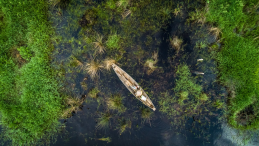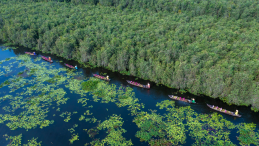


Wetlands are incredibly diverse and are found across the globe, occurring wherever water meets land. They support biodiversity, capture and store carbon, and help buffer against floods and droughts, among many other ecosystem services. However, they face increasing threats from drivers such as agricultural expansion, urban and industrial development, pollution and climate change. Wetlands continue to be lost or degraded, and as they decline under growing human and climate pressures, understanding their diversity and value is more critical than ever.
Here are five reads to enlighten you on the importance of wetlands:
Global Wetland Outlook 2025
This major report by the Scientific and Technical Review Panel of the Convention on Wetlands warns that wetlands are disappearing at an alarming rate. According to the report, 22 per cent of the world’s wetlands (about 411 million hectares) have been lost since 1970. The report specifically highlights that wetlands themselves are missing from climate finance, as wetlands receive less than 9 per cent of all finance for Nature-based Solutions, for instance. The report finds the world’s remaining wetlands contribute up to $39 trillion in benefits, highlighting a significant imbalance in funding.
State of the Worlds Mangroves 2024
Mangroves are an important wetland ecosystem, especially in the fight against climate change. Not only do they absorb carbon, but these coastal wetlands also provide a physical buffer against sea level rise and extreme weather events like cyclones. Around 50 per cent of mangroves are projected to be at risk of collapse by 2050, largely due to deforestation from coastal development, aquaculture and agricultural expansion. However, mangroves are resilient and conservation efforts have expanded in recent years, with roughly 40 per cent now protected. This report highlights the improvements in mapping and data collection that can support better understanding and practical management of these ecosystems.
The Wetland Book
Covering everything ranging from wetland ecology and hydrology to management approaches and international policy, The Wetland Book is a comprehensive reference that synthesizes decades of wetland research. It brings together knowledge on the physical, chemical and biological processes that shape wetlands, as well as their ecosystem services and connections to surrounding landscapes. The book also examines how wetlands respond to pressures such as land-use change, water management and climate variability. By integrating scientific understanding with policy perspectives, it provides an interdisciplinary foundation for scientists and practitioners.
Introduction to the Ramsar Convention on Wetlands
For those interested in wetlands, international policy and conservation efforts, understanding the Ramsar Convention on wetlands is key. The convention was the first treaty to focus on a single ecosystem and was signed in 1971. 55 years later, 172 countries are party to the treaty. Its mission is to promote the conservation and wise use of all wetlands, emphasizing their importance for maintaining biodiversity and ecological processes. Today, there are over 2,500 Ramsar sites around the world, which are considered “wetlands of international importance”. Though the convention is not part of the United Nations system, it works closely with UN Bodies, like UNESCO, who handles the legal instruments for new members and ratification.
Mapping the world's inland surface waters
To understand how wetlands are declining, researchers need to know the exact extent of wetlands, or the total surface area covered by wetlands on Earth. Global estimates of wetland extent vary widely because wetlands are dynamic, seasonal and defined differently across studies. This publication gives an overview of the Global Lakes and Wetlands Database (version 2), which maps inland surface waters worldwide and distinguishes 33 types of wetlands, ranging from freshwater and saline lakes to rivers, streams, peatlands, salt marshes, mangroves and more. The database is important as it provides a global baseline for understanding wetland diversity and for tracking changes to their extent.