

We have passed the midway point of the decade. Climate change is impacting and shaping daily life across our globe at an incredible pace and force. We enter a pivotal moment for climate action and for realizing UN goals by 2030. As climate change accelerates, political headwinds blow, international agreements hinge on implementation and the credibility of science is being questioned. Every year from here on out counts, but 2026 marks a crucial moment to stand by commitments, deliver on goals and build resilience in the face of increasing risks.
Here are five things in climate and environment to watch in 2026:
Changing realities: More heat and escalating risk
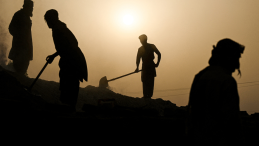
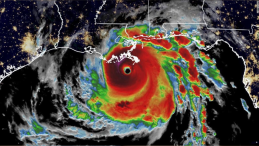
As Earth’s temperatures rise from human-induced greenhouse gas emissions, the 1.5°C overshoot is likely. The latest WMO Global Annual to Decadal Climate Update warns that global temperatures are likely to stay at or near record levels from 2025 to 2029, sharply escalating risks for societies and economies. It projects that each year in this period will be about 1.2°C to 1.9°C warmer than the 1850–1900 average, with a 70 per cent chance that the five-year average for 2025–2029 will be above this threshold. Every fraction of a degree of additional warming intensifies heatwaves, extreme rainfall, droughts, ice loss, ocean heating and sea level rise, compounding harm for people and ecosystems worldwide.
COP 31: Achieving climate implementation against political headwinds
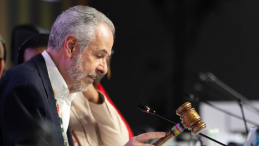
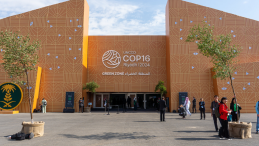
Despite weakened language and exclusions of a fossil fuel phase-out, COP 30 in Belém did deliver several positive outcomes, such as the Belém Adaptation Indicators for the Global Goal on Adaptation, the Just Transition Mechanism and a tripling of adaptation finance. The legwork to make those a reality is now underway and will carry to COP 31, which will convene in Antalya, Türkiye, with Australia taking on the role of the Presidency for negotiations. Major topics remain on the agenda still, including how to put into action the $1.3 Trillion goal of climate finance for developing nations by 2035 and the continued negotiations on language in phasing out fossil fuels.
Global action to address interlinked crises
In August, the United Nations Convention Combating Desertification (UNCCD) will hold its COP 17 in Ulaanbaatar, Mongolia. Here, parties meet to combat land degradation and to achieve Land Degradation Neutrality (LDN), the goal of no net-loss of land to degradation by 2030. The 2026 conference will focus on conservation and restoration of grasslands, and how arid and subhumid regions can adapt to water scarcity. In October, the UN Convention on Biodiversity (CBD) will also hold its 17th COP in Yerevan, Armenia. The main work will be assessing countries' progress on achieving twenty-three 2030 targets under the Kunming-Montreal Global Biodiversity Framework. Though under different frameworks, the COPs are intrinsically linked by the issues and impacts they address, such as land degradation and carbon emissions. Efforts to bridge the Rio Conventions are being made under the Rio Trio initiative started in 2024 in Baku.
Harnessing the power of cities in the just transition to a sustainable future
Cities are key to the just transition. Globally, cities account for 70 per cent of greenhouse gas emissions, which makes urban areas prime places to make deep sustainable changes on our way to decarbonization. Increasingly, as well, cities themselves are filling the gaps left by national policymakers in climate action. However, although urban decision-makers are well connected, they are still dependent on the national level for enabling more ambitious and inclusive climate actions and unlocking needed finance. The World Urban Forum in Baku, Azerbaijan, is a major opportunity to bring global city stakeholders together in 2026. The conference will be held under the theme “Housing the world: Safe and Resilient Cities and Communities”, where the focus will be on the global housing crisis and sustainable urban development.
Making 2026 a year for standing with science
The decision by the United States to withdraw from the Intergovernmental Panel on Climate Change (IPCC) and the Intergovernmental Science-Policy Platform on Biodiversity and Ecosystem Services (IPBES) represents a significant setback for international scientific collaboration. These institutions serve as the cornerstone of global efforts to rigorously assess the evidence on the drivers, risks and solutions associated with the interconnected climate and biodiversity crises. Disengagement from such processes does not make the underlying science disappear but deprives policymakers, businesses and the public of the credible guidance needed at a time when scientifically grounded information is indispensable. In 2026 and beyond, it is essential to reaffirm our commitment to science, to shared knowledge and to the collective global assessments that enable informed decisions for a safer, fairer future.
Suggested citation: "5 Things to Watch in Climate and Environment in 2026," United Nations University, UNU-EHS, UNU-VIE, 2026-01-21, https://unu.edu/ehs/article/5-things-watch-climate-and-environment-2026.