


Urban lakes and ornamental ponds are among the landscape elements that greatly enhance the quality of life in urban areas; they offer recreational and educational activities and help regulate the urban climate. They contribute multiple ecosystem services, such as flood mitigation, the moderation of local climatic variability, and an enhancement in runoff water quality, and support for biodiversity and recreational value. However, urban aquatic systems are highly vulnerable to anthropogenic pressures, such as stormwater runoff, the accumulation of contaminants or nutrients from surrounding built environments, and hydrological disturbances that undermine water quality and ecosystem functioning.
Journal Article
Design of a Constructed Wetland as a Nature-Based Solution for the Japanese Garden Lagoon, La Paz, Bolivia
Urban lakes and ornamental ponds are among the landscape elements that greatly enhance the quality of life in urban areas.
Abstract
This is an open-access article.
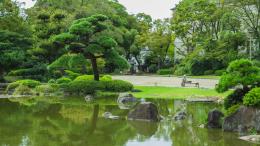
The Japanese Garden of La Paz, Bolivia, is a sociocultural space with high biodiversity, with its lagoon receiving treated effluent from the “Las Cholas” Wastewater Treatment Unit. Preliminary monitoring revealed elevated organic matter concentrations, raising concerns about water quality. This study aimed to design a constructed wetland (CW) to remove organic load and demonstrate its potential as a nature-based solution (NBS) for sustainable management. Physicochemical parameters and the trophic state index were evaluated during the dry and wet seasons. Macrophyte species were identified, and the most suitable species were selected through a systematic literature review considering treatment performance and local availability. The results showed alkaline conditions, low nutrient concentrations, and a mesotrophic trophic status. A total of 139 vascular plant species were recorded, including Cyperus involucratus, Azolla filiculoides, and Eichhornia sp.
Cyperus involucratus was selected due to its abundance and reported BOD5 or COD removal efficiency. The proposed system consists of a horizontal subsurface flow CW incorporating permeable reactive barriers filled with water hyacinth leaves as a biosorbent. A design flow rate of 0.86 m3/day was adopted for the proposed CW, corresponding to a hydraulic retention time (HRT) of 1.68 days and an estimated BOD5 removal efficiency of 68.54%.
Related content
Journal Article
Analysing resource management outcomes : an actor-centred power approach.
This publication was released as part of the UNU Resource Nexus Focus Area Resilient Food, Forest and Ecosystems.