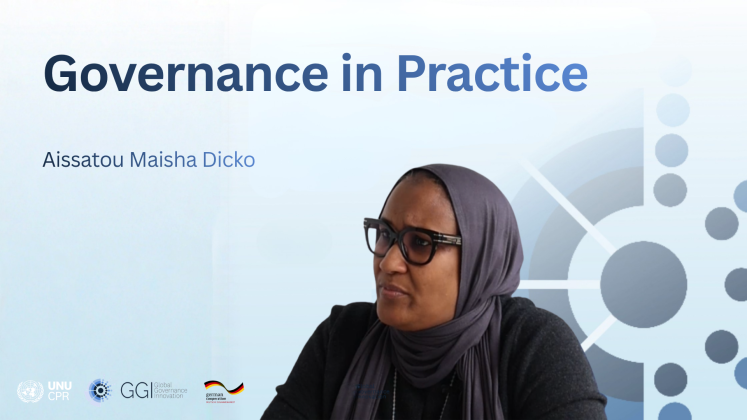
In this interview for the Global Governance Innovation Platform (GGI), Aissatou Maisha Dicko, Head of the Joint Data Center on Forced Displacement, a partnership between the World Bank and UNHCR, explains how the Center leverages complementary institutional strengths in development economics and protection mandates to generate evidence that informs policy and financing for forcibly displaced populations. She outlines how the Center compiles and curates a wide range of socioeconomic and displacement-specific data, including household surveys, labour force data, and targeted studies on education, employment, and livelihoods, all made publicly accessible through platforms such as the Microdata Library. Dicko also highlights additional resources, including extensive research repositories and the Dataset of World Refugee and Asylum Policies (DWRAP), which tracks refugee-related legislation over time. Looking ahead, she underscores efforts to build a “data marketplace” that connects researchers, policymakers, and practitioners to translate evidence more directly into effective policy responses and durable solutions for displaced communities and their host countries.