

Biological systems are fully functional, organic-based electrical systems, but they are so efficient that they manage to do it all with minimal electrical flows, which are negligible for today's commercial electronics. The dream of electronic devices based on biomaterials—which eliminate electronic pollution and reduce competition for strategic minerals— is thus still far ahead, and people like UNU-BIOLAC fellow Florencia Bernassani are already taking the first steps.
During her UNU‑BIOLAC fellowship at the National School of Higher Studies (ENES), UNAM, Florencia devoted her work to this scientific frontier: developing sustainable, low‑cost materials for next‑generation bioelectrochemical energy devices.
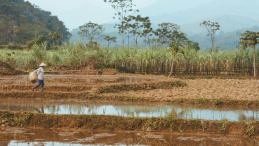
Her project explored how agricultural biowaste—specifically sugarcane bagasse, a plentiful byproduct in Latin America—can be transformed into carbon‑based electrodes for "biosupercapacitors," devices capable of storing small bursts of electrical energy while remaining environmentally friendly and biocompatible. By converting this biomass into biochar, enhancing it with metal oxides, and pairing it with flexible polymeric hydrogels and enzyme‑based electrodes, Florencia laid the necessary groundwork toward self‑charging hybrid devices combining supercapacitors and biofuel cells that don't rely on toxic chemicals or mined minerals.
Besides the scientific achievement, this work is also a model of Latin American collaboration. It was made possible through the mentorship and generosity of Dr. Diana Martínez Casillas (ENES‑UNAM), whose expertise in sustainable materials and energy storage guided the hands‑on development of supercapacitor components, and Dr. Eduardo Cortón (IQUIBICEN‑UBA), a pioneer of bioanalysis and bioelectrochemistry, who provided critical insight for integrating biological elements into the device.
Florencia's results are an early but meaningful step toward cleaner, greener electronics, proving that waste can become a resource, and that biocompatible energy devices are within reach. Her continued collaboration with her mentors promises further progress, as the team moves toward fully integrated prototypes.
This fellowship showcases precisely what UNU‑BIOLAC aims to catalyze: young researchers transforming regional knowledge and materials into globally relevant innovation.