

Five centuries after Paracelsus defined the Archeus as the sulfuric "fire" that starts in the gut, turning matter into life, and whose imbalance may be the cause of disease, genomics is proving this alchemical narrative to be surprisingly accurate.
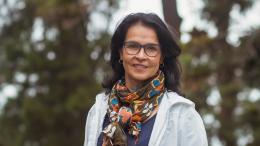
The human gut is a highly anaerobic environment continuously exposed to sulfur compounds derived from food and host, so, sulfur plays a central role in the gut's microbial energy metabolism. As research increasingly highlights the importance of gut health for overall well-being, understanding how intestinal bacteria produce, sense, and regulate reactive sulfur species has become a key scientific challenge, one that fellow Mayra Parente is pursuing through synthetic biology and proteomics.
Her research focused on reactive sulfur species that act as key metabolic and signaling molecules in bacteria. To study them, she designed genetic circuits that link sulfur sensing to fluorescent outputs, creating whole-cell biosensors that effectively turn living bacteria into biological detectors of metabolic processes.
Parente also conducted comparative proteomic analyses to identify proteins and pathways involved in sulfur homeostasis, helping clarify how reactive sulfur species influence microbial physiology and shape intestinal microbial communities. Together, the biosensor platform and proteomic studies provide complementary insights into sulfur metabolism and its role in microbiome health.
The project highlights the growing potential of biosensor technologies. The ability to transform cells into sensitive biological reporters could support future applications in microbiome research, diagnostics, environmental monitoring, and biotechnology.
UNU-BIOLAC gratefully acknowledges fellow Mayra Gimena Parente; her home mentor, Daiana Capdevila, at IIBBA-CONICET and Fundación Instituto Leloir; her host mentors, Mariana Bonilla and Rosario Durán, at Institut Pasteur Montevideo; Ernesto Cuevasanta; and the Analytical Biochemistry and Proteomics Unit (UByPA) for their support, training, and collaboration throughout this fellowship.