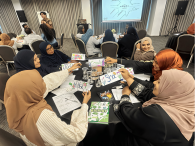
On 28-29 October 2026, UNU-IAS and UNESCO co-organized a workshop as part of the Education Beyond 2030 project. Youth representatives from the SDG 4 Youth & Student Network, UNU and the Youth Committee of the Japanese National Commission for UNESCO convened in Tokyo to draft the Youth Agenda on Education and Learning Beyond 2030.
Based on inputs from 200,000 young people from 194 countries, the agenda sets out their vision for the future, the changes they want to see in education and learning, and the actions and support needed to bring about these changes. It will serve as a basis for the next phase of consultations with governments, civil society, teachers and other education actors, and will be presented to world leaders at the 2027 Global Education Meeting.


The workshop culminated with a livestreamed unveiling of the agenda. Marco Pasqualini (Programme Specialist, Section for SDG 4 Leadership, UNESCO) presented findings from a global survey and consultations with youth and students, highlighting artificial intelligence, mental health and well-being as key concerns.
Emiliano Reyes Galindo (MSc student, UNU) and Nour Aldulaimy (Arab Region Student Representative, SDG4 Youth & Student Network Executive Committee) presented the draft agenda, which calls for quality, relevant education and the inclusion of the most vulnerable learners while recognizing the value of technology. It also asks for education that supports mental health and well-being, and places the protection of the planet at its centre.
Maoko Kobayashi, Chika Ebihira and Yuki Kawabata (Youth Committee of the Japanese National Commission for UNESCO) discussed the survey responses from Japanese youth, noting that a peaceful world without war or violence emerged as their top priority. Students in the audience raised questions and comments on access to schools in developing countries, support for learners from migrant backgrounds, and the role of life skills in curricula.
In closing remarks, Katsuhiko Hara (Assistant Minister and Director-General for International Affairs, Ministry of Education, Culture, Sports, Science and Technology, Japan (MEXT); Secretary-General of the Japanese National Commission for UNESCO) underlined the importance of listening to the voices of young people, stressing that Japan would engage actively in international discussions to support the youth agenda. Shinobu Yume Yamaguchi (Director, UNU-IAS) noted that the workshop was an important milestone towards the participation of youth in policymaking, and encouraged young people to use their imagination and share their creative ideas. Mami Umayahara (Programme Specialist, Section for SDG 4 Leadership, UNESCO) emphasized the uniqueness of the agenda, which outlines young people's expectations for education systems and their role in shaping them.
The workshop was organized by the SDG 4 Youth & Student Network hosted by UNESCO in partnership with UNU, and supported by the Government of Japan.