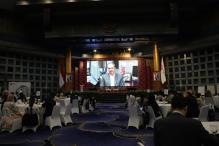
Biosensors have the potential to transform how analytical testing is performed by bringing diagnostic and monitoring capabilities out of specialized laboratories and into the places where information is most urgently needed. From rural communities and environmental monitoring sites to low-resource healthcare settings, these technologies help bridge a longstanding gap between analytical capacity and real-world decision-making. This vision was at the heart of the 2nd Latin-American Workshop – Development and Applications of Biosensors: From Synthetic Biology to Portable Technologies, which brought together young researchers from across Latin America to explore how emerging biosensing platforms can be translated into practical solutions for local challenges.
Advances in synthetic biology, open-source technologies, cell-free systems, nucleic acid engineering, and low-cost molecular diagnostics are lowering technical and economic barriers, enabling researchers to develop and deploy biosensing tools tailored to regional needs rather than relying exclusively on centralized laboratories. The course showcased how cutting-edge science can be adapted to address issues in environmental monitoring, public health, food safety, and biotechnology.
This practical vision was reinforced through three hands-on experimental modules. The first one focused on LAMP and cell-free protein expression, introducing participants to isothermal amplification and cell-free protein expression systems, enabling molecular testing in locations where conventional PCR platforms may not be available.
The second module explored lateral flow assays, one of the most recognizable formats for point-of-care diagnostics. Participants gained practical experience with portable, visually interpretable detection systems that deliver rapid results for nucleic acids, infectious diseases, or environmental contaminants.
The third module focused on CRISPR-Cas12a-based biosensing, exposing participants to one of the most promising tools in modern molecular diagnostics. By combining highly specific nucleic acid recognition with fluorescence-based signal generation, CRISPR biosensors offer sensitive detection of genetic targets and pathogens.
Beyond the technical training, the workshop organized lectures, laboratory activities, poster sessions, and scientific discussions where participants not only acquired new technical skills but also explored how biosensors can be adapted to address the specific environmental and health challenges faced throughout Latin America.
UNU-BIOLAC extends its appreciation to the course coordinators, Dr. Daiana Capdevila and Dr. Ana Sol Peinetti, as well as to the organizing teams of Fundación Instituto Leloir and INQUIMAE - University of Buenos Aires, for delivering an outstanding training experience and for their explicit commitment to building and sustaining regional collaboration networks, fostering future exchanges, joint research initiatives, and new opportunities for cooperation.