


Life is an electric gradient.
Cells have evolved many strategies and structures to harness the power of even the slightest flow of electric charge, resulting in the amazing natural world we live in.
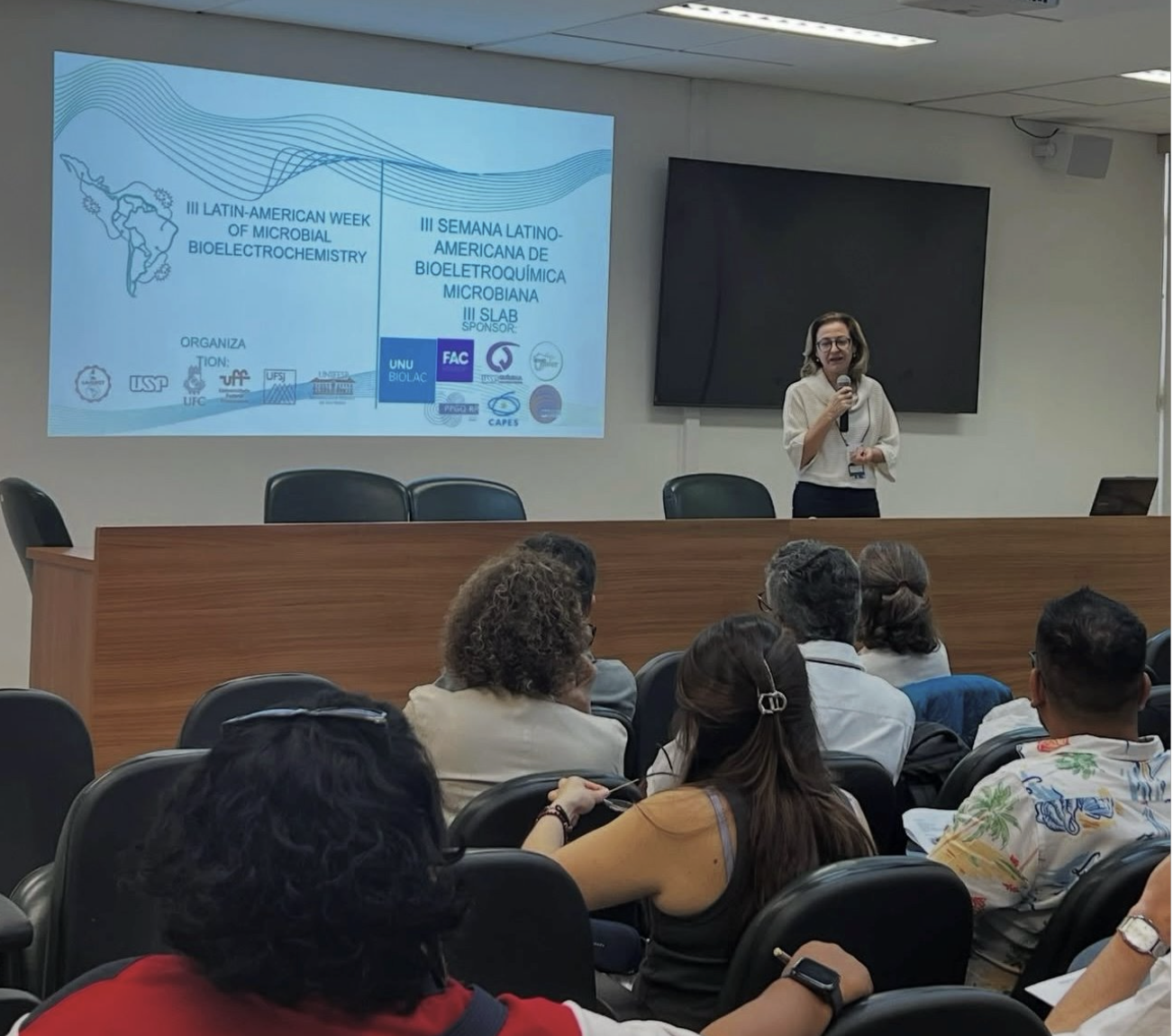
The III Latin American Week of Microbial Bioelectrochemistry was held at Universidade de São Paulo, Ribeirão Preto, Brazil, during August 2025, and is a push towards the engineering of biosystems that can supply sustainable, clean energy or substitute for energy-inefficient systems, inspired by the elegant solutions of evolution.
We thank Dr. Valeria Reginatto Spiller for coordinating this course that stems from a highly futuristic vision of a sustainable world.
Just for reference, here is a description of current and emerging points of interest for the development of bioelectrochemical systems and applications:
Sustainable Energy from Waste
Bioelectrochemical systems offer new ways to recover energy from organic waste streams. Microbial fuel cells can convert wastewater, agricultural residues, and industrial effluents directly into electrical power, while related systems enable the production of clean fuels such as hydrogen or methane. These approaches redefine waste as a resource and support decentralized, low‑carbon energy generation.
Next‑Generation Wastewater Treatment
BES technologies have the potential to transform wastewater treatment into an energy‑neutral—or even energy‑positive—process. By replacing energy‑intensive aeration with electroactive microorganisms, these systems reduce operational costs while simultaneously removing pollutants. In addition, valuable resources such as nitrogen and phosphorus can be recovered and reused, advancing circular economy principles.
Environmental Remediation and Pollution Control
Bioelectrochemical systems provide powerful tools for cleaning contaminated environments. Electroactive microbes can detoxify heavy metals, degrade persistent organic pollutants, and restore contaminated soils and sediments. The ability to control electron flow through electrodes allows more precise and efficient remediation compared to conventional biological treatments.
Carbon Utilization and Climate Solutions
Certain BES configurations enable microorganisms to use electrical energy to convert carbon dioxide into useful chemicals such as organic acids, methane, or bio‑based fuels. This process, known as microbial electrosynthesis, opens pathways for carbon capture and utilization, linking renewable electricity with biological carbon conversion and supporting climate‑friendly industrial processes.
Green Chemical and Biomanufacturing Processes
Bioelectrochemical systems are emerging as platforms for sustainable chemical production. By supplying or extracting electrons directly from microbial metabolism, BES allow greater control over biochemical pathways, improving efficiency and selectivity in the production of organic compounds, biofuels, and bioplastics precursors. This electron‑driven approach reduces reliance on fossil‑derived inputs.
Biosensing and Environmental Monitoring
The electrical signals generated by bioelectrochemical systems can be used for real‑time monitoring of water quality and environmental conditions. Changes in current or voltage can indicate the presence of toxins, organic pollution, or system disturbances, enabling low‑maintenance, self‑powered sensors suitable for remote or long‑term deployment.
Applications in Extreme and Closed Environments
Beyond Earth‑based infrastructure, BES concepts are being explored for use in extreme or isolated settings. Their ability to integrate waste treatment, resource recovery, and energy production makes them promising components of closed‑loop life support systems, including those envisioned for space missions or remote research stations.