


Science and technology have profoundly transformed our lives. Through systematic observation and experimentation, humanity has learned to understand, predict, and modify nature for its benefit. This ability has given rise to tools, products, and processes that meet our needs, marking milestones such as the printing press, the telegraph, the automobile, the airplane, and the digital era. However, there is one sector whose humanitarian impact is immense yet less recognized: biotechnology.
Biotechnology applies knowledge of genes, proteins, and cells of living organisms to solve pressing challenges in health, environment, and food security. Today, it is essential for combating global hunger. Biotechnology enables the development of pest- and disease-resistant crops, reduces dependence on pesticides, enriches foods with essential nutrients, and optimizes production under adverse conditions such as drought. In essence, biotechnology embodies a humanitarian mission: to guarantee the universal right to safe, sufficient, and nutritious food.
Science, when oriented toward human needs, is an act of empathy and solidarity. It is a service to the common good. Therefore, it is essential to recognize and disseminate the legacy of scientists who have dedicated their knowledge to humanity. One of the most inspiring examples is the work of Dr. Norman Borlaug, known as the “Father of the Green Revolution.”
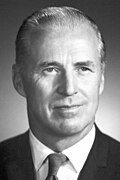 Dr. Norman Borlaug: Science in Service of Humanity
Born into a rural family in Iowa, USA, Borlaug’s early life was marked by hard work in the fields and the encouragement of his grandfather, who told him: “Norman, you’d better fill your head now so you can fill your stomach later.” Despite initial setbacks in gaining admission to university, Borlaug persevered, eventually earning a doctorate and embarking on a career that would change global agriculture.
In the mid-20th century, Borlaug joined a project led by the Rockefeller Foundation and the Government of Mexico to improve crop yields. Faced with poor infrastructure, limited resources, and farmer resistance, he decided to leave the comfort of the United States to work in difficult rural conditions abroad. His decision reflected a deep commitment to solving humanity’s problems on a global scale.
Through tireless experimentation, Borlaug and his team developed rust-resistant wheat varieties, pioneered large-scale crossbreeding, introduced robust semi-dwarf wheat capable of withstanding intensive fertilization, and implemented continuous planting cycles in different regions to accelerate results. These innovations transformed wheat production in Mexico and later spread to India, Pakistan, China, and other countries, helping to prevent massive famines and saving millions of lives. For this work, Borlaug received the Nobel Peace Prize in 1970, among many other honors.
A Legacy of Collaboration and Impact
Borlaug’s approach was not only technical but deeply humanitarian. He generously shared knowledge, trained local scientists, and collaborated with governments and institutions. His efforts led to the creation of the International Maize and Wheat Improvement Center (CIMMYT) in Mexico, which remains a global reference in agricultural research. His influence extended to Canada, Europe, Africa, and Asia, where his methods strengthened research institutions, trained generations of scientists, and improved food security. Throughout these efforts, Borlaug and his team faced obstacles such as bureaucratic, economic, and logistical challenges, but their perseverance and tenacity allowed them to realize their vision.
In 1963, Borlaug visited India at the invitation of Dr. Swaminathan, then a member of the wheat program at the Indian Agricultural Research Institute (IARI). He supplied seeds of high-yielding semi-dwarf Mexican wheat varieties. Test plots were established at IARI in New Delhi and other locations. Initial yields were significantly higher than those of locally grown varieties, encouraging farmers in Punjab and Haryana to quickly adopt the new methods. These varieties, combined with irrigation, chemical fertilizers, and modern agricultural techniques (part of a holistic approach advocated by Borlaug and Indian scientists), led to a dramatic increase in wheat production. Wheat yields in India nearly doubled between 1965 and 1970.
The Government of India later established the Norman Borlaug Chair in Agricultural Biotechnology for Crop Improvement at IARI to honor his contributions. Borlaug worked closely with scientists and various institutes under the umbrella of the Indian Council of Agricultural Research (ICAR), including the Directorate of Wheat Research and state agricultural universities. His statue was inaugurated inside the National Agricultural Science Complex (NASC) of ICAR in New Delhi in 2013.
Another notable example of Borlaug’s influence is the introduction of drought-tolerant maize varieties in northern Nigeria. Collaborations between CIMMYT, IAR, and Nigerian extension services brought improved maize hybrids capable of surviving erratic rainfall and intense heat. Farmers who adopted these varieties reported yield increases of 30–40% compared to traditional varieties, even during poor rainfall seasons. Beyond increasing harvests, these varieties reduced crop failure risks, improved household food security, and provided farmers with resilience against the growing threat of climate change.
In Nigeria, Borlaug’s legacy continues through programs such as the Norman Borlaug Institute for International Agriculture and Technology, which trains scientists in advanced skills in crop genetics, biotechnology, and agricultural economics. Leaders like Dr. Akinwumi Adesina, President of the African Development Bank and winner of the World Food Prize, embody Borlaug’s vision by advocating agricultural transformation as the most powerful tool to eradicate poverty in Africa.
Borlaug’s impact also reached Eastern Europe, specifically Turkey, which struggled for food self-sufficiency. While some advocated testing Borlaug’s wheat varieties, others strongly opposed. After successful results from both institutional and farmer trials—especially in coastal regions—larger-scale seed imports were approved. Borlaug not only developed new wheat varieties but also contributed to improving agricultural education and research activities in Turkey. Many agricultural research institutes and universities in Turkey adopted Borlaug’s methodologies and benefited from his educational programs. This enabled Turkish agricultural experts and scientists to acquire knowledge of modern farming techniques and biotechnology.
In addition to training scientists and technicians, Borlaug also trained and educated local farmers. These initiatives taught farmers to apply new agricultural techniques and use improved seeds. These educational efforts played a fundamental role in increasing Turkey’s agricultural production and improving farmers’ living standards. Motivated by the results obtained during this period, collaboration efforts within Turkish research programs and institutions increased, making institutional research efforts more effective and coordinated regarding biodiversity, disease monitoring, species adaptation, and capacity development.
Biotechnology Today: Continuing the Mission
Modern biotechnology has taken Borlaug’s vision even further. Tools such as genome editing (CRISPR/Cas9), marker-assisted selection, and bioinformatics now allow scientists to develop crops that thrive in saline soils, resist diseases, and withstand drought. These innovations reduce pesticide use, accelerate crop cycles, and democratize access to improved seeds.
Beyond crops, biotechnology is driving livestock and aquaculture improvements, enhancing efficiency, resilience, and nutritional quality. Circular bioeconomy initiatives integrate biotechnology with soil management, recycling, and emissions reduction, strengthening food systems against climate change and pandemics. While debates on regulation and ethics continue, no adverse health effects from genetic engineering have been documented, underscoring its potential as a safe and transformative tool.
From the Green Revolution to the Blue Revolution
Another aspect of Borlaug’s team’s work is that the results they achieved in increasing productivity and land yield helped preserve other important ecosystems, such as forests, protecting them for conservation and biodiversity efforts instead of converting them to agriculture. Thanks to these achievements, producers were able to meet society’s agricultural demands using a smaller land footprint than with conventional farming practices.
Borlaug’s humanitarian scientific model, guided by compassion and practical application, remains a benchmark. Today, agricultural biotechnology pursues the same mission with more powerful tools: ensuring dignified lives in the future by integrating technical rigor, environmental ethics, and community participation. Now, the emerging “Blue Revolution” in aquatic product production reflects this evolution, aiming to multiply protein production with a smaller land, water, and carbon footprint while supporting small producers and regenerating ecosystems. These efforts can be observed in various institutions worldwide, where aquatic organisms such as tilapia, oysters, shrimp, and algae are researched and produced, promoted as alternatives to terrestrial animals.
Engineers Without Borders: Carrying the Torch
Dr. Norman Borlaug’s legacy demonstrates that hunger is not inevitable. When science combines compassion, determination, and collaboration, it becomes a powerful tool for structural transformation. From Mexico’s wheat fields to modern biotechnology laboratories, his vision continues to inspire. The organizations Engineers Without Borders International and Engineers Without Borders Mexico honor this legacy and call on society to adopt a humanitarian approach to science and engineering to build a sustainable, inclusive, and dignified future for all. We are proud to highlight the work of humanitarian activists like Dr. Borlaug, who dedicated their lives to improving living conditions worldwide. His story reminds us that similar challenges exist in all societies and that cross-border collaboration can generate transformative solutions. Currently, EWB International supports projects ranging from building bridges for rural connectivity, installing solar energy in remote communities, designing affordable medical devices, and conducting feasibility studies for recycling plants. Each initiative reflects the same spirit: science and engineering in service of humanity.
Authors:
Betsaida Bibo Verdugo 1,2, Enrique Guemez Sorhouet 1,2, Sergio Ulaje Fernández 2,3, Oyebanre Olufemi David 4, Ali Akyol 5, Rajeev Lal 6, Phuc Vu 7, Arinaitwe Hedwig 8.
1.- Centro de Investigaciones Biológicas del Noroeste 2.- Engineers Without Borders México 3.- Universidad Autónoma de Baja California Sur 4.- EWB Nigeria, 5- EWB Turkey, 6- EWB India, 7- EWB USA 8- EWB International
Suggested citation: "Science, Technology, and the Humanitarian Legacy of Dr. Norman Borlaug," United Nations University, UNU-BIOLAC, 2026-01-03, https://unu.edu/biolac/article/science-technology-and-humanitarian-legacy-dr-norman-borlaug.