

According to the One Health Initiative, the health of human societies and their treatment is strongly connected to animal and environmental health; in this context, the presence of new pathogen diversity and novel antimicrobial resistance markers in human and animal pathogens is becoming more important since the effect on humans can finally affect farm animals and vice versa. Even these interactions may affect the rest of the environment and ecosystems. To understand those interactions, new approaches have been developed. Modern biotechnology increasingly relies on high-throughput sequencing technologies that generate vast amounts of genomic and metagenomic data. While these data offer extraordinary potential, their complexity requires specialized computational approaches. Bioinformatics has become a central pillar of biotechnology by enabling the analysis, annotation, and interpretation of this data, supporting applications in pathogen analysis, diagnostics, environmental monitoring, and microbial engineering.
More recently, artificial intelligence (AI)—particularly machine learning (ML)—has expanded the possibilities of bioinformatics. ML models are now routinely used to predict antimicrobial resistance, classify microbial communities, detect biosynthetic gene clusters, and infer phenotypic characteristics from sequence data. This synergy between bioinformatics and AI is reshaping how biotechnology addresses challenges in health, agriculture, and ecosystems. However, access to training in these fields remains limited in many regions of Latin America. This course seeks to bridge that gap by equipping young scientists with practical and affordable skills to apply bioinformatics and AI methods to biotechnology challenges, with a focus on microbial diversity and pathogen dynamics. By empowering local researchers with these tools, we aim to strengthen the regional capacity for innovation, surveillance, and scientific advancement.
Objectives:
● Understand the fundamental concepts of the One Health view.
● Learn and understand basic principles of bioinformatic analysis of pathogen genomic data, to apply them to functional annotation.
● Comprehend the theoretical foundations of machine learning algorithms commonly applied to genomic data analysis, identifying strengths, limitations, and appropriate applications of tools available for this approach
● Practice best core procedures for the use of genomic data in ML-based approaches.
The course combines theoretical lectures and hands-on practical sessions:
Theoretical Modules:
- Pathogens, Genomic Diversity and the Theoretical Framework
- From Taxonomy to Function
- Machine Learning Implementation and Hands-on Applications
- Application of Bioinformatics and ML in One Health
Practical Modules:
- Data and Bioinformatics Tools Introduction
- Functional Profiling
- Integrative activity and networking.
- Hands-on Machine Learning: Classification and Clustering
- Application of Bioinformatics and ML in One Health
Application procedure
Applications will be received via this form (Google login required)
For more information, send your questions to baim.course@gmail.com or amy.moran@ues.edu.sv
Last day to apply: December 22nd, 2025.


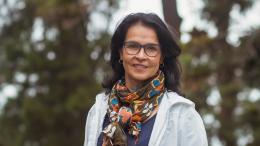
Dr. Ana Moya-Beltrán is an assistant professor at Universidad Tecnológica Metropolitana (UTEM) in Chile. She graduated in Bioinformatics Engineering from Universidad de Talca and obtained her PhD in Biotechnology from Universidad Andrés Bello. Her doctoral work received the “Best Doctoral Thesis in Microbiology 2022” award from the Sociedad de Microbiología de Chile. She currently leads the Data-Driven Complex Systems Lab at UTEM, where her research integrates machine learning, artificial intelligence and high-performance computing to analyze complex, multi-omic and clinical datasets. Her group develops data-driven models to understand complex biological systems, including microbial communities, host–microbiome interactions and molecular networks, with applications in health- and environment-related complex systems. She serves as Secretary of the Chilean Society for Bioinformatics and has an h-index of 13.

Pedro E. Romero Dr. rer. nat., obtained his PhD in Natural Sciences at the Goethe Universität (Frankfurt am Main, Germany), Currently, he is an Assistant Professor at the Faculty of Biological Sciences, Universidad Nacional Mayor de San Marcos (Lima, Perú). His work uses bioinformatics tools to study biodiversity through genomics, phylogenetics and metabarcoding, focusing on invertebrates and microorganisms. He is also passionate about fostering essential bioinformatics skills in a broad community of life sciences professionals.

Jose Arturo Molina Mora is a full professor and scientific researcher at the University of Costa Rica, Costa Rica. He holds degrees in Microbiology and Clinical Chemistry, as well as in Mathematics, and earned both a Master’s and a Ph.D. in Science with an emphasis in Bioinformatics. He collaborates as a researcher and project coordinator with the European Bioinformatics Institute (London, United Kingdom) and the Institute of Human Phenomics (Shanghai, China). His research focuses on the analysis of large-scale data using bioinformatics and artificial intelligence (machine learning and AlphaFold) to study pathogens and antimicrobial resistance, as well as collaborations in human genomics.

Juan Pablo Cardenas Astudillo has a BsC. in biochemistry from the University of Santiago de Chile (USACH) and a Ph.D. in Biotechnology from Andrés Bello University (UNAB, Chile). With previous experience in the industry, focused on the human microbiome, Juan Pablo currently holds an assistant professor position at the Center for Genomics and Bioinformatics (CGB) in Universidad Mayor (Chile). His work is focused on microbial genomics and metagenomics, with additional focus on microbiome evolution and bacterial systematics.