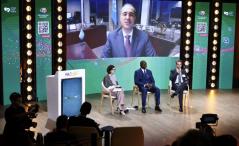
Multilateralism is under pressure. Global tensions are rising and trust in international institutions is weakening. At the same time, global challenges such as climate change, extreme poverty, inequality and protracted armed conflicts demand cooperation more than ever.
At UNU-MERIT’s Master of Public Policy (MPP) programme, students are encouraged not only to analyse global policy outcomes but to reflect on how their own thinking evolves in the process. Five MPP students shared how the programme has reshaped their understanding of multilateralism, development, evidence, and implementation. Their reflections reveal that learning policy is not only about acquiring tools, but about cultivating perspective, discipline, and intellectual responsibility.
Before and After: Understanding Multilateralism

Biborka Kiss, a Hungarian student specialising in Global Governance, describes how her understanding of multilateralism began long before she entered a classroom.
“I got my first piece of chewing gum on my fourth birthday from a Syrian girl in Vienna. She told me stories about a long journey and a homeland far away. In primary school in Bishkek I learned the word podruga (RU: friend) who patiently showed me how to navigate her world. I realised how words compel different meanings, when my high school classmates found the bookish Hungarian I spoke very amusing. I found refuge in model UN, always aiming to represent the positions furthest from my own to then distil my opinion from everything I learned along the way.”
For Biborka, the MPP transformed those early experiences into something more structured and purposeful.
“In a sense, I have always been learning about multilateralism. What began as finding similarities amidst differences on a personal level, through MPP, grew into building durable solutions to achieve common goals in the global arena. In an age when institutions seem to hollow out and agreements of the past are walked back, making use of cooperation as a strategic tool is essential. Since multilateral debates discuss questions that have no right answer, the more different perspectives are at the table, the better. MPP has taught me that my childhood hope can become a disciplined pursuit of development. One that would benefit humanity and move us towards a brighter tomorrow. Multilateralism today must build resilient frameworks that allow differences to coexist with progress and I hope to contribute to that future.”
Rethinking Development

Irmak Tankurt, a Dutch and Turkish student specialising in Global Governance for Development, reflects on how the programme creates space for her to interrogate foundational concepts.
“What does ‘development’ truly mean and who decides that? Studying public policy, it is very important to reflect on how often we use words without knowing their origins or impact. ‘International development’ entered our terminology in the post-WWII period with President Truman referring to ‘underdeveloped’ countries in his inauguration speech. Since then, it has shaped the knowledge systems that guide many nations and multilateral institutions as a framework for aid and global policy.”
She explains how the MPP deepened this questioning through dialogue.
“Now, in the MPP, I can bring some of these questions into the classroom and discuss them further from a policy perspective with colleagues that come from all over the world. With the Problem Based Learning setting of our tutorials supporting us to share our opinions and exchange ideas, it makes room for a process of active (re)learning and reconsideration through widening each other’s perspectives.”
Over time, this process became transformative.
“Over the past half year, this program has encouraged me to question all my assumptions on the daily, from the meaning of development to how policy is shaped, especially in a setting where multitudes of knowledge are present. As we move toward becoming policy professionals, I believe questioning and challenging our own beliefs, idea systems, and ways of learning, being, and doing in this world is an essential step to take for our inner development before focusing on making impact for global development.”
Evidence and Trade-offs
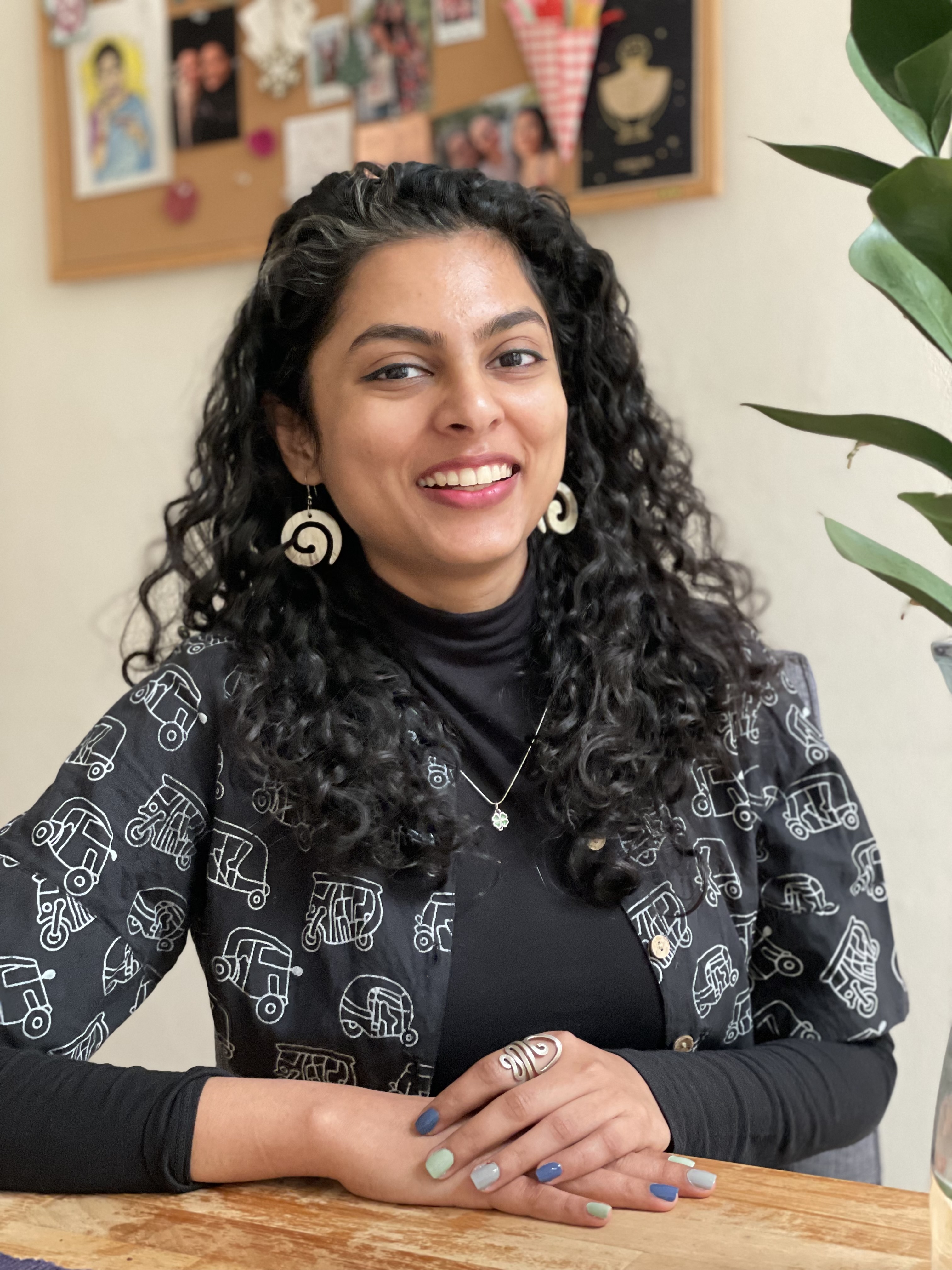
Shruthi Manivannan, an Indian student specialising in Social Protection, reflects on her relationship with quantitative evidence.
“There are three kinds of lies: lies, damned lies and statistics.”
As she explains:
“As a humanities student, statistics and data science felt intimidating but necessary for policy work. Guided gently by supportive tutors, the black box of quantitative methods and statistics opened before me, and while it answered many questions, the world it opened left a deep suspicion of narratives around me. How on earth could I continue to trust official policy numbers when I now knew a dropped variable here and a changed regression model there altered results so significantly for the same phenomenon? How accurate are proxies used as stand-ins for missing, outdated or compromised data?”
Yet her conclusion is not cynicism, but empowerment.
“No, in an age of misinformation and ‘fake news’ coming from the top echelons of our public institutions, being able to see through the legitimacy numbers establish is a balm. Learning the ability to ask the right questions is empowering and humbling, lies tend to fall apart under careful scrutiny after all.”
From Ambition to Implementation

Alexander Bichler, an Austrian student on the Governance of Innovation and Global Governance track, shifts the focus from structures to mindset.
“Extensive research points to several reasons for the gap between multilateral ambition and implementation — ranging from institutional path dependencies and resource constraints to a lack of political incentives. These structural analyses are vital and largely correct. However, they often overlook how people think and make decisions. I believe that even the most perfectly designed policy will fail if there is a way it is understood by those responsible for carrying it out.”
He continues:
“To complement our structural efforts, we must recognise the transformative value of initiatives like the Inner Development Goals. While global commitments aim to address shared challenges, the way policies are carried out often remains fragmented and short term.”
For him, governance is not only institutional but cognitive.
“This is not to say that technical solutions are less important, but rather that their impact depends on the people applying them. Until we integrate ‘inner growth’ as a legitimate variable in governance, our multilateral ambitions will continue to outpace our capacity to realise them. As the next generation of policy professionals, our task is to bridge this gap by cultivating the complexity of mind necessary to turn global vision into local reality.”
Looking Ahead

Celine Koyun, a German student specialising in Migration Studies, turns her reflection toward the future.
“Weak multilateral cooperation affects small and less powerful economies the most. These states often lack the resources to respond to global crises on their own. Therefore, the continued need for a rule-based international system exists to secure their economic stability and political participation.”
She recognises the geopolitical constraints but also identifies pragmatic pathways.
“To encourage cooperation even when states disagree, opportunities for unintended cooperation should be encouraged. States act in the interest of themselves and are more likely to cooperate when doing so is no more costly than acting alone. This creates a positive spillover effect that benefits all other nations and reinforces the global system.”
And if global consensus falters:
“Issue-specific or regional coalitions that proactively pool their interests and resources and act without having to wait for global consensus remain viable and practical options for responding to issues.”
Together, these reflections show that at UNU-MERIT, students are trained to understand the complexity of the international system, learn the mechanics of how international organisations operate while always question assumptions, interrogate evidence, and bridge ambition with implementation.
Applications to the Master of Public Policy at UNU-MERIT are currently open. The deadline is 1 May for non-EU and EEA applicants and 1 June for EU and EEA applicants. Learn more.
Suggested citation: "Rethinking Multilateralism from Within: Reflections from MPP Students at UNU-MERIT ," UNU-MERIT (blog), 2026-02-25, 2026, https://unu.edu/merit/blog-post/rethinking-multilateralism-within-reflections-mpp-students-unu-merit.