


Over the past five years, the UNESCO Chair on Science, Technology and Innovation for Sustainable Development in Latin America has become a flagship programme for UNU-MERIT’s engagement with the region. Through the Chair, we have provided policy advice, produced evidence-based research, supported capacity development, and helped strengthen networks of researchers and policymakers working in and for Latin America and the Caribbean.
The Chair also illustrates what multilateral cooperation can look like in practice: bringing together universities, policymakers, researchers and international organisations to exchange knowledge, build capabilities and address development challenges that no institution or country can tackle alone. A fuller picture of this work can be found here.
As part of our Multilateralism at Work series in the lead-up to United Nations Day, Chairholder Professor Carlo Pietrobelli reflects on what this experience has taught him about multilateralism itself — not simply as an institutional arrangement, but as a way of producing knowledge, building capabilities and learning across countries.
Multilateralism is usually discussed as a diplomatic arrangement. Less often, it is treated as an epistemic one. Yet the way knowledge about development is produced, validated and transmitted is deeply shaped by who sits at the table.
Holding the UNESCO Chair at UNU-MERIT on Science, Technology and Innovation Policies for Latin America has led me to see multilateralism not only as a context for research and training, but as a hypothesis to be tested: can international cooperation generate better knowledge about development than national or bilateral approaches alone?
Capabilities cannot be transferred, only built
The central idea behind much of the Chair’s agenda is that technological and institutional capabilities are cumulative, context-specific and acquired through learning.
The uncomfortable implication for the logic of multilateralism is that, if capabilities cannot simply be handed over, international cooperation cannot work as a transfer mechanism from those who know to those who do not. Instead, it works as a platform for mutual learning, in which experiences from different systems are compared, translated and adapted rather than replicated.
Honduras: policy training as a two-way exchange
The policy training delivered in Honduras tested this principle directly.
Honduras faces constraints typical of smaller, less diversified economies: limited state capacity, a thin innovation system and a difficult position in global value chains. A training programme that simply exported “best practices” from more advanced systems would have been of little use.
What proved valuable was starting with participants’ own policy problems and using international comparisons as a repertoire of options rather than as templates. Policy capacity is built when practitioners can situate their own constraints within a wider set of experiences.
The exchange also ran in both directions, sharpening our own understanding of how policy ideas fare when they meet real institutional limits.
Beyond the one-size-fits-all policy template
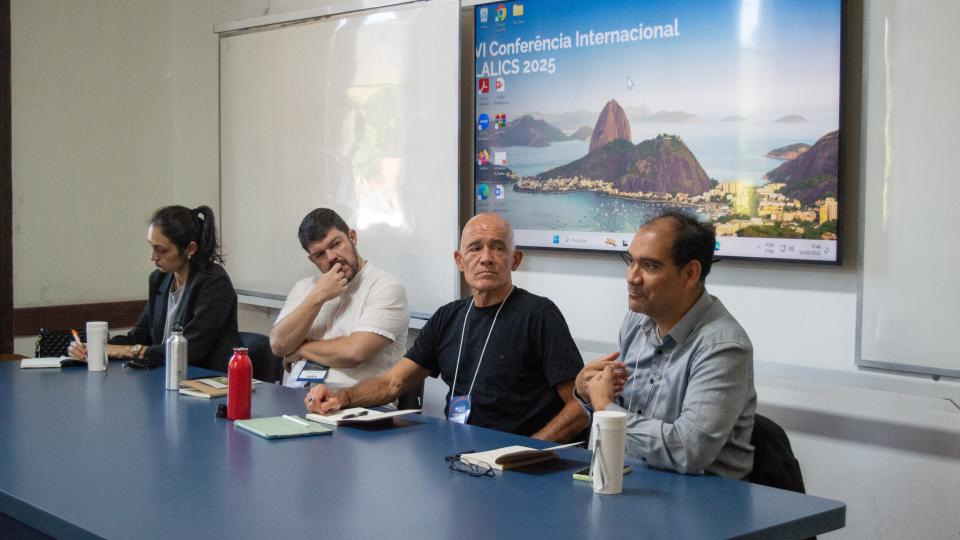
Latin America offers a demanding laboratory. Its economies differ widely in productive structure, state capacity and integration into global value chains, and the region has a history of both ambitious policy experiments and disappointing reversals.
A multilateral perspective helps avoid two symmetrical temptations: importing best-practice templates detached from the local context, and retreating into national exceptionalism that forecloses comparison.
Policy space, in this sense, is not the freedom to ignore global rules, but the capacity to use them strategically. Such capacity can itself be strengthened through training and capacity building.
Capacity as a global public good
Training researchers and policymakers, an activity in which the Chair has been frequently involved, is often framed as a development service — a form of altruistic endeavour.
I find it more useful to see it as the production of a global public good: shared analytical language, comparable evidence and networks of people able to sustain dialogue on development policy.
These assets are non-rival and long-lived, but chronically under provided precisely because no single actor captures their full returns. This is a classic multilateral rationale, and one that applies equally well to the economics of innovation: the spillovers and externalities that innovation policy seeks to generate for a wider set of beneficiaries are also among the reasons why societies tend to underinvest in innovation in the first place.
LALICS: building a regional epistemic community
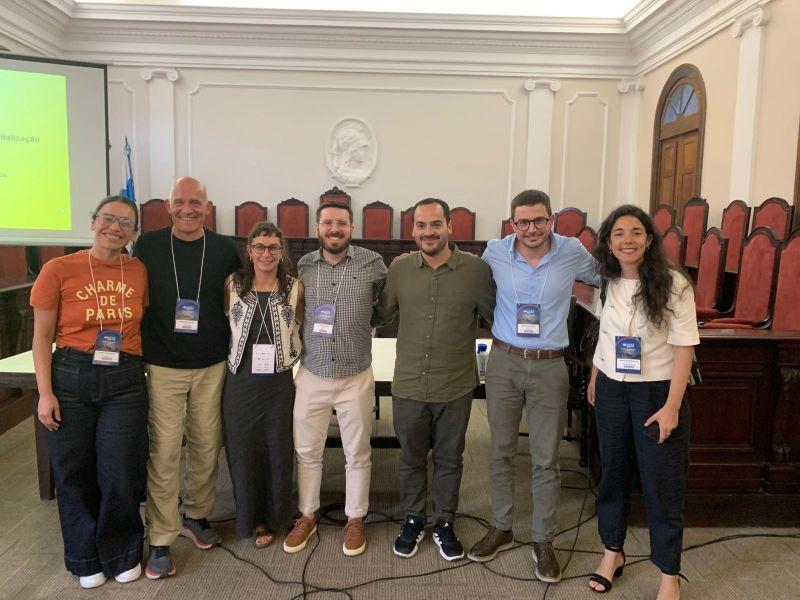
The panels with young Latin American scholars that we organised at LALICS conferences addressed a structural asymmetry: the region has long been a rich source of ideas on innovation and development, yet early-career researchers often lack access to international networks.
Multilateralism in these workshops helped renew a regional tradition of thinking about development, innovation and industrial policy, while widening and enriching the debate.
A pragmatic case for cooperation
At a time of technological rivalry and economic nationalism, the experience of the Chair suggests a simple lesson: the challenges of industrial upgrading, digital transformation and the green transition are precisely those where knowledge is dispersed, spillovers are international and no country can learn in isolation.
Multilateralism is therefore not simply an institutional ideal. It is a practice that needs to be sustained when dealing with global public goods that require joint research, shared learning and collective responses.
Suggested citation: Prof. Dr. Carlo Pietrobelli., "Multilateralism as an Innovation and Development Tool: Lessons from a UNESCO Chair on STI Policies for Latin America ," UNU-MERIT (blog), 2026-10-13, 2026, https://unu.edu/merit/blog-post/multilateralism-innovation-and-development-tool-lessons-unesco-chair-sti-policies.