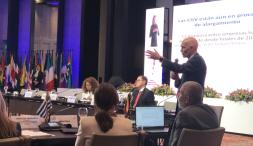
Technological change is not spatially neutral and understanding how innovation unfolds across regions is key to addressing inequality and promoting sustainable growth. This is the central message highlighted throughout the III International Conference on Regional Development in South America (KIRDSA), held on 24–26 February 2026 in Buenos Aires, Argentina, to which the UNESCO Chair at UNU-MERIT actively contributed. The conference brought together scholars, postgraduate students, policymakers, development banks, and public institutions from across Latin America and beyond to discuss the creation and diffusion of knowledge and the role of territories in shaping development across the region.
By fostering dialogue between regional and international research communities—including networks such as the Regional Studies Association (RSA)—the Chair helped strengthen KIRDSA as a vibrant platform for exchanging ideas on innovation, development, and sustainability.
UNESCO Chair’s Special Participation in the Panel on Energy and Digital Transition
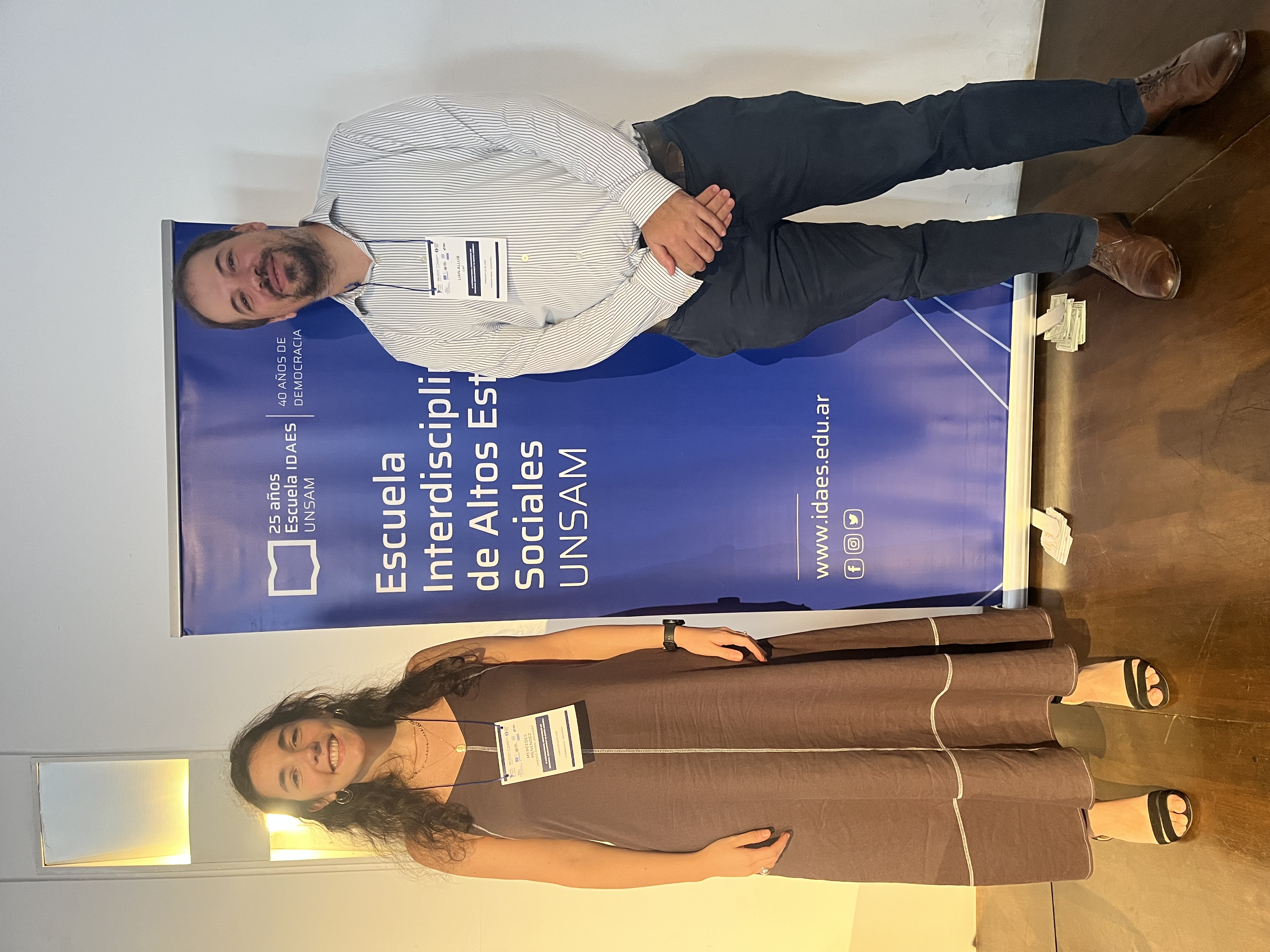
At a special panel on energy and digital transition, María de las Mercedes Menéndez (UNESCO Chair) joined Lian Allub from Corporación Andina de Fomento (CAF) to discuss one of the most pressing questions facing the region: can Latin America advance the green and digital transitions simultaneously?
Drawing on a recent CAF report, Allub stressed that the energy transition must be just and development-oriented. Latin America and the Caribbean continue to face structural challenges—including significant income gaps with advanced economies and persistent poverty and inequality—making it essential that decarbonization strategies also support economic development and social inclusion.
Menéndez opened the debate with a provocative question: Is going green and digital really a “convenient marriage” for Latin America? Her speech emphasized that the two transitions are often assumed to move together, yet they are driven by very different dynamics. Digital technologies typically evolve through rapid, market-driven innovation, while green technological change faces higher uncertainty, longer investment horizons, and greater systemic risks. For this reason, she argued; the green transition cannot rely on market forces alone—it requires strong public coordination, strategic policy support, and sustained investment.
Menéndez also highlighted the crucial role of international collaboration in strengthening the region’s absorptive capacity. As it is highlighted on a recent Chair’s paper, Partnerships, knowledge exchange, and coordinated policy efforts will be essential for Latin American countries to develop the capabilities needed to adopt, adapt, and innovate in green technologies—and ultimately accelerate their specialization in sustainable industries.
The discussion also drew on the Chair’s research on critical minerals, exploring how Latin America’s resource endowments could shape the future of the twin transition. In an increasingly geopolitical world, minerals essential for clean technologies have become strategic assets, redefining global trade, technological sovereignty, and development strategies.
Additionally, Menéndez presentation addresses the topic of digital infrastructure and the energy transition. In this context, Latin America and the Caribbean account for approximately 5% of global data centers, compared to China’s 3.7%. Despite this difference, China’s computational capacity is second only to that of the United States. Access to energy is a key factor for digital infrastructure and may become concentrated among large firms, potentially influencing how resources are allocated. This dynamic highlights questions about how the benefits of, and decision-making within, the green transition are distributed.
The debate made one point clear: the green and digital transitions in Latin America will not happen automatically. Their success will depend on deliberate policy choices, international cooperation, and the region’s ability to position itself strategically in a rapidly evolving global technological landscape. In addition, the audience raised several important questions to the panel regarding the forces that could hinder the progress of these twin transitions. Concerns were expressed about the risk of a fragmented technological paradigm in the absence of effective coordination and strategic direction. The discussion also highlighted that major initiatives such as the Green Deal are currently being put to the test, while digital dominance remains uneven and contested across countries, contributing to a more divided global technological landscape.
UNESCO Chair’s Special sessions on innovation, regional development, and structural transformation
The UNESCO Chair also promoted two Special Sessions bringing together emerging scholars from across Latin America to present cutting-edge research on innovation, regional development, and structural transformation. The eight presentations shared a common concern: technological change is not spatially neutral. It unfolds unevenly across territories, reshaping productive structures, employment patterns, and development trajectories.
Taken together, the sessions highlighted a crucial lesson for Latin America: innovation-led development must take geography seriously. Regional inequalities, structural heterogeneity, and uneven absorptive capacities strongly shape how technological opportunities translate into growth and inclusion. Designing effective innovation and development policies therefore requires a deeper understanding of these territorial dynamics.
Looking Forward
The UNESCO Chair at UNU-MERIT remains committed to deepening collaboration with scholars, policymakers, and institutions across Latin America and the Caribbean. By creating spaces for dialogue such as the special sessions at KIRDSA Buenos Aires 2026, the Chair helps facilitate mutual learning, amplify emerging voices, and generate insights that can inform policies for a more sustainable and inclusive future.
Suggested citation: Dr. María de las Mercedes Menéndez., "Innovation, Territories, and the Twin Transition: Reflections of UNESCO Chair from KIRDSA 2026," UNU-MERIT (blog), 2026-04-10, 2026, https://unu.edu/merit/blog-post/innovation-territories-and-twin-transition-reflections-unesco-chair-kirdsa-2026.