

Oluwasanya, G., Omoniyi, A., Perera, D., Qadir, M. and Madani, K. 2024. Unmasking the Unseen: The Gendered Impacts of Water Quality, Sanitation and Hygiene, United Nations University Institute for Water, Environment and Health (UNU-INWEH), Richmond Hill, Ontario, Canada. ISBN: 978-92-808-6119-8, https://doi.org/10.53328/INR24GAR011
Download the report
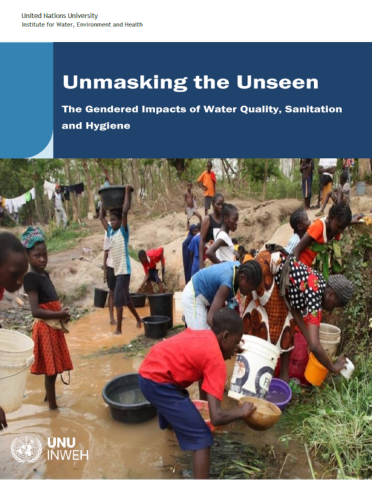
Addressing gender inequality may not be achievable by 2030 if the Differential Impacts Assessment (DIA) of unsafe water on health and well-being in the study area and, by extension, in areas with similar characteristics are not unmasked. Thus, this report presents the key findings from the study, outlining a framework and guidance for examining gender-specific impacts stemming from poor water quality and WASH practices through a piloted case study in Abeokuta City, Nigeria, to serve as a preliminary guide for conducting comprehensive, site-specific assessments. The piloted assessment framework is a 5-step approach, guiding the evaluation of gendered impacts from method design to the field activities, which include water sampling and laboratory analysis, public survey, and health data collection, to the data and gender analysis. The focus on low- and middle-income countries underscores the importance of DIA in such regions for better health and socioeconomic outcomes, promoting inclusive development.
The study results underscore unsettling, largely unseen gender disparities in exposure to health-related risks associated with non-utility water sources and highlight pronounced differences in water source preferences and utilization, the burden of water sourcing and collection, and health- and hygiene-related practices. Specifically, this preliminary assessment indicates an alarming inadequacy in accessing WASH services within the pilot study area, raising considerable doubts about achieving SDG 6 by 2030. While this finding is worrying, this report also discusses the lack of a standardized protocol for monitoring water-related impacts utilizing sex-disaggregated data, shedding light on the unseen global-scale gendered impacts.
The study results warn about the water safety of non-utility water sources. Without point-of-use treatment and appropriate water safety protocols, the water sources are unsuitable for potable uses, potentially posing compounded health risks associated with microbial contaminations and high calcium content, particularly affecting boys. Also, the results show that girls are likely the most affected by the repercussions of water collection, including time constraints, health implications, and safety concerns. Men and boys face a higher risk related to poor hygiene, while women may be more susceptible to health effects stemming from toilet cleaning responsibilities and shared sanitation facilities. Despite the preference for disposable sanitary pads among most women and girls, women maintain better menstrual hygiene practices than girls. This age-specific disparity highlights potential substantial health risks for girls in the near and distant future. Enhancing women's economic status could improve access to superior healthcare services and significantly elevate household well-being.
The report calls for targeted actions, including urgent planning and implementation of robust water safety protocols for non-utility self-supply systems and mainstreaming gender concerns and needs as a “6th sense” accelerator for SDG 6. The methodology developed and piloted here is scalable. It serves as an introductory guide that can be further refined to explore and track site-specific differential health and socioeconomic effects of inadequate water quality, especially in locales similar to the study area. The report targets policymakers and donor organizations advocating for sustainable water resource development, public health, and human rights, as well as those promoting gender equality to enhance global, regional, national, and community-level water management.
KEY FINDINGS
- Study reveals non-utility water sources unsafe without point-of-use treatment
- Differential Impacts of WASH Services on human health evident
- Poor menstrual hygiene among Girls still remains a significant health risk
- Inadequate WASH services jeopardize SDG 6 Goals
- Improving women's economic status vital for healthcare access and household well-being
Photo credit (cover page): Olatunji Obasa, Punch Newspaper. Residents scrambling for water in a hole due to inadequate WASH services in Ogun State, Nigeria.
Suggested citation: "Unmasking the Unseen: The Gendered Impacts of Water Quality, Sanitation and Hygiene," United Nations University, UNU-INWEH, 2024-03-02, https://unu.edu/inweh/article/unmasking-unseen-gendered-impacts-water-quality-sanitation-and-hygiene.